Concrete and steel construction
Macrosynthetic concrete reinforcement for a more sustainable walkway
Text Niels RouvroisImage Adfil
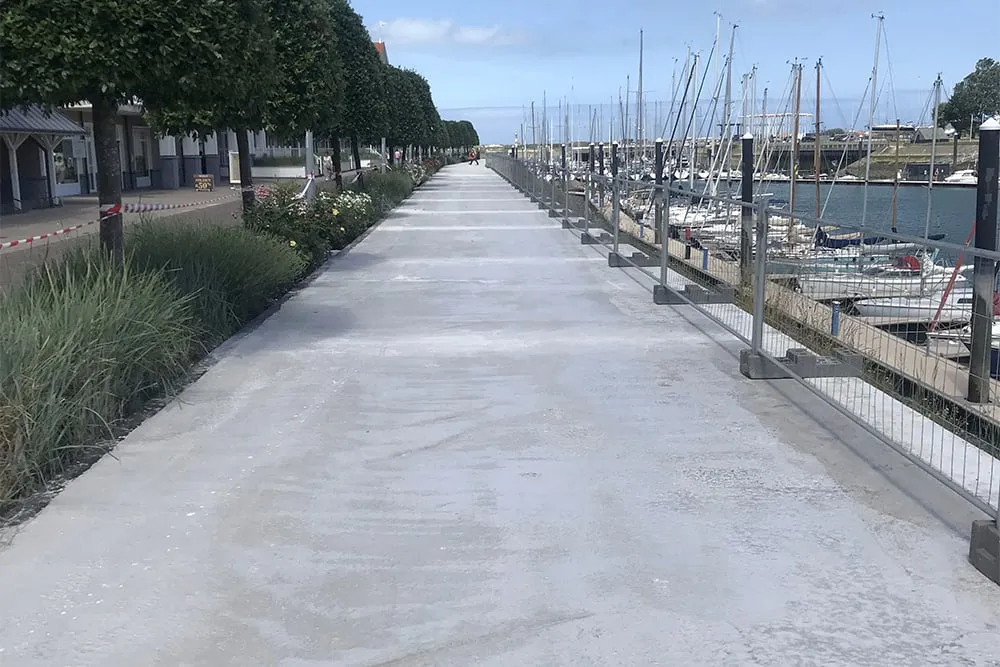
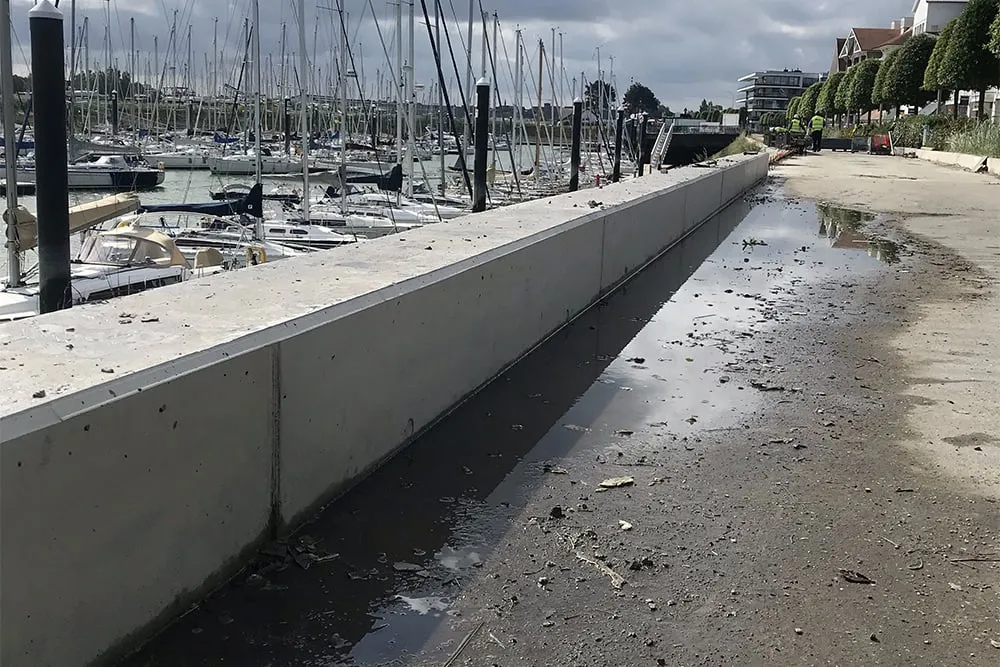
A fire service intervention caused severe damage to the timber promenade along the harbour channel in Nieuwpoort in the summer of 2023. Commissioned by the Agency for Maritime and Coastal Services (MDK), renovation of the damaged section began in May. Adfil, a producer of micro- and macrofibres, supplied synthetic fibres to reinforce the concrete slab and edge beam. “The amount of steel avoided as a result is considerable. It is a major win for the environment,” says Steven Anseeuw, Technical Sales Manager at Adfil.
The planks had bowed or sunk over a distance of 200 metres. Steven Anseeuw explains: “As the concrete slab and edge beam will still be clad in timber, there were no aesthetic requirements. However, contractor BESIX was looking for an alternative to steel reinforcement in terms of durability. A particularly large amount of steel reinforcement had been specified for the concrete edge beam, which only needs to support the railing and provide some support to the walkway: around 85 kg per m³. This was because the concrete had to meet a very low maximum crack width to protect the steel within the beam from chemical attack by the surrounding environment, in this case sea salt. We can replace those 85 kg of steel per m³ with just 4 to 5 kg/m³ of macrofibres along the entire route. A reinforcement mesh had also originally been specified for the slab. This was replaced with 3 kilograms of fibres, except for a small steel mesh at each end.”
Numerous benefits
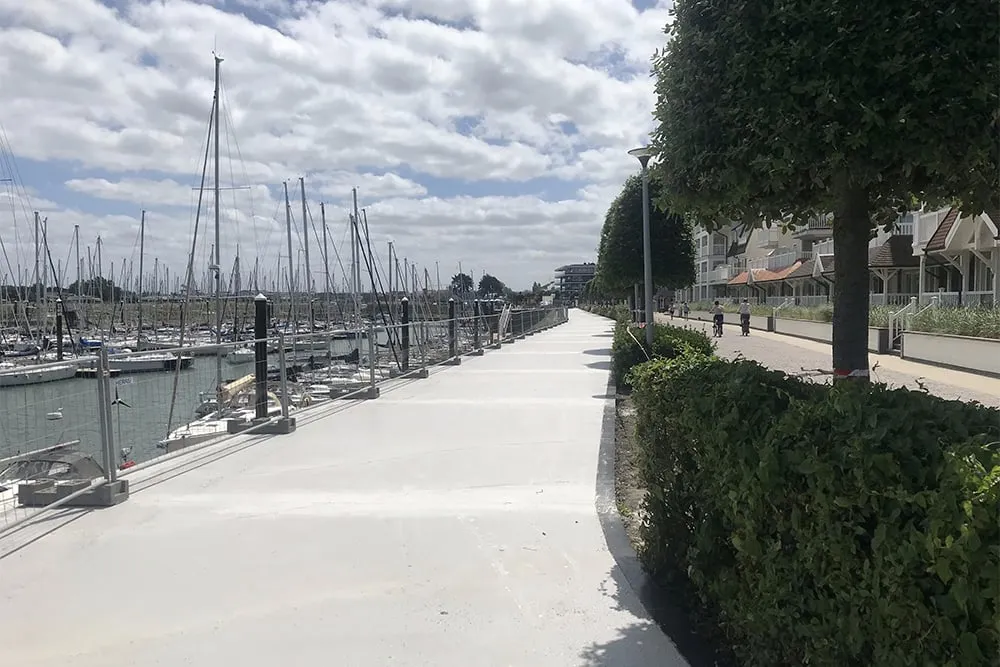
The walkway is in an aggressive environment, close to seawater and sea air, which can have a detrimental effect on the service life of steel reinforcement. Steven Anseeuw explains: “If the concrete develops a crack, there is a real risk that the steel reinforcement will corrode, leading to concrete cancer. Adfil’s fibres, by contrast, are 100% chemically inert. A crack or hairline crack in the concrete cannot therefore damage the reinforcement. The benefits are numerous. Replacing the steel reduces the environmental impact considerably, the service life is improved because the risk of concrete cancer is drastically reduced, and there are financial savings from using 5 kilograms of fibres instead of 85 kilograms of steel per m³. Fibre reinforcement also saves time, as the fibres are mixed in during concrete production, making the on-site pour much more straightforward.”
The reinforcement of the future
Durus Easyfinish fibres were used for the promenade in Nieuwpoort. These polypropylene macrosynthetic fibres from Adfil have revolutionised concrete construction. The macrofibres offer superior performance, cost savings, and health and safety benefits for concrete suppliers, contractors and designers. Durus EasyFinish is very easy to handle and use. The fibres can be mixed into the concrete at the plant, ready for use, or added on site. This is a major advantage over reinforcement mesh, which can be installed incorrectly. The fibres are inert, unaffected by the alkalinity of concrete or by moisture, and therefore 100% rustproof. This ensures a long service life. Durus EasyFinish also requires considerably less storage space than steel reinforcement and eliminates the risk of trip, fall and cut injuries associated with steel reinforcement mesh. The fibres are ATG-approved and are usually mixed at the batching plant, so the concrete arrives on site BENOR-certified and guaranteed to contain the correct dose of Adfil fibres.
Adfil’s role is not limited to supplying the product. “We provide technical support to the contractor wherever it is needed. Challenges can always arise during construction, and this project was no exception. The strong winds at the waterside caused the concrete to lose a great deal of moisture after the formwork was removed. This substantial moisture loss puts the concrete under stress, causing it to shrink and crack. It is then our job to explain that it is very important to spray on a curing compound immediately after striking the formwork, to prevent moisture loss. Adfil therefore does everything it can to be a reliable partner throughout the works.”
More and more contractors and clients are turning to Adfil. “The environment and sustainability are becoming increasingly important priorities, and we see that reflected among our partners. In that respect, I am convinced that we have the reinforcement of the future,” concludes Steven Anseeuw.
Question about this story? Ask your question
Keep following this
Get an email when a new story is published. No account needed.
- SubjectConcrete and steel construction