Concrete and steel construction
Thermal conductivity of hollow concrete masonry units
Text and images FEBE

To limit the energy consumption of buildings, Belgian energy performance regulations set maximum thermal transmittance values (Umax), among other requirements, for the building envelope. To assess whether an external wall meets the requirements, the thermal conductivity values (λ) of hollow concrete masonry units, among other things, must be known.
The standard for concrete masonry units, NBN EN 771-3, and its Belgian application provisions, PTV 21-001, state that manufacturers of concrete masonry units must declare the thermal conductivity value ‘λ10,dry, masonry unit’ if the units are intended for building components subject to thermal requirements.
The value ‘λ10, dry, masonry unit’ cannot be used directly to assess the performance of a building component under EPB regulations. For this purpose, PTV 21-001 requires a further λ-value to be declared, namely one for which 90% of production, with a confidence level of 90%, has a λ-value less than or equal to the declared value ‘λ10, dry, masonry unit, 90/90’.
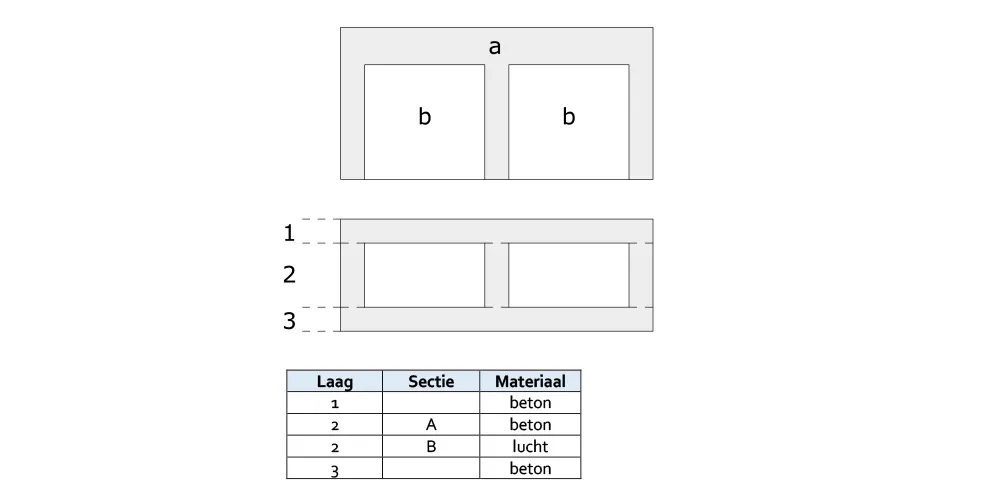
The Belgian standards committee E125 ‘Masonry’ has drawn up new tables based on Belgian configurations. These tables will soon be published in the first national annex to NBN EN 1745. The λ-values in the tables have been calculated using the simplified method set out in NBN EN ISO 6946. This method is permitted under EPB regulations. The concrete masonry units are divided into layers and sections so that each element consists only of parts that are thermally homogeneous in themselves, either concrete or air. The tables give the ‘λ10, dry, masonry unit’ for different values of ‘ρ net, dry, concrete’, depending on the thickness of the cross webs, longitudinal webs and top shell of the concrete masonry units.
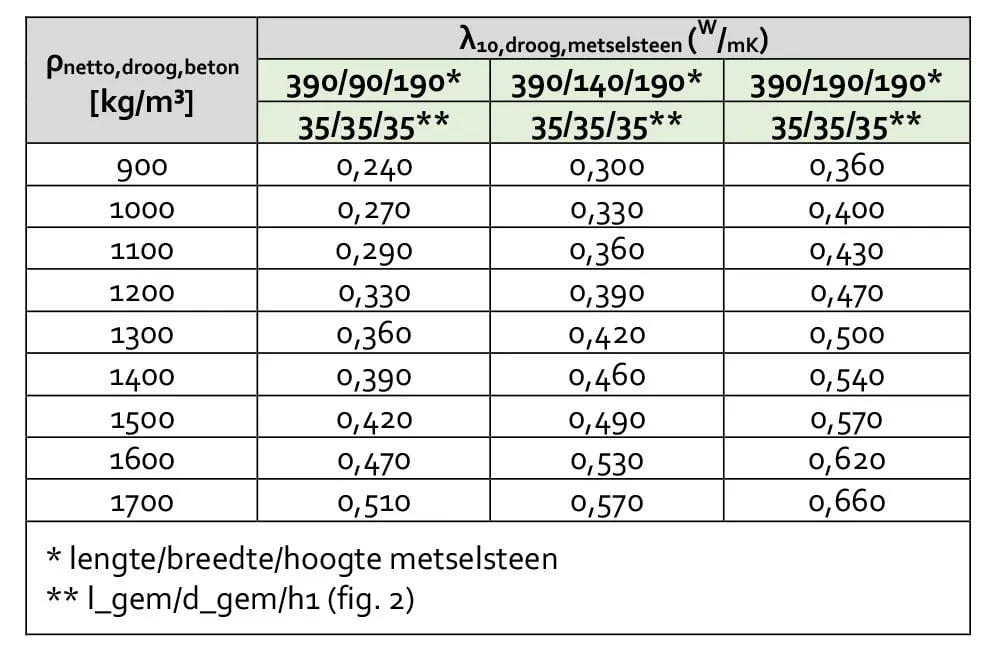
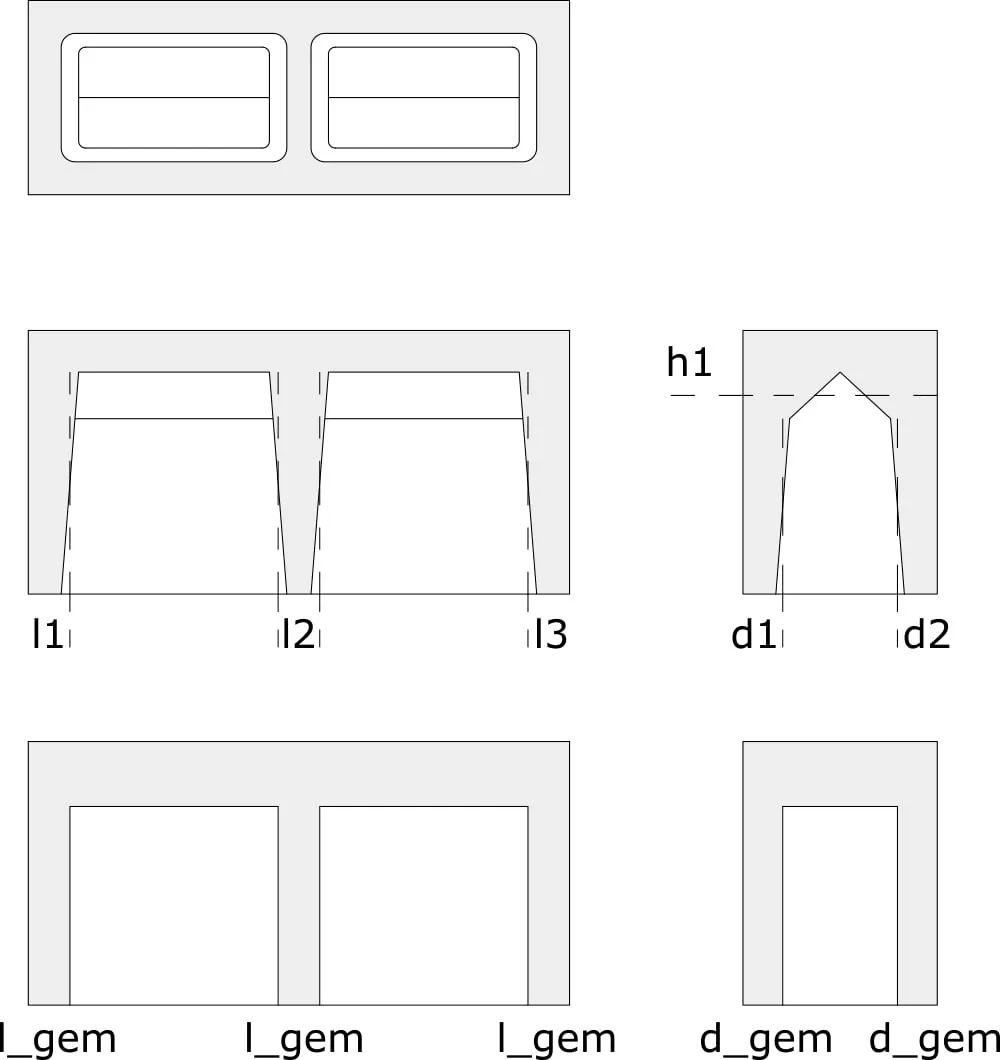
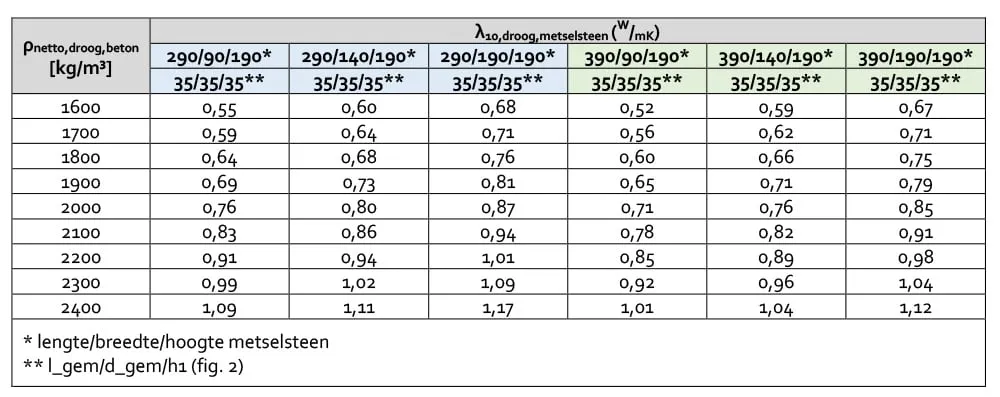
In practice, the thickness of the cross webs, longitudinal webs and top shell of concrete masonry units is not uniform throughout. For simplicity, therefore, the average value should be used in each case, calculated as half the sum of the minimum and maximum nominal values. Tables have been drawn up for different sizes of concrete masonry units with one, two and three cavities, using both conventional aggregates and expanded clay aggregate. By way of example, Tables 1 and 2 show some values for concrete masonry units with two cavities.
Hollow concrete masonry units make only a limited contribution to the thermal resistance of a building’s envelope. The new tables make it much easier to declare the thermal performance of hollow concrete masonry units. Their values also closely reflect real-world performance. These values will be added to the EPB product data database and can then be used
under EPB regulations.
Question about this story? Ask your question
Keep following this
Get an email when a new story is published. No account needed.
- SubjectConcrete and steel construction