Concrete and steel construction
Three striking features in precast concrete
Text FEBE, Tim JanssensImage Corentin Haubruge, CRH, LUCID
The FEBE Elements Awards were presented at Skyline Park in Izegem on 30 November 2023. As is customary each year, the precast concrete sector recognised inspiring projects in five different categories. This article takes a closer look at three standout winners: Basisschool Hofkouter in Sint-Lievens-Houtem, ZIN in No(o)rd in Brussels and Pier Blankenberge.
A stylish school building
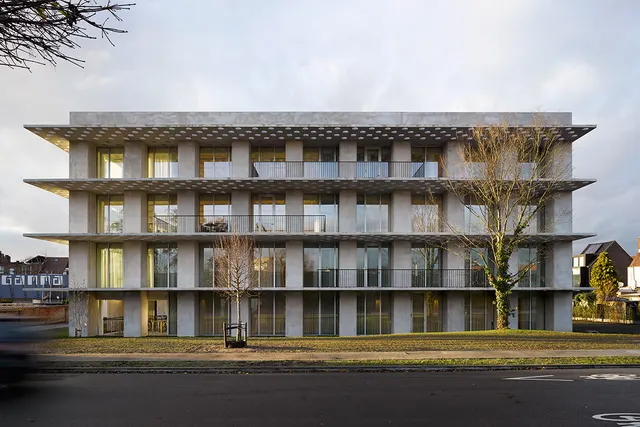
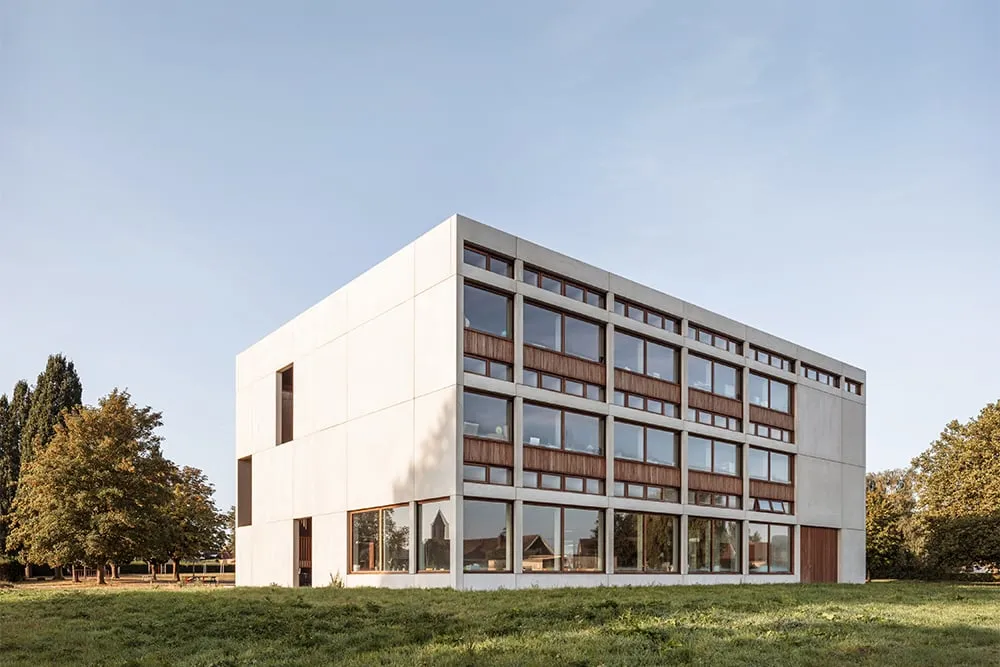
Basisschool Hofkouter in Sint-Lievens-Houtem, designed by Geert De Groote Architecten and Isabelle Jacques–Bernard Wittevrongel architecten, was named winner in the ‘Precast in Buildings’ category. The ambition was to create a monolithic building with the flexibility needed to accommodate pedagogical developments. Concrete was the material of choice from the outset, both inside and out. The refined load-bearing exposed concrete elements serve several purposes: providing mass and thermal inertia, ensuring acoustic comfort and, of course, delivering a high-quality aesthetic finish. The necessary, repetitive and carefully controlled joint layout introduces a clean rhythm and forms the ornament of the interior and exterior surfaces. The jury praised the “particularly elegant architecture that tells many stories” and described this outstanding example of school construction as a project demonstrating how precast concrete can be used to create timeless, sustainable and future-oriented buildings. “The exposed load-bearing precast concrete elements allow users to experience the robustness of the building, while the detailing of the elements demonstrates their refinement. The horizontal precast concrete overhangs provide a protective skin that regulates the indoor climate.”
Circularity is a key strength
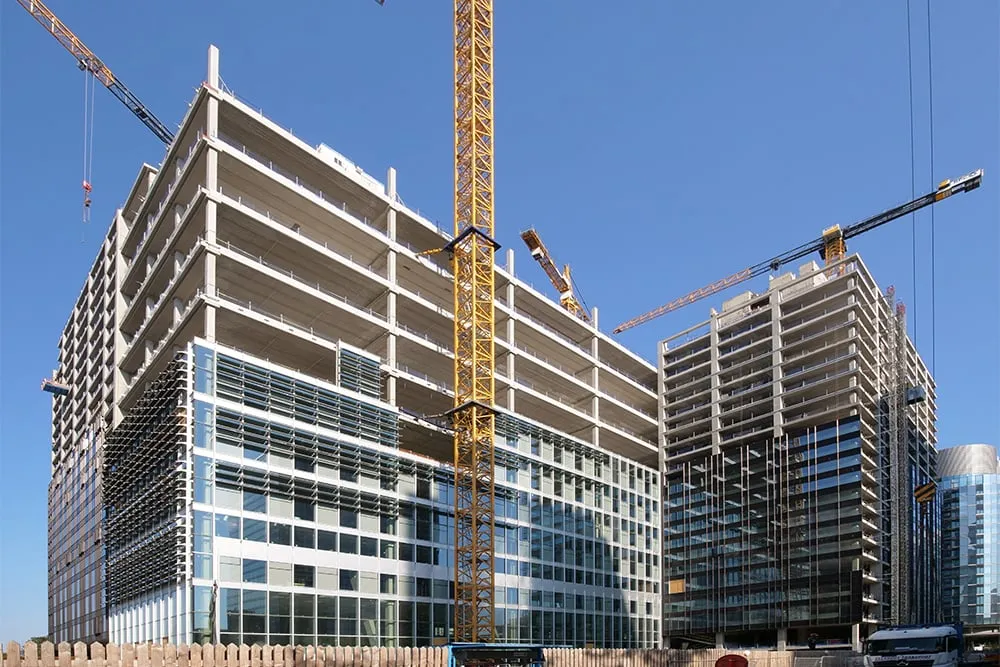
In the ‘Precast in Structures’ category, which focuses on prefabricated structures where conceptual and functional aspects take precedence, the top prize went to ZIN in No(o)rd by Jaspers-Eyers Architects, 51N4E and l’AUC. As part of this much-discussed circular renovation project, the WTC I & II towers in the heart of Brussels’ Northern Quarter are being transformed into an open, hybrid complex of offices, apartments and a hotel, complemented by a public conservatory and a panoramic roof garden. Maximising the reuse of the existing structure is one of the project’s key priorities. The foundations, underground floors and central concrete cores of the former towers account for more than 60 % of their original weight, so they have been retained. A striking precast concrete structure with fourteen double-height floors is suspended between the former cores. On the single-height levels, U-shaped precast columns house the fresh air supply as a built-in shaft, limiting the ductwork in the ceilings or floors. Precast concrete allows for optimal spans, minimising the amount of vertical structure and concrete required. By leaving the concrete exposed throughout, the building’s timeless construction is made tangible to its users. In addition, rubble from the demolition of the former towers was reused as aggregate in the new precast concrete elements, earning the project a Cradle to Cradle Silver label.
A sustainable coastal landmark
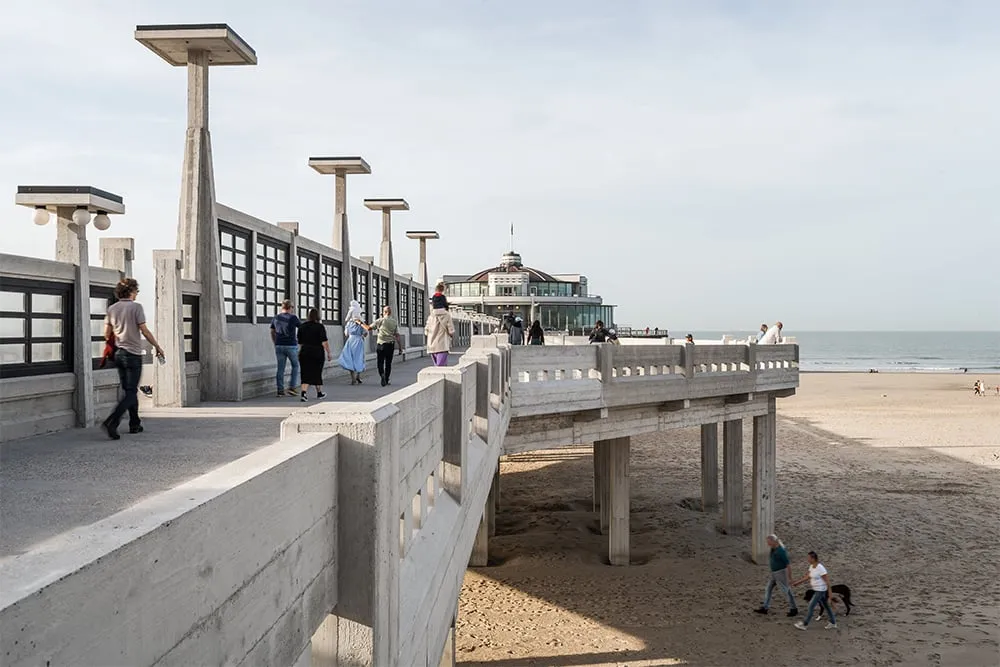
Last but not least, we take a closer look at the winner in the ‘Outstanding Precast’ category, where sustainability in all its aspects is the primary criterion. B-juxta and Agentschap Onroerend Erfgoed reconstructed the promenade of Blankenberge’s iconic Art Deco pier to match the original 1933 design. The monolithic structure is made of concrete and is 350 metres long. The beams, parapets and windbreaks were prefabricated. To limit the number of joints, the elements are connected to one another or to the components cast in situ, such as the columns and floor slab, using so-called ‘wet joints’. The high level of finish was the designers’ main reason for opting to prefabricate part of the structure. The elements have a consistent colour, and the optimised concrete mix ensures a long service life. The fact that choosing precast also shortened the construction period was an added bonus.
Question about this story? Ask your question
Keep following this
Get an email when a new story is published. No account needed.
- SubjectConcrete and steel construction