“Circularity is about more than just the product”
Bricks, clay roof tiles and clay pavers are inherently durable and circular. But circularity is about more than just the product. That, at least, is Wienerberger’s view. By introducing ClickBrick, a demountable brick façade system, repurposing brick rubble in its production process and actively participating in numerous research and pilot projects on reuse, the manufacturer puts its all-encompassing circular strategy into practice every day.
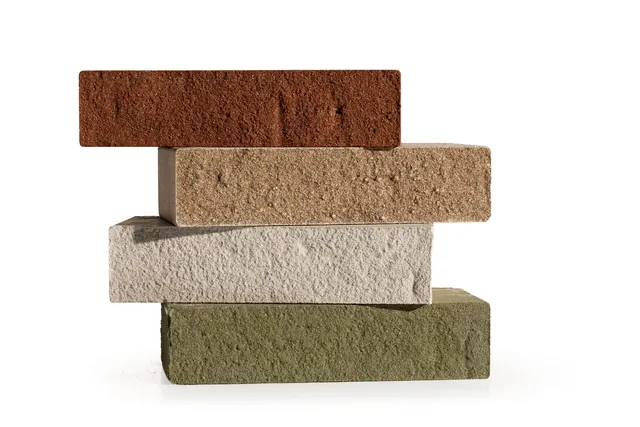
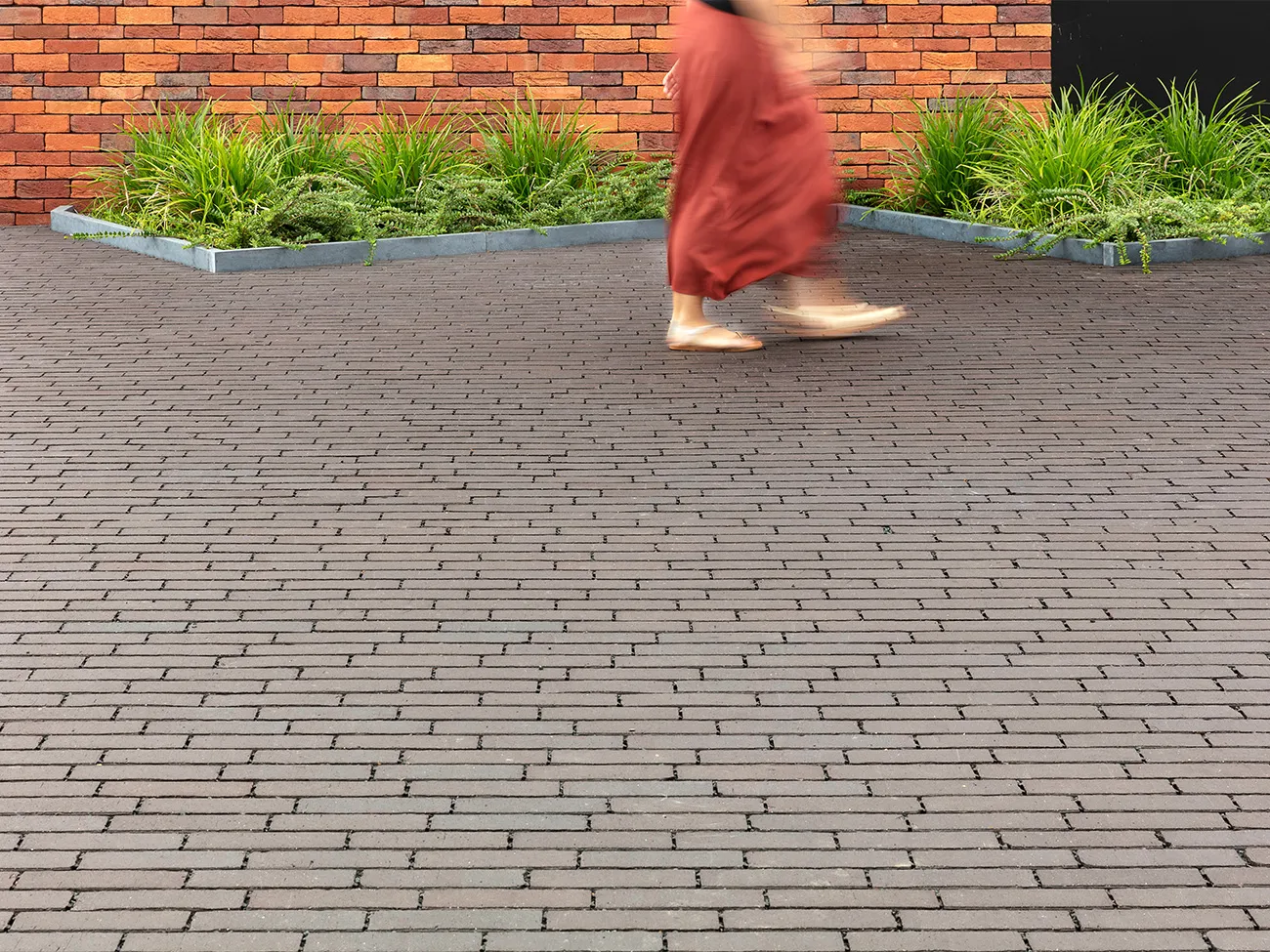
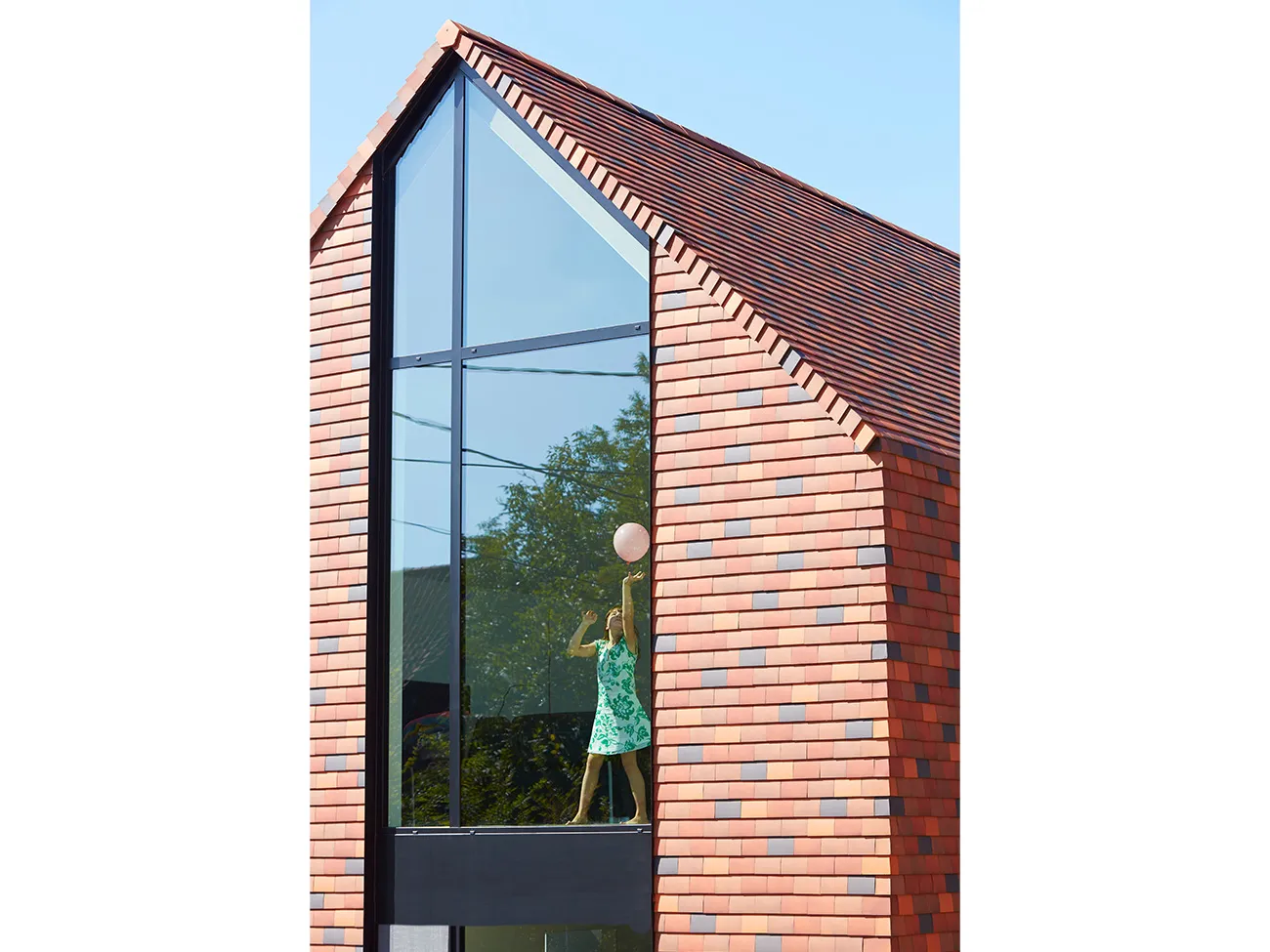
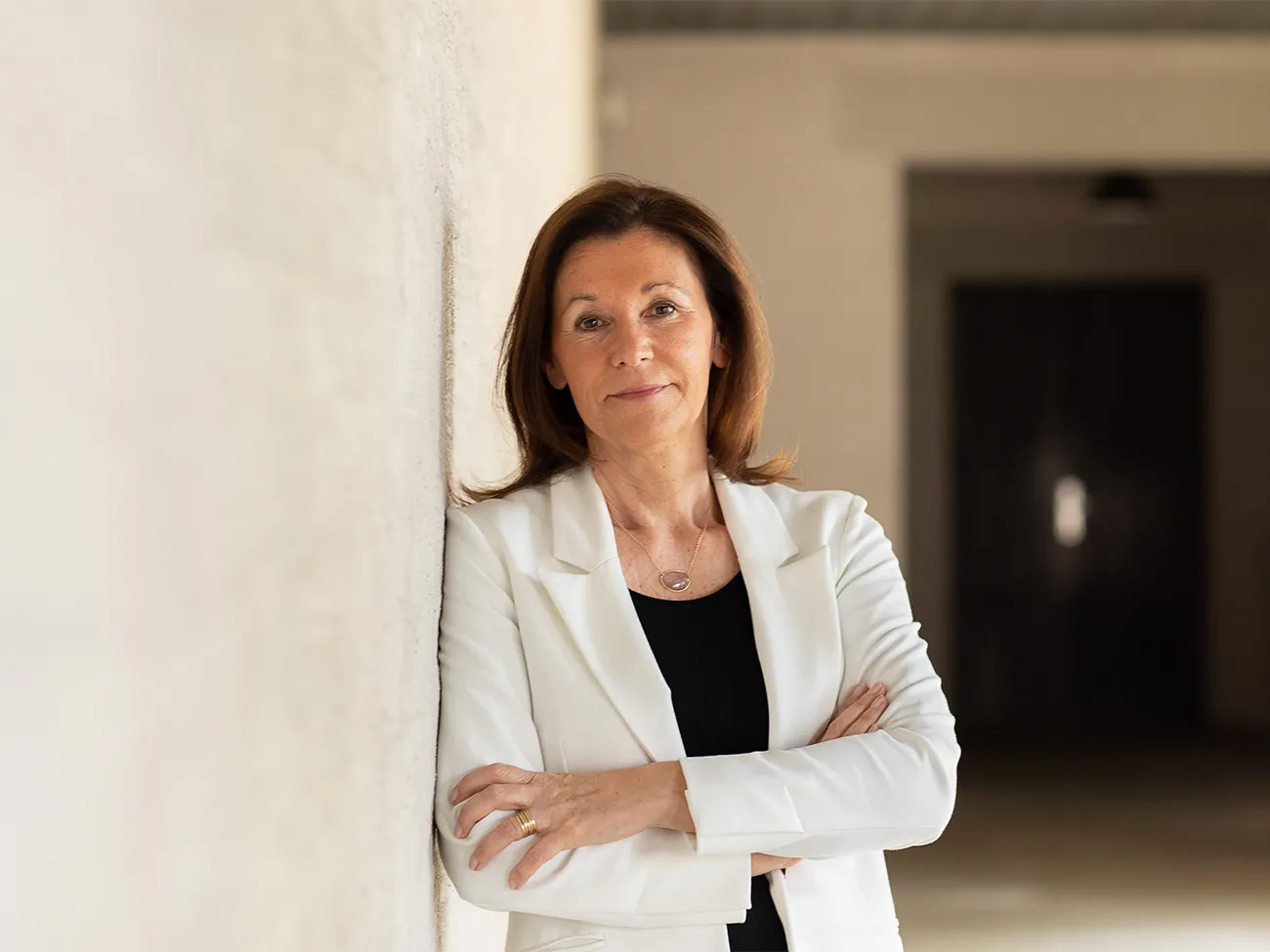
“Our bricks, clay roof tiles and clay pavers have a long service life and are robust,” says Katrien Nottebaert, CMO at Wienerberger. “Our ceramic products can be reused perfectly well in another building project in the future, provided the design process takes demountable connections into account. Take our roof tiles, for example: their mechanical fixings make them easy to remove and reuse in a new project. Our clay pavers are also ideally suited to reuse, without leaving any traces behind.”
Demountable brick façade
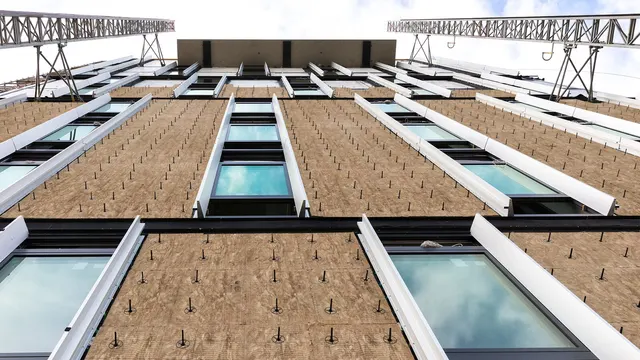
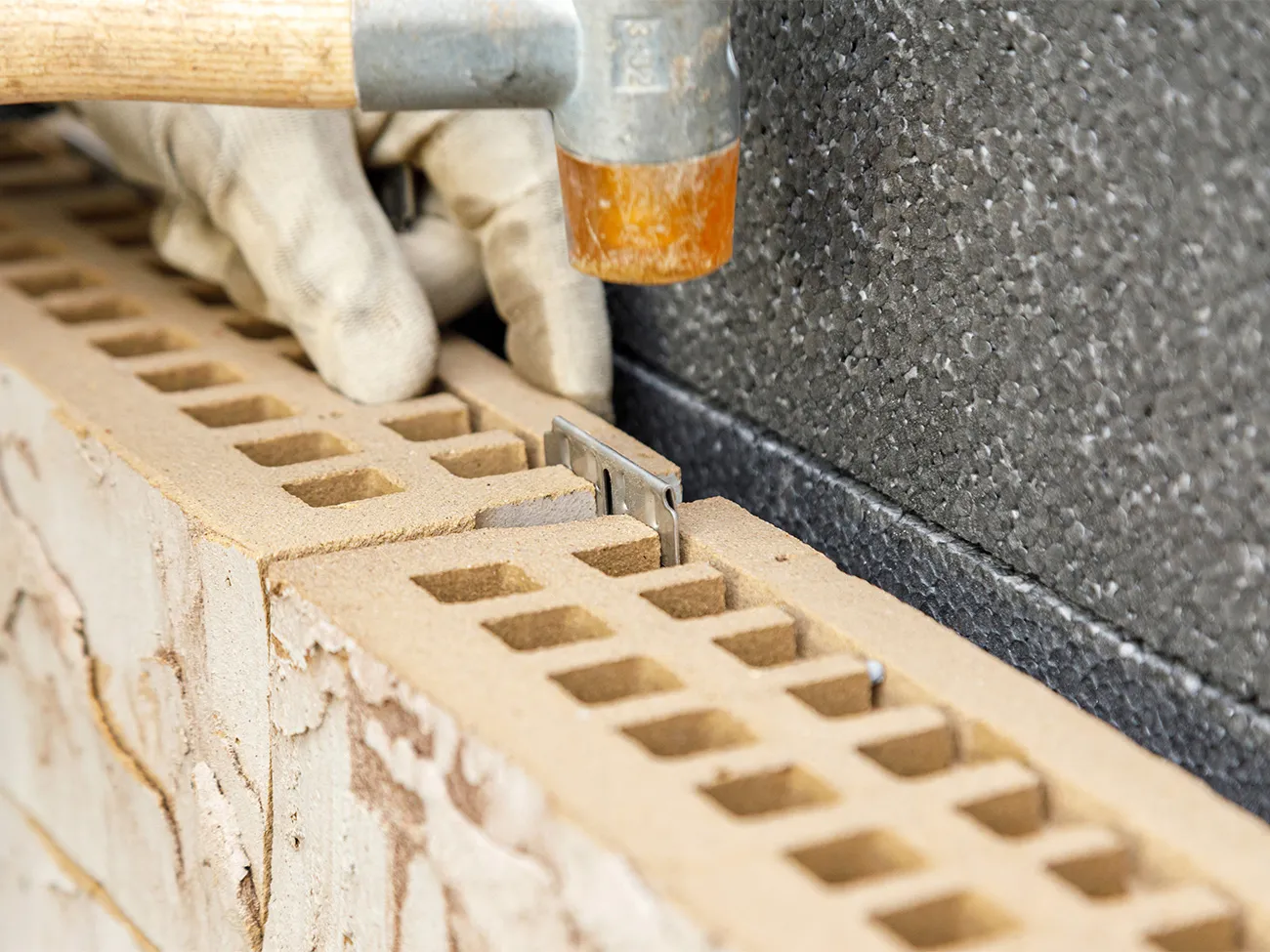
Traditionally laid facing bricks can always be reused, but this is often labour-intensive, making reuse uneconomic. Wienerberger is changing that with a demountable solution for external walls. “ClickBrick is a modular, dry-stack ceramic system,” explains Katrien Nottebaert. “These demountable facing bricks are mechanically
anchored to the supporting structure using stainless steel cavity wall ties and clips. The anchoring is so robust that the façade system can withstand high wind loads without deforming. Another obvious benefit is that it is quick and easy to install.”
ClickBrick has proved its qualities time and again on projects abroad, and several projects are currently under way in Belgium too. “These pilot projects give us the opportunity to test both the system’s ease of use and its cost. We apply what we learn to future projects,” says Katrien Nottebaert. A study carried out in collaboration with VUB also confirms that ClickBrick can be reused: after thirty years, the circular dry-stack system retains 70 % of its value when dismantled and can be used perfectly well in a subsequent building project. Even after fifty years, the facing brick still has a residual value of 56 %. ClickBrick also has a low environmental impact, thanks in part to the absence of mortar and adhesive and the fact that the system requires just two materials: brick and metal.
Building with lime mortar
To make the recovery of conventional bricks more cost-effective too, Wienerberger is working with mortar manufacturers to explore the potential of lime mortars. “We want to find suitable lime mortars that make it easier to separate facing bricks from the mortar during demolition, so they can be recovered cost-effectively,” says Katrien Nottebaert. This is also being tested in practice on a project for Wonen Regio Kortrijk, designed by MAKER and TETRA architecten. There, the century-old facing bricks and clay roof tiles from eighteen social housing units in Tuighuisstraat are being reused as much as possible in the new homes.
Closing the material loop
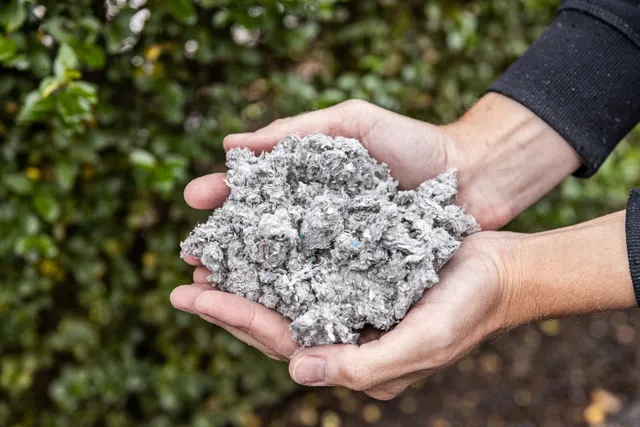
Wienerberger’s circular vision extends beyond its finished products. The company is already demonstrating in practice that brick rubble can be processed into new clay products. “We already repurpose 100 % of our firing waste and factory brick rubble in our production process,” says Katrien Nottebaert.
Although clay products are inherently recyclable, they are often mixed with other materials in construction waste during demolition, which usually results in downcycling. To move towards higher-quality recycling, Wienerberger is working with Tracimat on the ‘Data-driven sloop en recyclage’ project, with the aim of closing the material loop as far as possible through reuse and recycling. “We aim to match supply and demand more effectively by making data from demolition inventories available in the right way and at the right time.”
Making urban mining easier to implement
Wienerberger sees its responsibility in the circular transition as extending beyond its own business strategy. “To make urban mining easier to implement in the future, designers need to approach their projects with the right mindset. Where possible, we advise them on key considerations in the design process: avoid what is unnecessary, design with the building’s end of life in mind, opt for a layered construction and consider a demountable structure,” says Katrien Nottebaert.
Een zakelijke vraag aan Wienerberger nv? Get in touch
Companies in this story
Keep following this
Get an email when a new story is published. No account needed.
- SubjectYearbook
- CompanyWienerberger nv