“Heat recovery is an essential part of the energy transition”
Text Tim JanssensImage David Plas, EQUANS
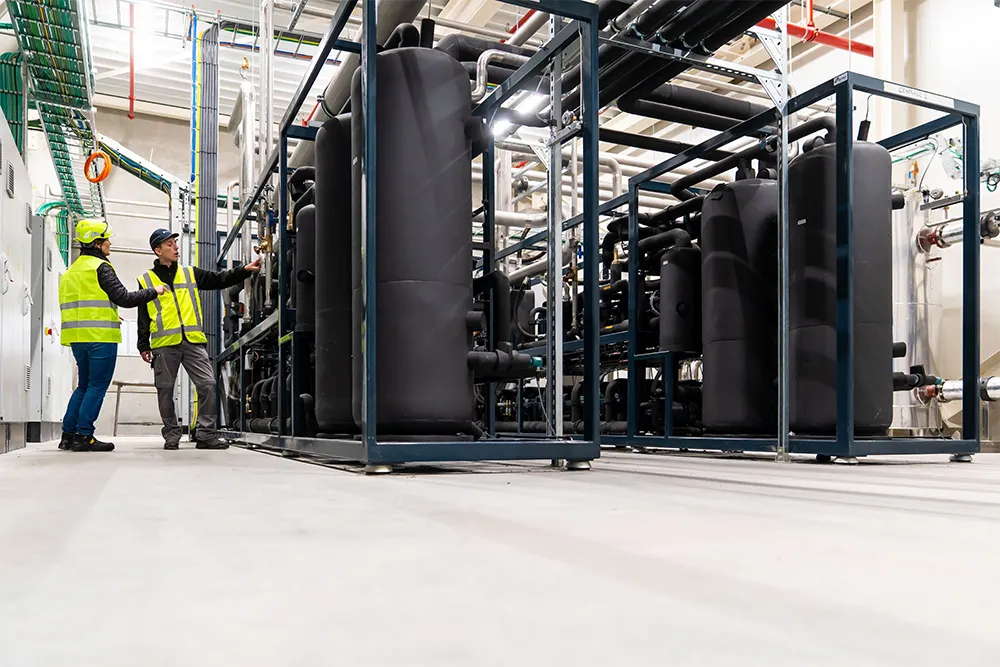
Governments and businesses are stepping up the transition to renewable energy, with the EU’s 2050 targets as the ultimate goal. This means they must not only invest in sustainable technologies, but also make every effort to use energy efficiently and avoid waste. Combined heat and power (CHP), which recovers heat, and other technologies are therefore a key priority, both environmentally and economically. One specialist area in which Equans has built up expertise over many years, as part of its comprehensive energy management offering. “In many cases, heat recovery can be a key piece of the puzzle.”
The principle behind heat recovery is as simple as it is ingenious: rather than releasing waste heat into the atmosphere, capture it and put it to use heating buildings or producing domestic hot water. Despite its clear advantages, this is a relatively recent concept, says Jeroen Vander Eeckt, Business Developer at Equans BeLux. “Ten years ago, primary energy was fairly cheap and there was no European Green Deal. There was little immediate need for heat recovery, but since then we have been through a major energy crisis and the legislative framework has become wholly focused on achieving CO2 neutrality by 2050. Demand has risen sharply for energy-efficient solutions that are also economically viable. As an essential part of the energy transition, heat recovery can be a key piece of the puzzle for many governments and businesses.”
Huge potential
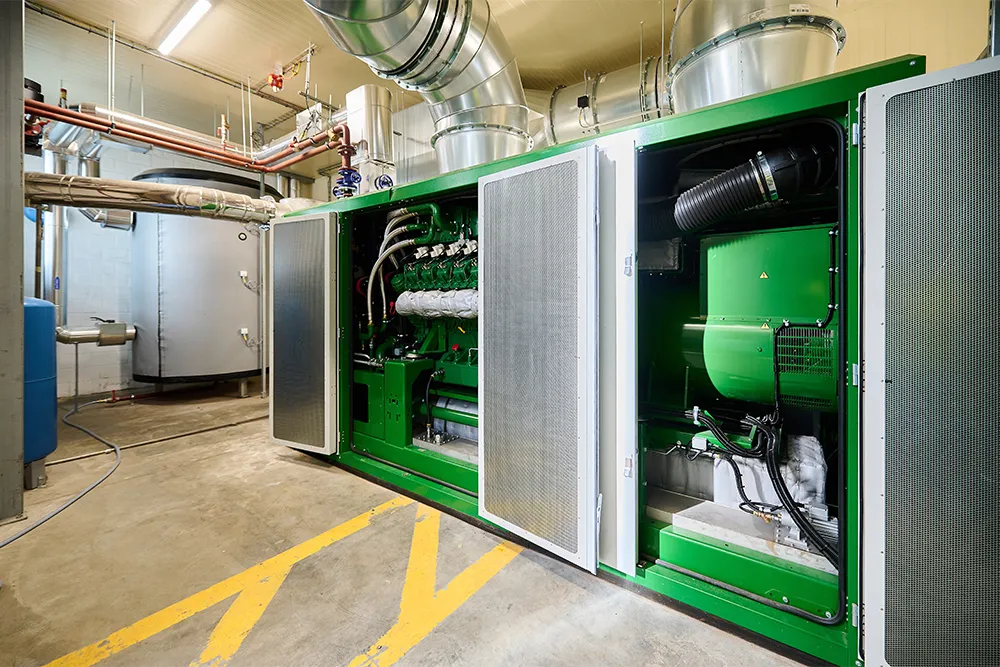
There are several ways to recover heat, including a Type D ventilation system or a district heating network. Another promising technology is combined heat and power. Gas is used to drive an engine, turbine or fuel cell, which turns an alternator to generate electricity. The heat generated by the alternator is recovered via a heat exchanger, as is the heat in the combustion gases, through condensation. The result: up to 20 % less fuel consumption than with separate generation of electricity and heat, lower emissions of CO2 and other harmful gases, and an energy bill up to 10 % lower, provided the system is correctly sized.
At Equans, they have strong confidence in the potential of CHP systems, which can add value in both smart buildings and industrial settings. “We have two dedicated teams for this, supported by a third team of around twenty technicians specialising in the maintenance of CHP systems and emergency generators,” explains Jeroen Vander Eeckt. “Our greatest strength is that we take care of everything for our customers, offering a complete service that is second to none on the market: design, installation, monitoring, maintenance and, if required, (co-)financing. This means they do not have to worry about the practicalities or the initial investment, while sharing in the environmental and financial gains with us. A CHP system is often part of a wider solution, such as an EPC contract. In these cases, we aim to optimise energy performance by combining different technologies with close monitoring, intelligent control and high-quality maintenance.”
Always beneficial
One example is the City of Geel, where Equans installed several CHP systems under a performance-based contract. “An important point to note is that we look at the savings across the entire building portfolio, not just at the sites where the systems are installed. Gas consumption will rise locally, but transporting the waste heat will significantly reduce energy consumption elsewhere, making the overall picture more favourable,” explains project manager Julie Van Simaeys. Another excellent reference is the CHP system Equans installed at Christeyns, a Belgian global player in the chemicals and detergents industry. The company was looking for a sustainable, future-proof solution to reduce steam consumption, and therefore its CO2 impact and energy bill. One element of this is a 550 kWe CHP system that generates more than 4,100 MWh of electricity and 4,900 MWh of heat each year. The heat from the gas engine that powers the system is used to heat two halls. Any surplus waste heat is transported via a district heating network to neighbouring apartment buildings. In short, nothing goes to waste. The same applies at Sligro Food Group, which equipped its new distribution centre in Evergem with refrigerated and frozen storage areas that allow heat recovery. The waste heat is used, among other things, to heat water via a heat exchanger in a heat pump, and to provide underfloor heating in the offices, meeting rooms and the floor of the freezer room.
With gas and electricity prices now more volatile than before the coronavirus crisis, there is greater caution around CHP technology. Equans has also noticed that some customers are hesitating to take the plunge. This is misplaced, stresses Julie Van Simaeys. “The key factor determining the return on a CHP system is the difference between gas and electricity prices, and even under current market conditions that difference is large enough to make CHP more energy-efficient and economically viable. Heat pumps and district heating networks are also gaining ground, but that does not change the fact that CHP remains an important part of the solution in many cases, particularly where there is constant demand for heat and electricity, as in hospitals, airports and residential care centres. We recently installed the first CHP system at Aquafin to run on biogas, which is no longer burned as a local waste product but put to practical use to generate green electricity. It will therefore remain a relevant technology even in a carbon-neutral world.” Jeroen Vander Eeckt wholeheartedly agrees: “If designed, sized and implemented intelligently, and combined with other technologies where necessary, a CHP system is always beneficial both environmentally and economically. That is why it is important for an energy expert to understand a customer’s situation. This calls for specialist expertise, which we have in abundance at Equans.”
Question about this story? Ask your question
Keep following this
Get an email when a new story is published. No account needed.
- SubjectYearbook