Heating water in accordance with VDI 2035: reducing risks and maximising performance
Text Spirotech, Tim JanssensImage Tim Janssens
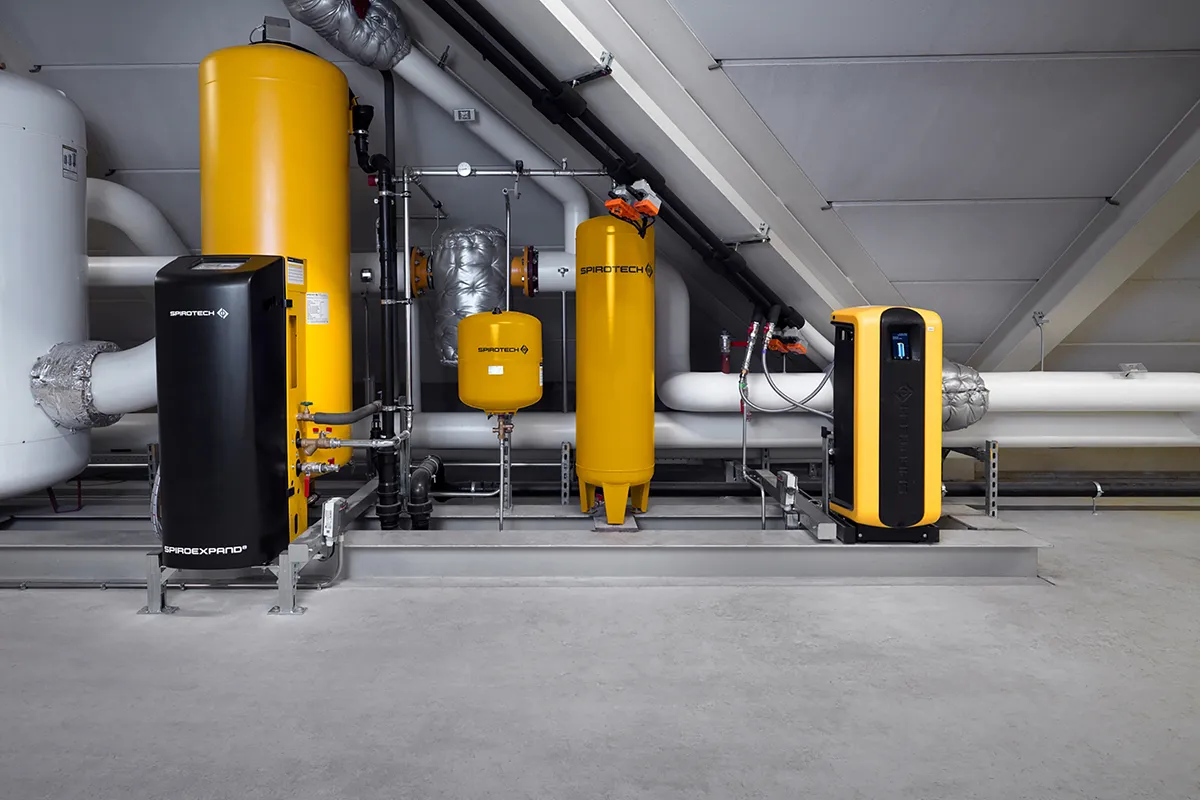
Good system water quality is crucial to optimising the performance and service life of energy-efficient heating systems. The VDI 2035 standard sets out the rules for designing, installing, filling and maintaining heating systems (< 100°C) in buildings, with the aim of preventing the three classic failure mechanisms: limescale formation, corrosion and biological growth. Spirotech offers a wide range of solutions to help meet these requirements.
VDI 2035 is a German guideline that applies to building heating systems operating at temperatures of up to 100 °C, with the exception of district heating systems, which are covered by the AGFW 510 guidelines, and systems using additives such as antifreeze (for example, glycol), corrosion inhibitors and stabilisers. As a standard for manufacturers and installers, this widely adopted guideline focuses, among other things, on water quality and preventing limescale formation and corrosion.
Preventing limescale formation through demineralisation
Limescale formation reduces heat transfer, resulting in lower heating performance and higher energy costs. In extreme cases, it can even cause damage through overheating and stress cracks in heat exchangers. Reducing the risk of limescale formation starts with the hardness of the filling and top-up water. If the hardness of the filling and top-up water needs to be reduced, Spirotech recommends demineralising it with SpiroPure. “All SpiroPure filling and top-up systems use a special resin that not only removes residual hardness and dissolved salts from the heating water, but also keeps the pH value stable for longer. SpiroPure also reduces the concentration of chlorides, sulphates and nitrates, lowering the risk of corrosion. This makes demineralisation with SpiroPure more suitable than using standard demineralised water,” the company says.
Preventing corrosion: conductivity, pH and oxygen
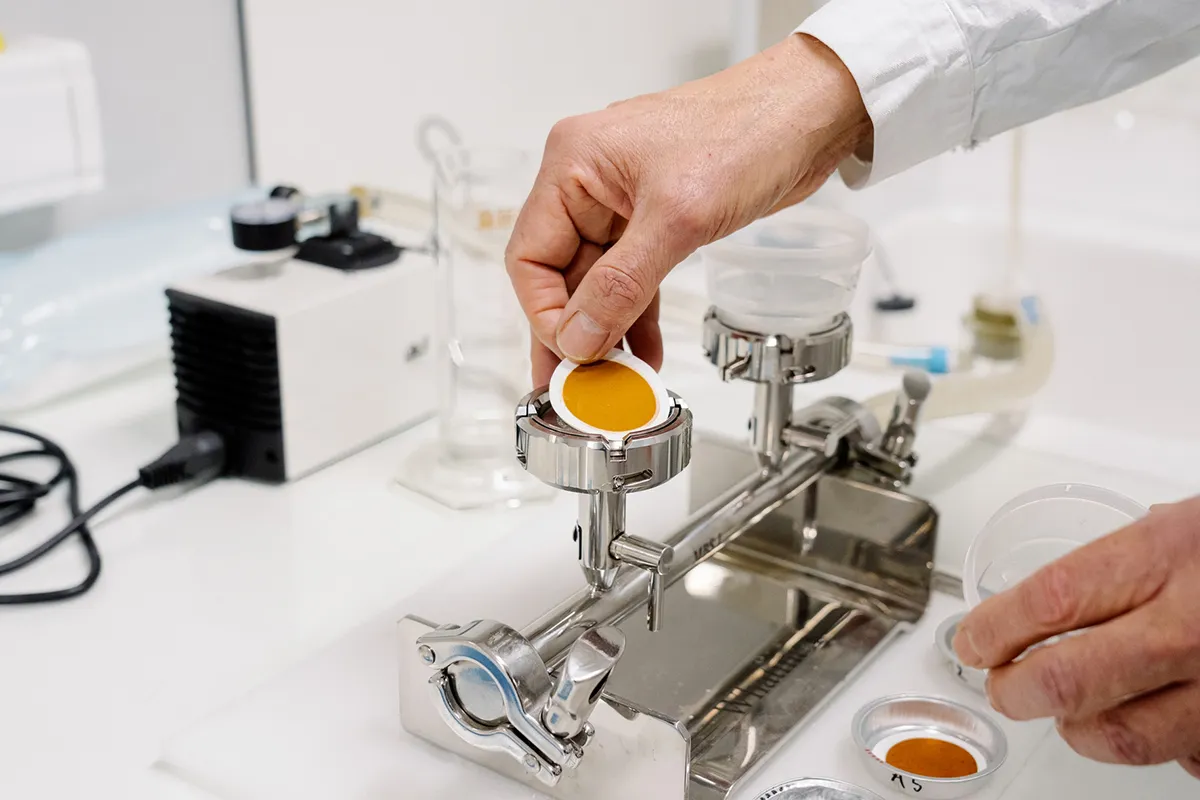
Corrosion is the main cause of faults and damage in heating systems. Several parameters affect corrosion in heating water: conductivity, oxygen content, pH value, installation materials and microbiology. Spirotech offers various solutions to optimise these parameters and significantly reduce the risk of corrosion. In addition to SpiroPure, which has a positive effect on conductivity by demineralising the water to reduce its salt content, there is SpiroTrap MB3/MBL/Magnet, a magnetic dirt separator that helps remove dirt particles and magnetite. VDI 2035 recommends regularly monitoring water quality, and Spirotech offers a detailed laboratory analysis for this purpose (SpiroCare). Oxygen levels can in turn be optimised by removing air with automatic quick air vents (SpiroTop) and microbubble air separators (SpiroVent), as well as by degassing system and top-up water with a fully automatic vacuum degasser (SpiroVent Superior).
The basis for high-performance, trouble-free systems
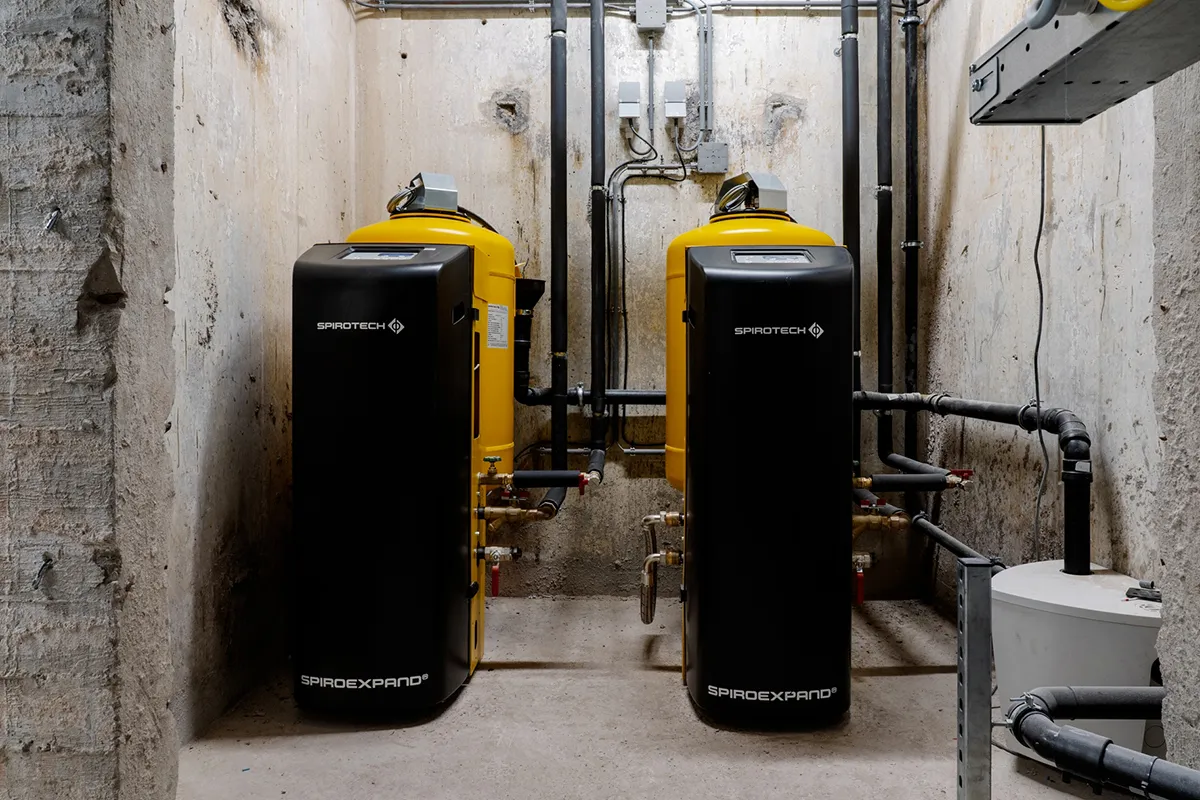
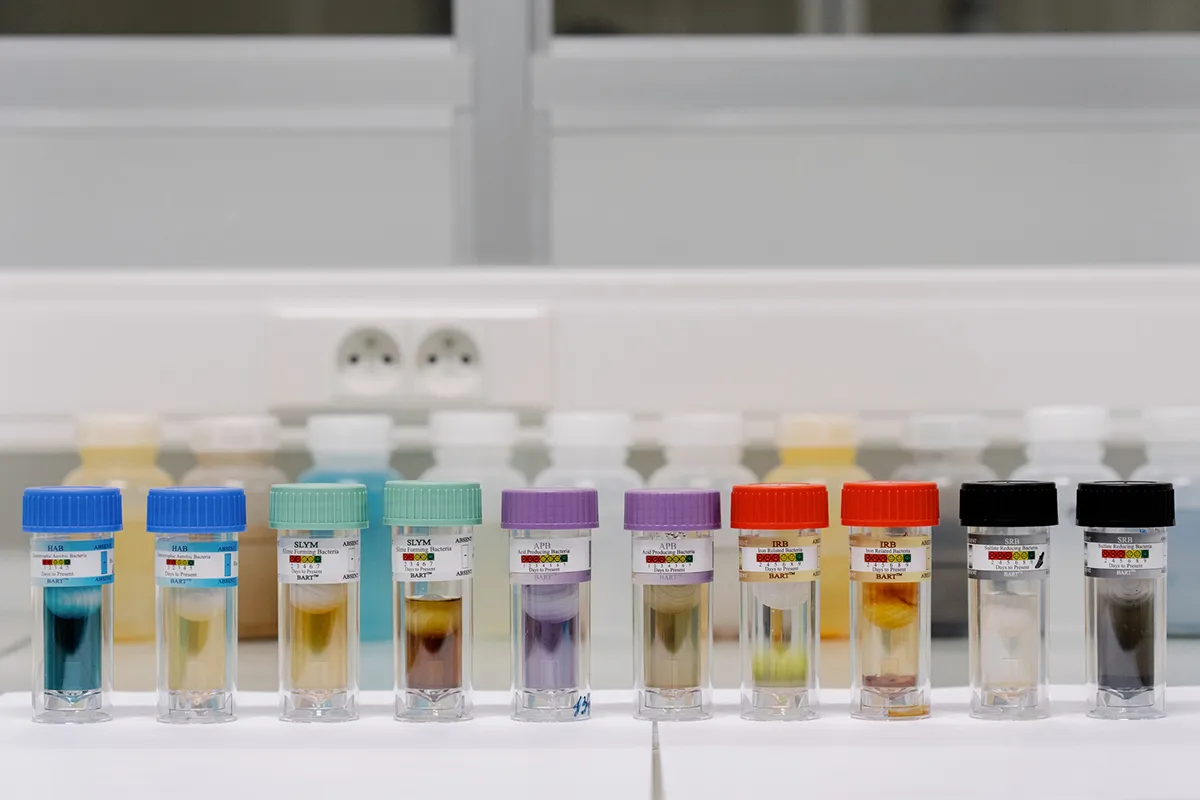
VDI 2035 also includes several other requirements that Spirotech is well placed to address. Gas and air bubbles, which can reduce heat transfer, can be effectively removed with SpiroVent and SpiroVent Superior. Microbiological growth, which is more likely at lower flow temperatures, for example in heat pump systems, can be assessed through SpiroCare. According to VDI 2035, pressure maintenance can have a significant effect on corrosion behaviour in heating systems. It can be ensured using fixed gas expansion vessels with high-quality diaphragms in combination with a vacuum degasser for smaller heating systems, or pump-controlled pressure maintenance systems that store excess system water in non-pressurised expansion vessels (SpiroExpand). Finally, Spiro-Plus flushing agents and additives help bring system water and the installation itself into top condition and keep them there. “Complying with VDI 2035 means reducing hardness, preferably through demineralisation, keeping conductivity and pH within limits, minimising oxygen ingress, continuously degassing and removing dirt, and ensuring stable pressure maintenance. Combining these measures with our targeted solutions for filling, air removal and degassing, dirt separation, analysis and pressure maintenance provides the ideal basis for high-performance, trouble-free heating systems,” Spirotech concludes.
Een zakelijke vraag aan Spirotech België? Get in touch
Companies in this story
Keep following this
Get an email when a new story is published. No account needed.
- SubjectYearbook
- CompanySpirotech België