How to choose the right automated warehouse solution
Text Lieke BousemaImage SSI SCHÄFER
Rising sales are driving increased product flows through logistics facilities. While this is great commercially, it is creating operational bottlenecks. Automation is essential to handle the deluge of orders. But where do you start? SSI SCHÄFER’s best practices can help you understand the process and the fundamentals of automated warehouse solutions. Together with Sales Manager Max Nijssen, we go through the key questions and most common solutions.
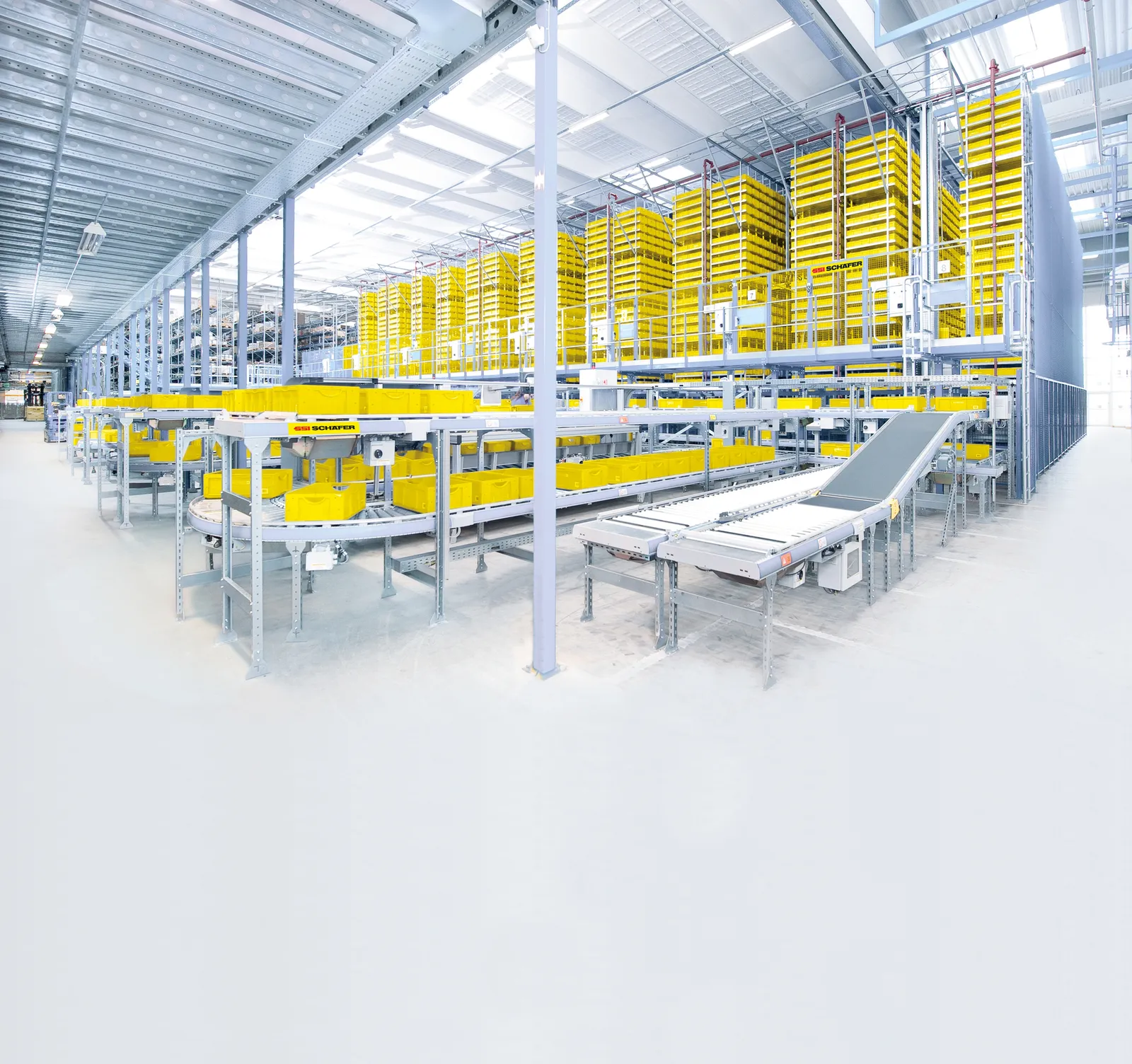
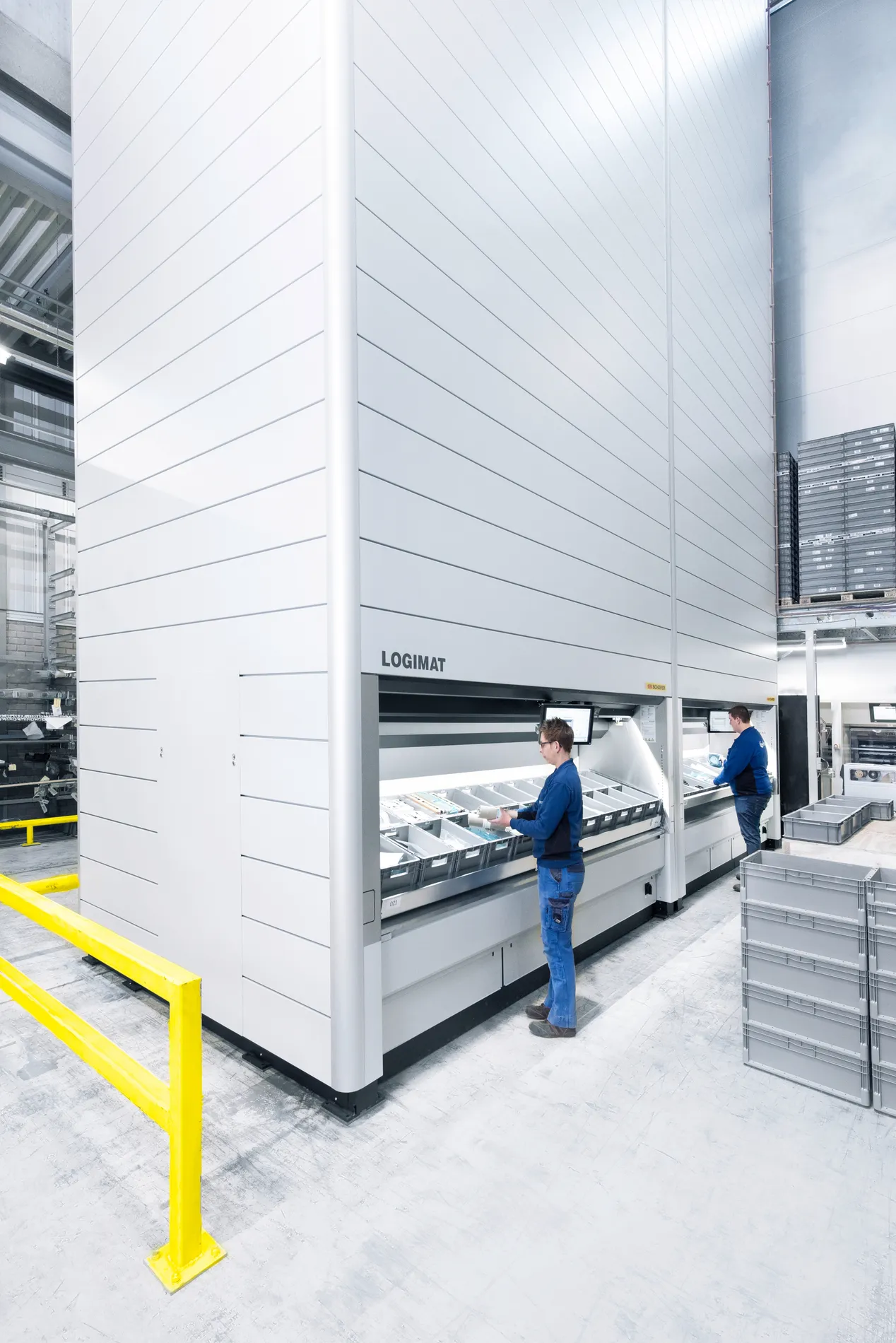
“Depending on their size, growth rate and the growth path they have in mind, companies consider different levels of automation, and we are happy to advise them,” begins Max Nijssen. “However, automation does not have to start with equipment. A first, smaller step could be to implement simple technology to reduce the need for manual labour or shorten process lead times. Installing a conveyor system can make it easier to connect workstations, while the Vertical Lift Module (VLM) is ideal for storing small parts and items. This module has been specifically designed both to address space constraints and to reduce picking errors.”
By combining these systems, employees working with a VLM no longer need to waste time delivering the retrieved product to the next station. The conveyor takes care of this. If a conveyor system takes up too much valuable floor space, an Automated Guided Vehicle (AGV) can provide the answer. “AGVs are also more flexible. They only need a rail or guide on the floor. And, thanks to their intelligent motion sensors, they can be used safely in manual warehouses with high pedestrian traffic.”
Full automation
Those looking to take things a step further can even opt for full automation, with minimal involvement in manual process handling. Such a solution might include shuttles for ambient, chilled or frozen storage areas, case-picking and piece-picking robots, order verification systems and various sensors. “But as I said earlier, automation does not have to start with equipment,” stresses Max Nijssen. “A Warehouse Management System can help with stock counting, order consolidation for faster and more efficient item picking, and clearer oversight of the process as a whole. Whatever form of automation you choose, it is crucial to break the process down into steps. First analyse the route products take through your logistics centre, from goods-in to dispatch, and then determine how each step can be carried out more efficiently.”
Goods-in area
Is product and tracking information for every item entered into the system as soon as it arrives? Are there scanners for pallet or carton labels? “These are things to consider if you want clear, accurate stock records, straightforward picking and replenishment,” says Nijssen. “Also look at how the goods-in area is currently set up. Are items moved manually or by conveyor to the depalletising or storage buffer? Is there a separate procedure for returned orders? How are these products checked and recorded before being stored or buffered? An automated sorting system or a separate conveyor could help speed up and simplify these processes.”
Order picking
Picking orders manually can be very time-consuming, even with perfect stock records, Max Nijssen notes. “It is more cost-effective to assign employees a single main task. For example, separate picking from packing or order consolidation at different stations. In that case, a conveyor system, an AGV or even a dedicated shuttle-type function can handle the delivery. Another option is to use robotics to pick items and assemble orders, or to do both.”
“All tasks in the dispatch area can be handled manually, but a little help from automation can significantly optimise the process. For example, routes and order details can be printed automatically and applied to the package. The label is scanned and the details added accordingly, which means fewer errors or mix-ups. This speeds up the entire process.”
Key considerations
When automation is on the horizon, dozens of decisions need to be made. This article has highlighted just a few crucial points. “For anyone who wants to learn more about this subject and the fundamentals of automated warehouse solutions, we have developed a best-practice guide that can be downloaded from our website,” says Max Nijssen, who offers one final tip: “Always allow for future growth by investing in scalable systems with room for more workstations, more machines, more orders, higher turnover and more people. We would be happy to explore the options with you.”
Een zakelijke vraag aan SSI Schäfer N.V./S.A.? Get in touch
Companies in this story

Keep following this
Get an email when a new story is published. No account needed.
- SubjectYearbook
- CompanySSI Schäfer N.V./S.A.