Modular construction: flexible and sustainable
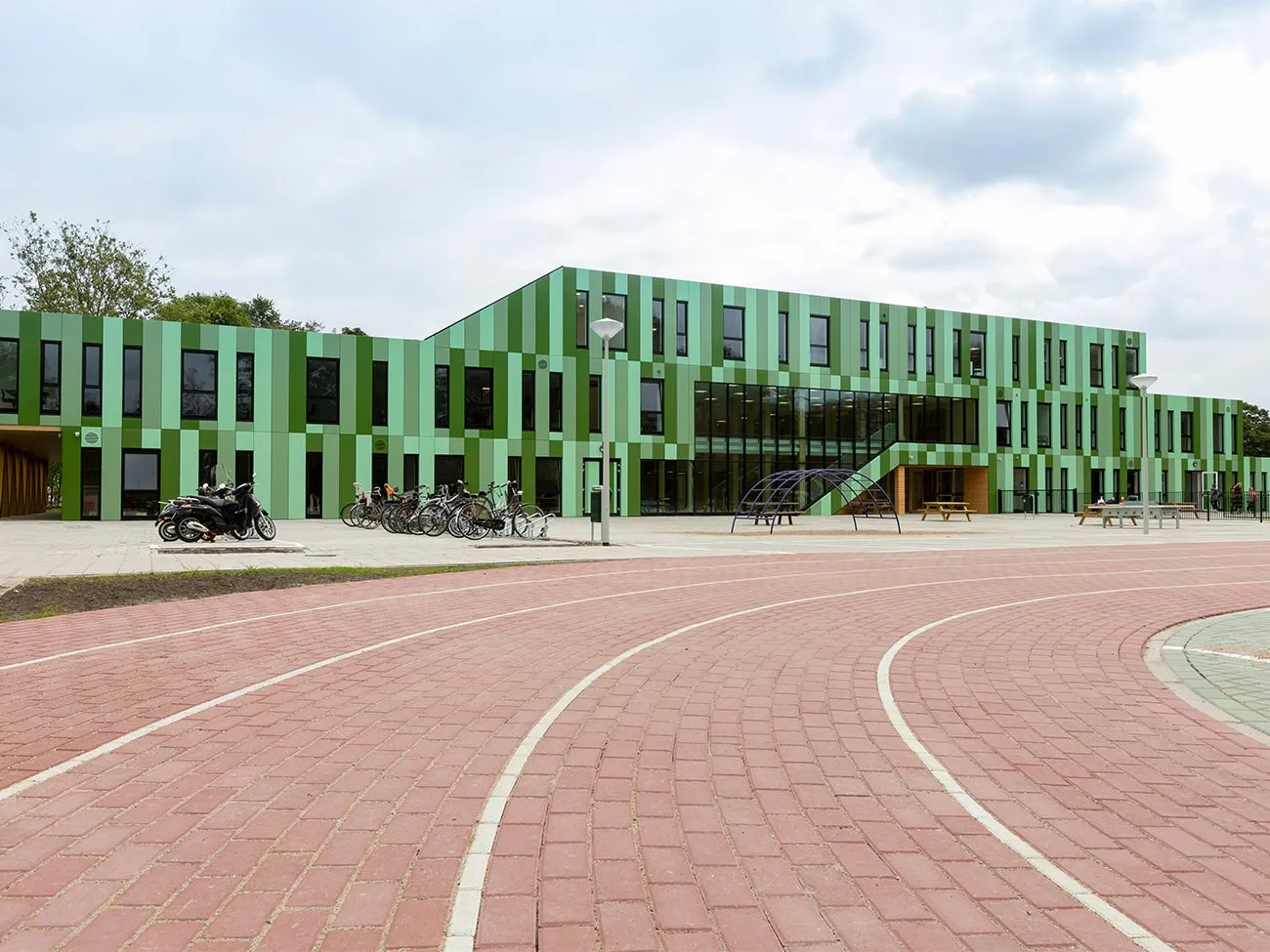
If our country is to make the transition to sustainable, circular construction, we need to take an innovative approach to our buildings. De Meeuw has the innovations to make this happen. The modular construction specialist offers high-quality solutions using temporary or permanent building units.
De Meeuw’s modular construction method offers many practical benefits. It is fast and flexible, while also sustainable. Complete building modules, including technical installations, are prefabricated in the company’s own production halls and assembled on site. The end client can choose the look, layout and finish they want.
Time savings
The production process comprises two streams. In the first hall, De Meeuw makes shell modules from large steel components. Employees pour a concrete floor there, creating a smooth finished surface that forms the base of the module. This semi-finished product is then taken to the assembly hall, where the modules are fully finished, including window frames, sanitary fittings and interior walls. “This allows us to produce fifteen to twenty modules a day,” says Koen Lismont, Director of Sales and Business Development at De Meeuw. “That represents a 50% time saving compared with traditional construction methods. And of course, we do not compromise on quality. It is above all the ideal working conditions that make this speed possible. We do not have to worry about weather delays, and our employees quickly become familiar with the specific tasks they have to carry out in the units.”
Levels of finish
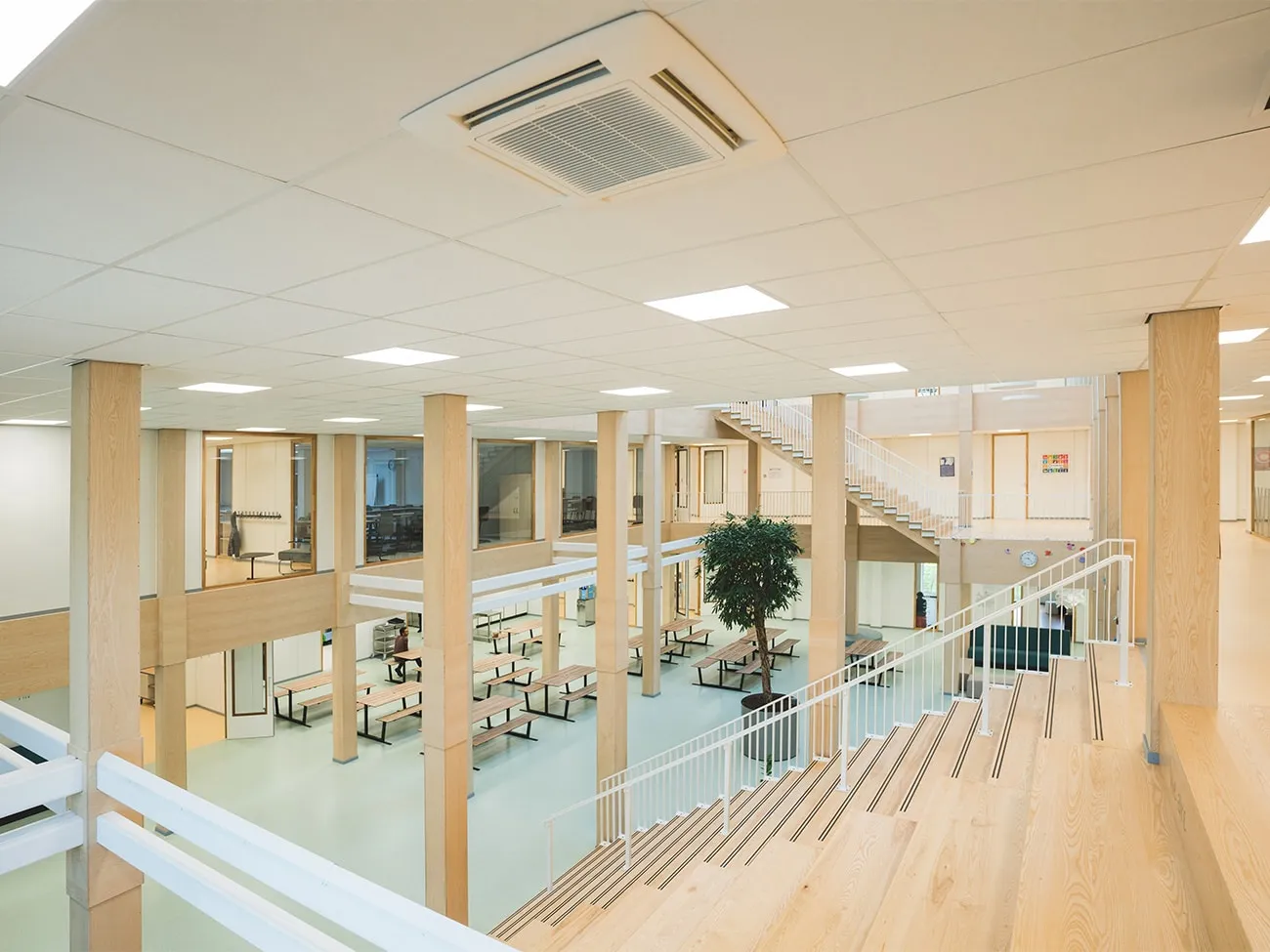
De Meeuw has long been known for its containers, which it produces using these fast, standardised construction methods. But the company offers much more, with different levels of finish that bridge the gap between temporary and permanent buildings. Lismont: “We also offer a ‘Deluxe & Complete’ solution, which is indistinguishable from a traditional building in terms of appearance and comfort. This solution may not yet be so well known in the business world, but it is already hugely popular in the healthcare sector and in school construction.”
Expats
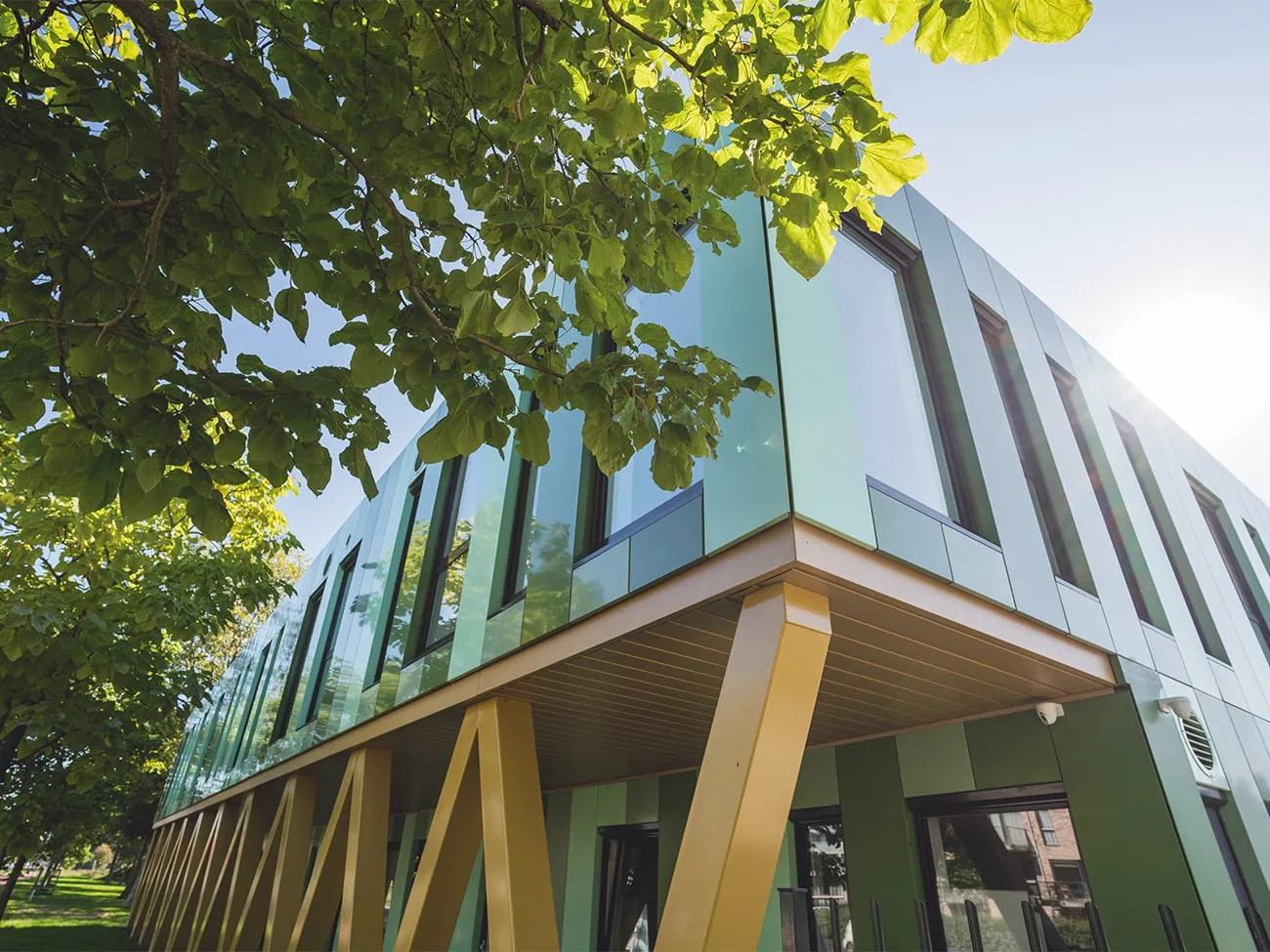
The International Community School in Amsterdam is a good example. Brexit caused demand for education for expatriate children in the Dutch capital to rise rapidly. De Meeuw therefore built a temporary modular school
building that is indistinguishable from a permanent structure. When the children move to a permanent school building in around five years, Amsterdam will put the temporary modules to use elsewhere in the city. De Meeuw took this into account when designing the project.
Keeping relocation in mind
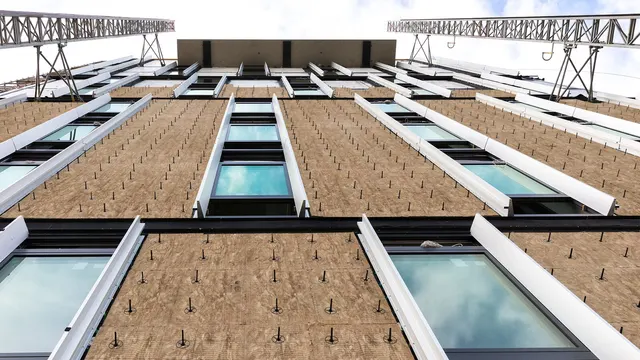
The modular nature of the building means it can easily be dismantled and relocated. “Yet you would never guess that this is a temporary, modular building,” says Jurgen Van Muylder, Sales Developer at De Meeuw. A separate façade has been fitted to the outside of the modules. “A so-called cassette façade, which gives the building a modern, permanent appearance without compromising its modularity or future relocatability.”
Environmental footprint
De Meeuw’s modular approach also helps the company keep the environmental footprint of its processes very small. “We aim to reuse as many materials as possible and put circular construction into practice,” says Lismont. “We can reuse our units from one building in other projects. We also recover components from units returned to us after a previous rental project when assembling new units. At our head office, we are also investing heavily in a second-hand market, selling items such as sanitary fittings and external joinery to DIY enthusiasts. We even go back to the raw material level. Used PVC flooring and sheet materials are returned to the supplier to be reused as raw materials in their own production.”
Circular revolution
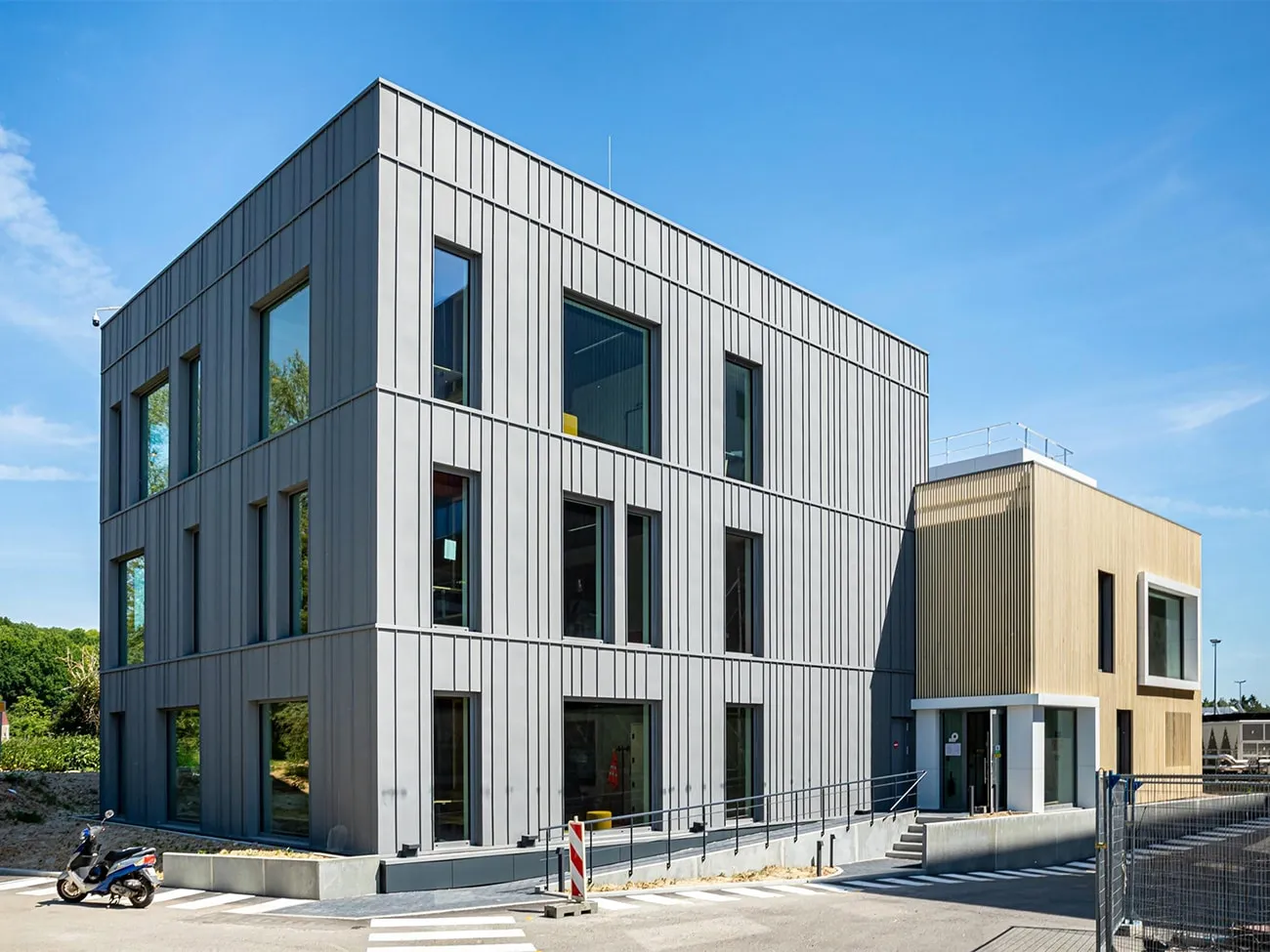
De Meeuw’s modules could bring about a circular revolution, particularly in the housing market. They can easily be adapted to changing housing needs over time. “Just imagine,” says Lismont. “A young couple is looking for an affordable first home. Three or so modules can already be combined to create a modern, fully fledged home. When their family grows, they simply add another module. And when the children eventually leave home, that module comes back to us. In future, a son or daughter moving away to study could even transport their unit to suitable accommodation in a university city. This flexible concept can easily respond to our customers’ changing needs. And it does so efficiently, not only for the customer, but also for the housing market as a whole.”
Expanding and downsizing
This flexibility also applies to businesses. With remote and flexible working on the rise, it is not easy for organisations to ensure their offices and business premises match their staffing needs. Modular construction lets you adapt your organisation quickly to changing circumstances. Both expansion and downsizing are possible. “We are therefore convinced that our modular construction method is the future for many organisations,” Lismont concludes.
Question about this story? Ask your question
Keep following this
Get an email when a new story is published. No account needed.
- SubjectYearbook