Optimal energy and comfort management thanks to Priva’s self-learning AI control system
Text Tim JanssensImage Tom van Huisstede
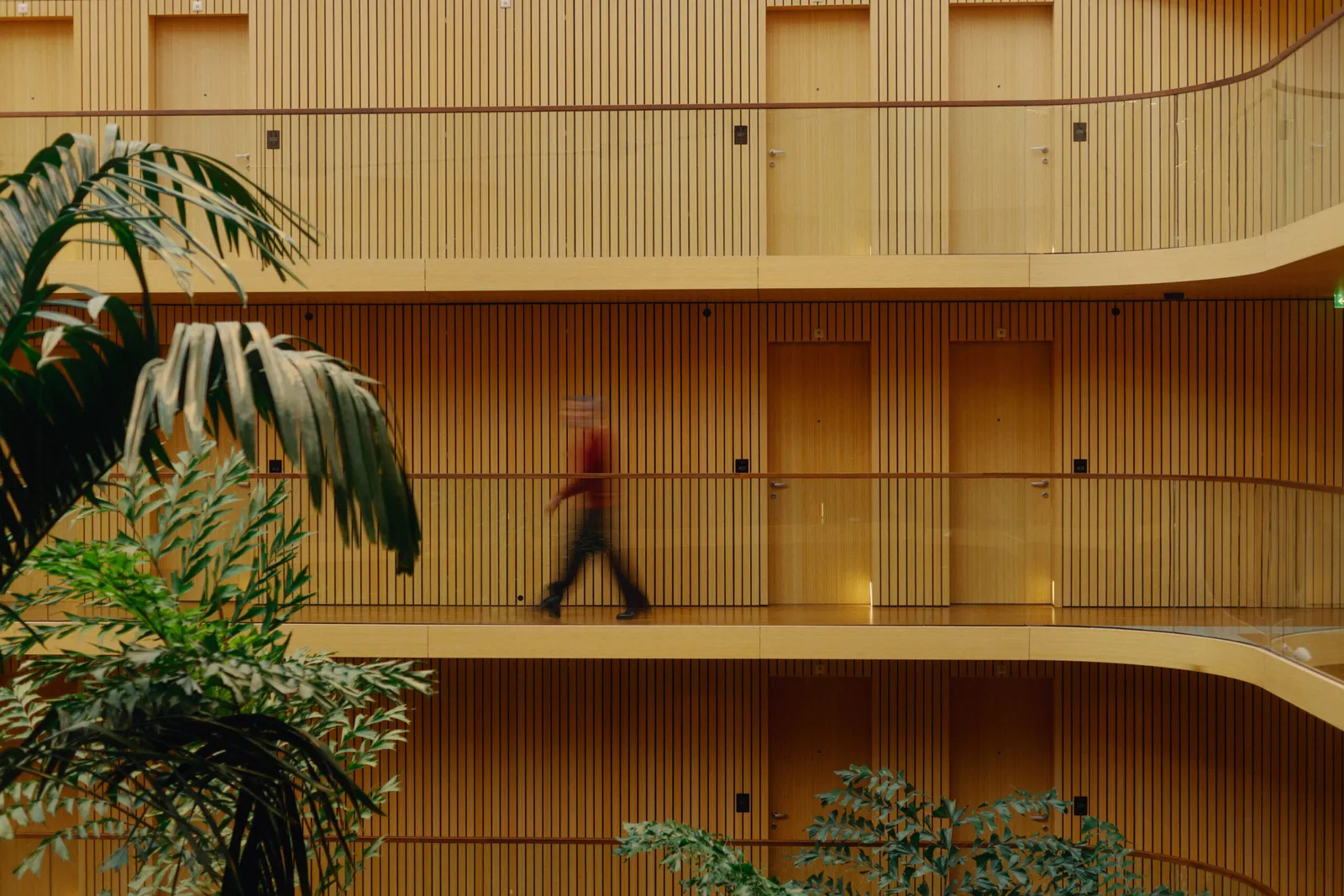
The European 2050 targets present us with a major challenge. It is already no easy task to ensure new buildings meet current and future standards, let alone existing buildings whose energy performance leaves much to be desired. Yet the solution may be simpler and less far-reaching than you might think at first. For example, with ecoBuilding, Priva has developed an add-on that automatically optimises energy and comfort management thanks to an ingenious combination of digital twin technology, machine learning and AI. What’s more, this intelligent, cloud-based software system is compatible with almost any building management system and, at current energy prices, pays for itself in just two years. The benefits are just as impressive …
Priva’s ecoBuilding concept is as user-friendly as it is revolutionary. Rather than having to reinvent the wheel and install all kinds of new hardware, it can simply be added as an extra software layer to existing building management systems. It all starts with creating a digital twin, a virtual copy of the building and its technical systems. Once the ideal scenario has been determined through the necessary simulations, machine learning and artificial intelligence are applied. Using accurate data and forecasts, from historical and real-time usage data and energy tariffs to current and future weather conditions, the operation of building systems is automatically optimised 24/7 through intelligent control, including maximum use of renewable technologies such as solar panels and heat pumps. This results in significant energy savings (up to 40%!), reduced CO2 emissions and improved comfort. It also substantially improves the cost-efficiency of buildings. At current energy prices, the ecoBuilding system has a payback period of just two years, not to mention considerably lower energy bills.
A three-part game of chess
The ecoBuilding story is highly innovative, but it had been in the pipeline at Priva behind the scenes for quite some time. “The concept was first mapped out in 2009-2010, but the necessary technology was not yet available, or was too expensive, to put our solution into practice. Since the breakthrough in machine learning and AI, we have been able to do so. In ten years, we have gone from a magical, utopian idea to a tangible product,” says Ruud Hulleman, Strategic Business Developer Building Automation at Priva. “I often use the metaphor of chess to explain how ecoBuilding works in three parts. The digital twin is the chessboard, representing the starting point for the building and its systems. Machine learning is your opponent, allowing you to draw on past experience and decisions to make the digital twin increasingly accurate. Artificial intelligence is the chess player looking for the best solution. Creating a digital twin takes just a few hours, and after that the system needs only a few weeks to produce good results based on all the data collected. We deliberately designed it to be as self-learning as possible, and therefore highly intuitive and user-friendly. Once ecoBuilding has been fully implemented, you no longer need to think about it: you simply reap the benefits.”
Bringing order to technical complexity
Another major advantage of ecoBuilding is that it provides insight into the complex operation of a building and its technical systems. “It is becoming increasingly difficult to regulate and optimise indoor climate,” says Koen Somers, General Manager BeLux & France at Priva. “Many systems are not properly configured, but because they are so complex, the problem often goes unnoticed. And even when it is detected, it is very difficult to get to grips with it. Constantly turning all kinds of knobs certainly doesn’t work. ecoBuilding addresses this issue. We make it possible to see what is happening and what should be happening in a building, including the detection of faults and gaps. In the digital twin, we map out how the processes should run. If things work differently in reality, we can quickly identify which part of the system is not functioning properly. ecoBuilding also always plans 24 hours ahead, enabling it to anticipate potential problems. This gives building managers and users back control of their buildings.”
Keeping pace with change
Priva now has more than a hundred ecoBuild projects under way across Europe. It has also already built up some impressive references in Belgium: Ziekenhuis Oost-Limburg, KBC, UZ Brussel … “We are already past the early adopters phase. We can achieve significant savings in both old and new buildings. In the Netherlands, we even worked on a building dating from the late 1800s which was Paris-proof after just six months. In short, the potential of ecoBuilding is enormous,” Ruud Hulleman emphasises. “Our strength lies in optimising how buildings and systems operate by using smart software,” adds Koen Somers. “The fact that Priva Building Automation is celebrating its 40th anniversary this year, while Priva itself is blowing out 65 candles, is an added advantage in the competitive market in which we operate. We offer not only knowledge built up over many years, but also the assurance that our system will continue to receive optimal support in the future. The ecoBuilding concept also continues to evolve. We started with ‘comfort using as little energy as possible’ and are now moving towards ‘making optimal use of primary energy sources in terms of CO2 impact and cost’. And the fact that the system is called ecoBuilding does not necessarily mean that we limit ourselves to individual buildings, because we can also play an important role in the grid. For example, we are increasingly looking at district heating networks and ways to optimise energy production for a group of buildings. In short, more and more is possible, and ecoBuilding simply grows along with it.”
Question about this story? Ask your question
Keep following this
Get an email when a new story is published. No account needed.
- SubjectYearbook