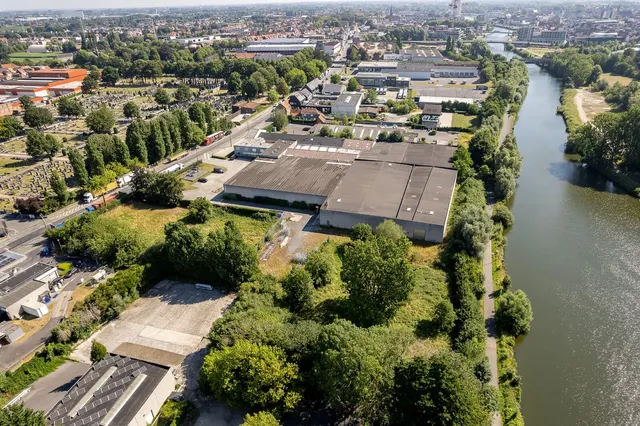
The crucial role of green roofs and façades in climate adaptation
Text Iris SalembierImage Vice Verda
Until a few years ago, green roofs and façades were still fairly unusual. Now they are almost commonplace. Vice Verda deserves some of the credit. Founded almost twenty years ago, the company is one of the sector’s undisputed pioneers. From its base in Aalter, with a branch in Brussels, it operates throughout the Benelux. In 2024, it helped build the highly sustainable town hall in Roeselare. This is the story of a close-knit family business that has grown through passion, expertise and a clear vision of ‘green-blue building’.
Flanders is densely built-up. Every extra square centimetre of green space contributes to biodiversity. That is just one of the many benefits of green roofs and façades. Dirk Van de Waeter, one of Vice Verda’s directors, knows all about them and explains why they benefit not only nature, but also people and even the buildings themselves. But let’s start at the beginning: how did he come to specialise in this field when hardly anyone had given it a second thought?
A family with a green vision
Dirk Van de Waeter: “Fifteen years ago, I was still commercial director at a company specialising in waterproofing components. Waterproofing a roof is one thing, but I could see many more possibilities.” Around that time, his eldest son Sam graduated with a dissertation on green roofs. The apple never falls far from the tree, and the Van de Waeter family is no exception. “That dissertation was the catalyst. We then founded Vice Verda together. We were true pioneers in green roofs, and more recently in green façades too. We successfully brought them to market.”
Benefits all round
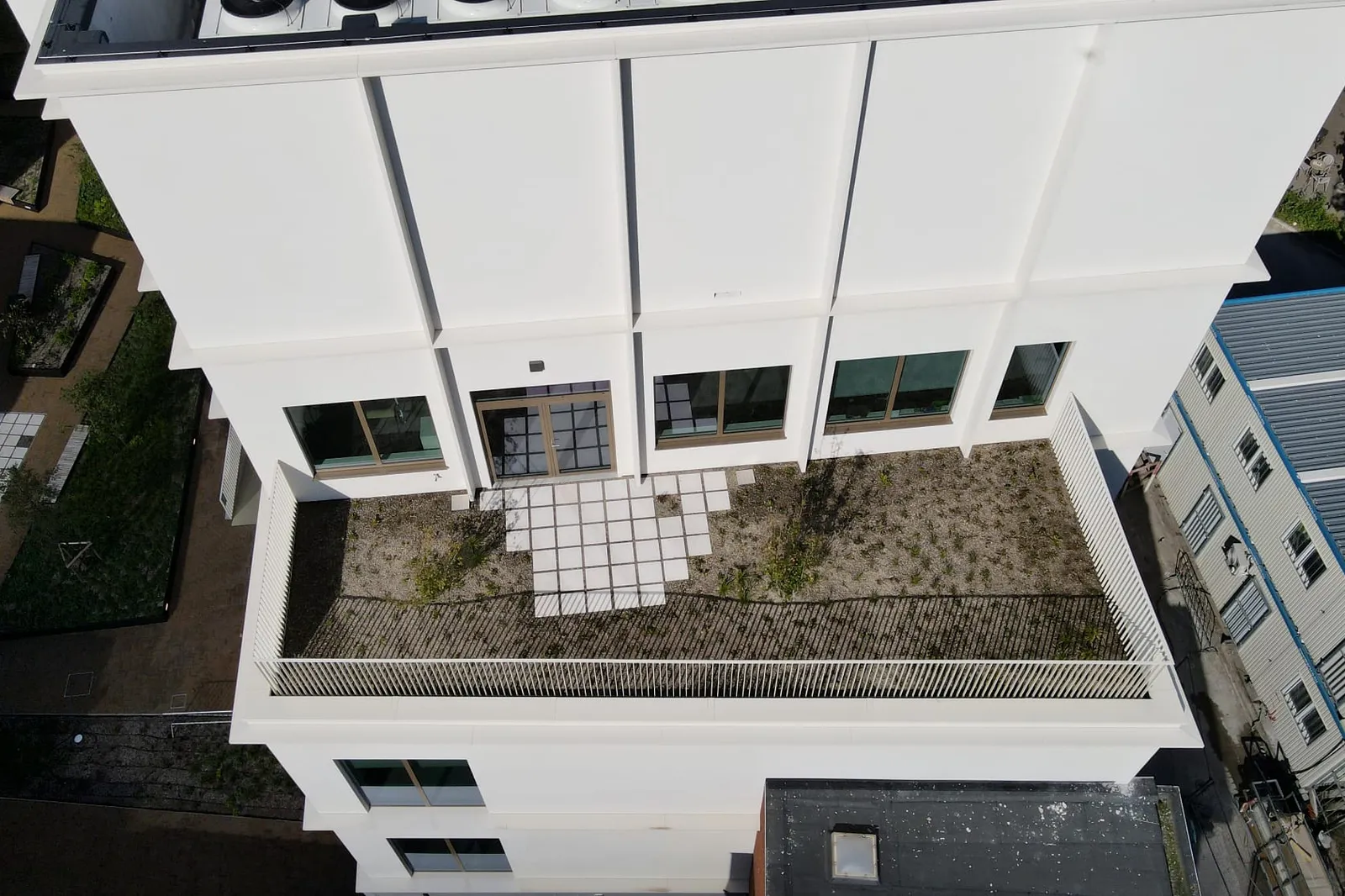
“Climate change is driving a shift towards green-blue building in the construction sector,” says Dirk Van de Waeter. “Green roofs and façades also play a crucial role in climate adaptation. Water retention systems can help prevent or manage flooding. Temperature control is important too. Green façades have proven insulating properties, which is why they are increasingly used as part of the building envelope. Green roofs improve the thermal comfort of both the building itself and the surrounding city. They reduce the urban heat island effect.” And what about the building itself? Does the planting have any drawbacks? The opposite is true. “A flat roof waterproofing system typically has a service life of thirty years. With a green roof, you can double that thanks to the natural protection against UV radiation.”
Roeselare gets a green heart
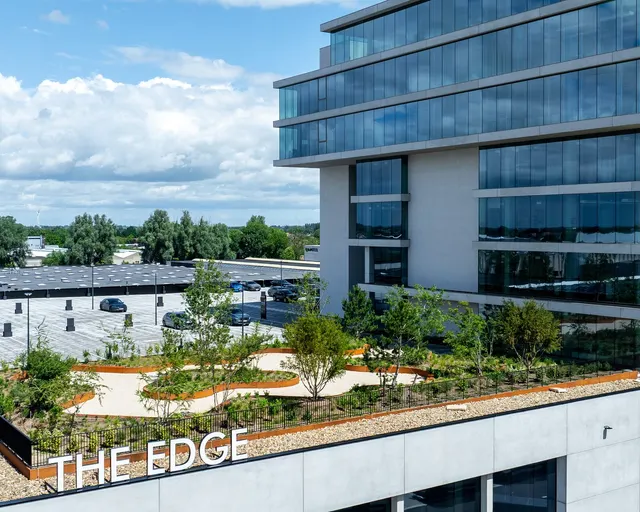
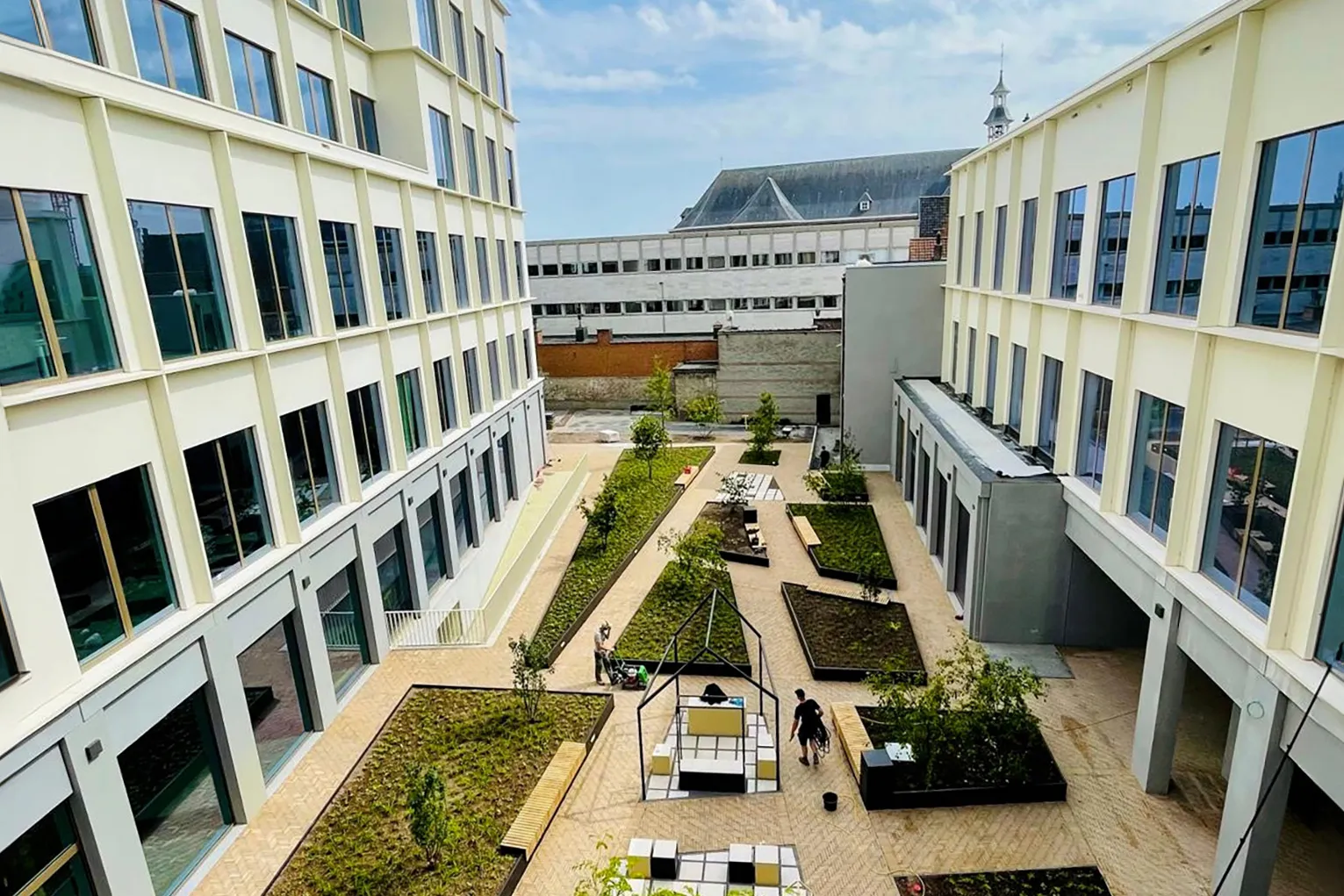
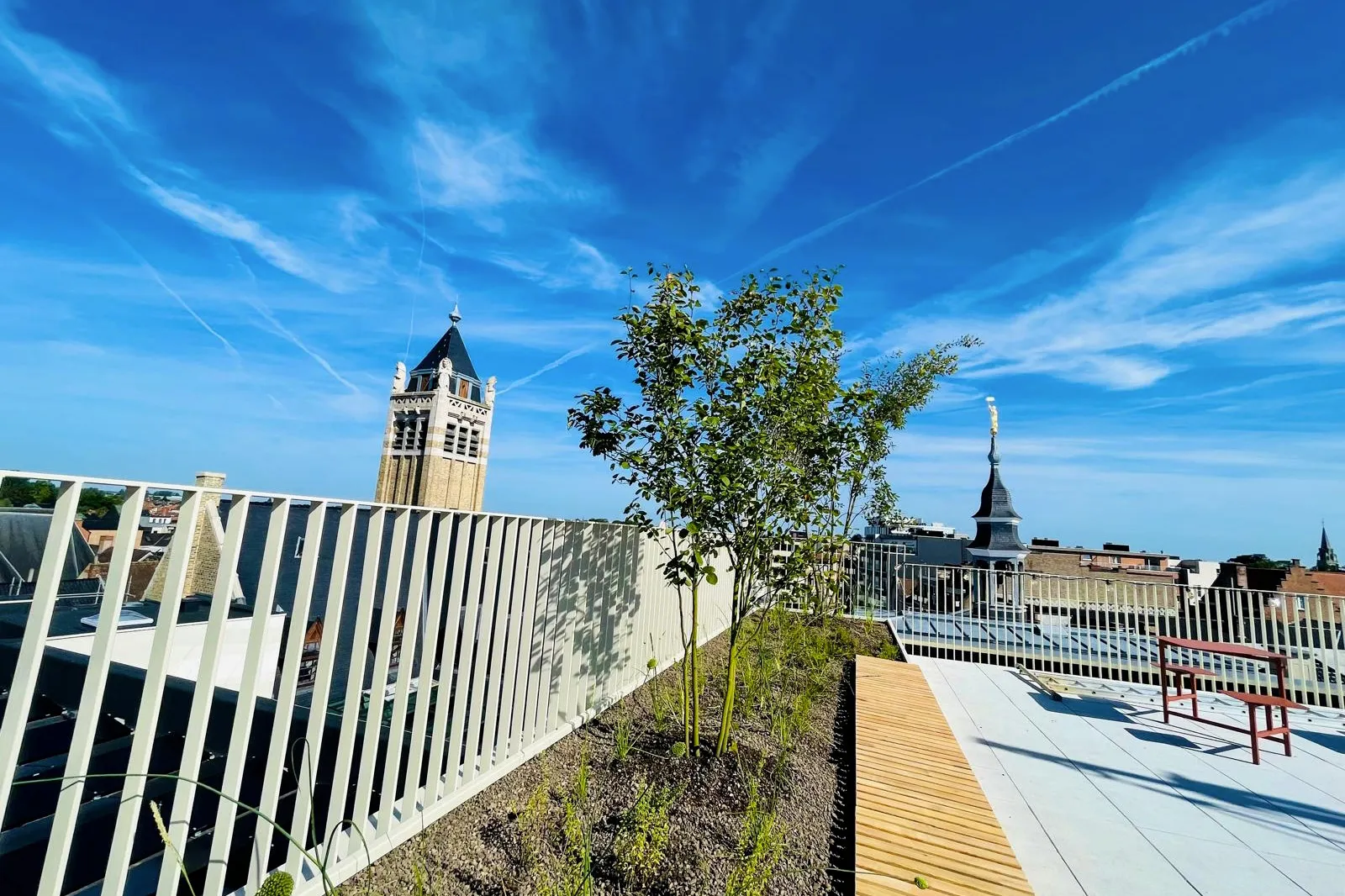
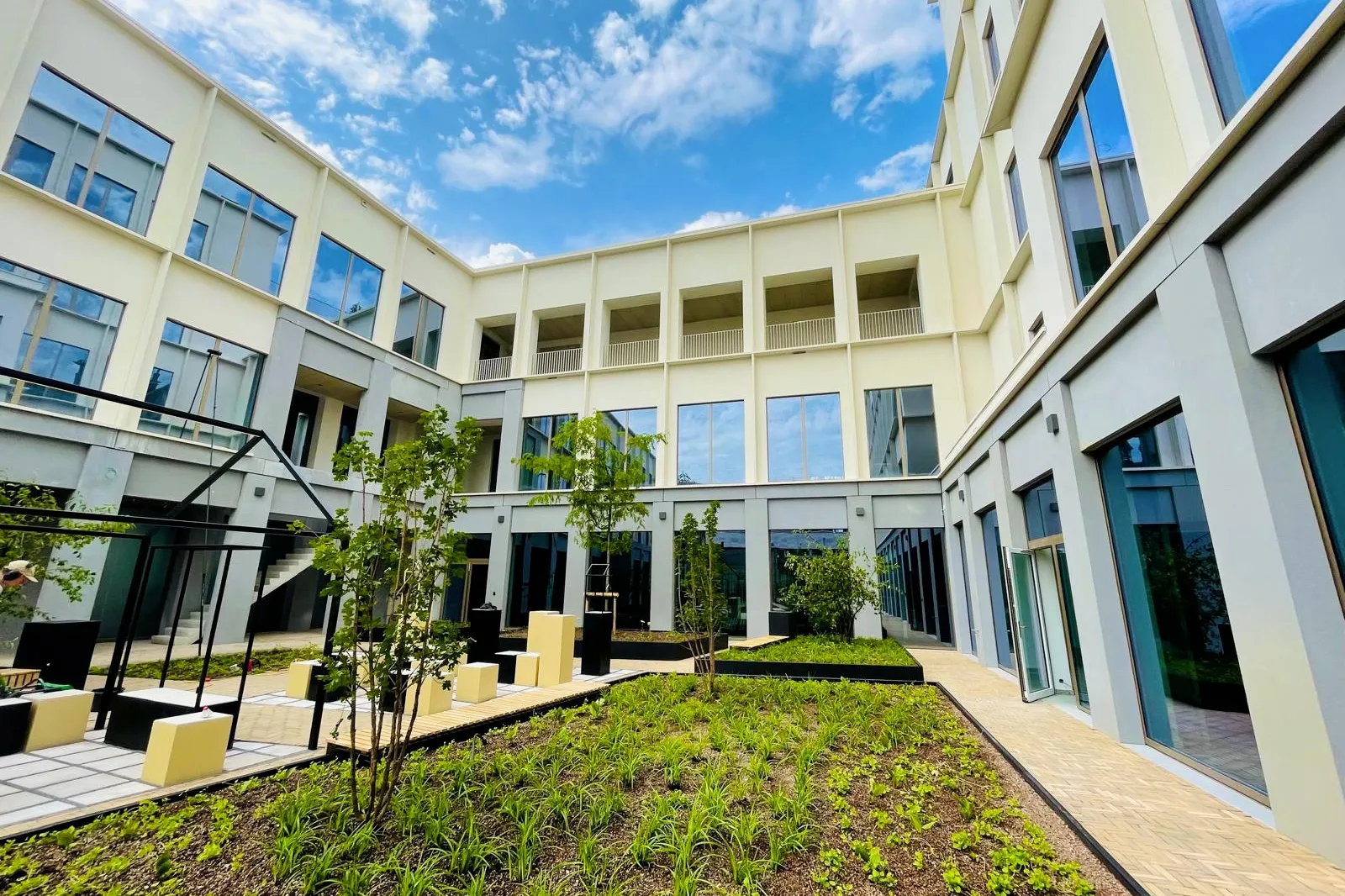
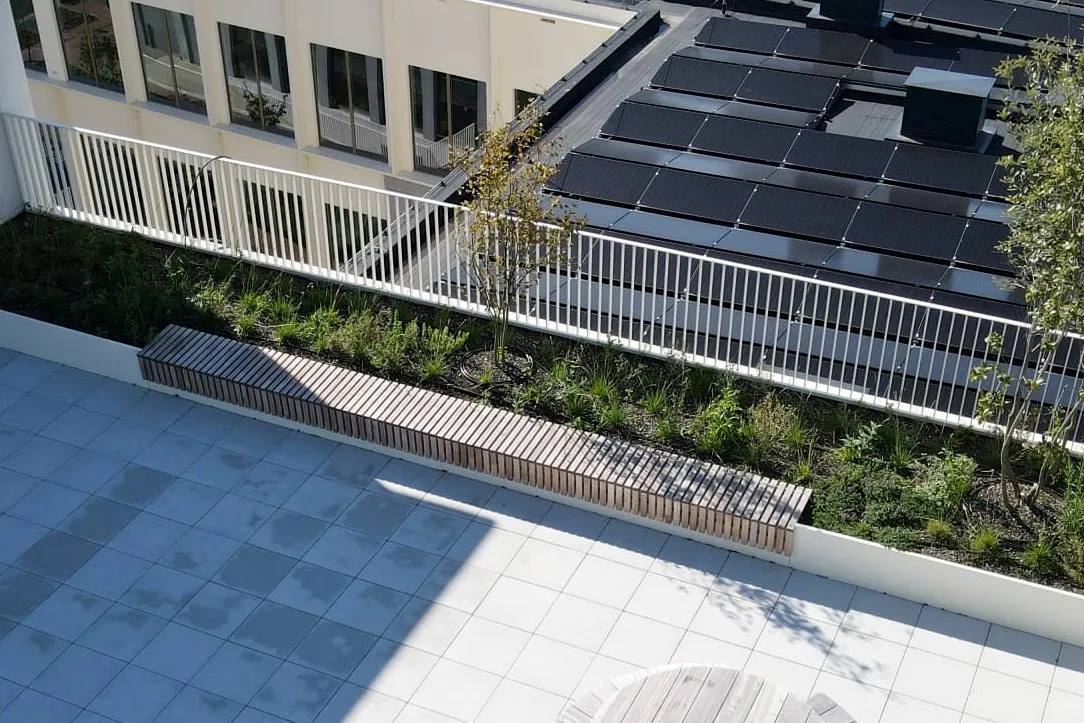
One of Vice Verda’s recent projects is in Roeselare: a new town hall designed to prioritise sustainability and energy efficiency. As the site is entirely paved and the building is completely enclosed, green roofs were the perfect solution. Working with landscape architect Arne Deruyter, Vice Verda created an impressive combination of courtyard gardens above a car park, several green roofs and planters on the upper floors. Everything is equipped with a water retention system connected to new and existing rainwater tanks. An advanced irrigation system waters all the planted areas. To complete the project, Vice Verda supplied bespoke benches and bins for the courtyard garden.
Looking ahead
If Vice Verda has its way, our future will be green. To make that vision a reality, however, the managing director has a heartfelt appeal to Flanders’ construction industry: “Please consult us as early as the design stage! If we are brought in too late, we sometimes find that beautiful design drawings cannot be realised because the roof or other structures have not been designed to accommodate them.” So, architects, clients and property developers, we’re counting on you!
Question about this story? Ask your question
Keep following this
Get an email when a new story is published. No account needed.
- SubjectYearbook