Ingenious dewatering concept for residential project in central Kapellen
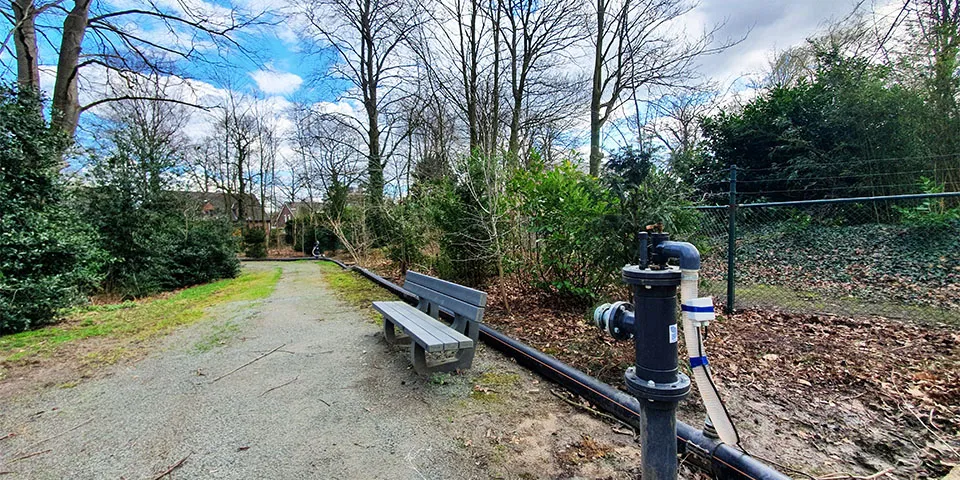
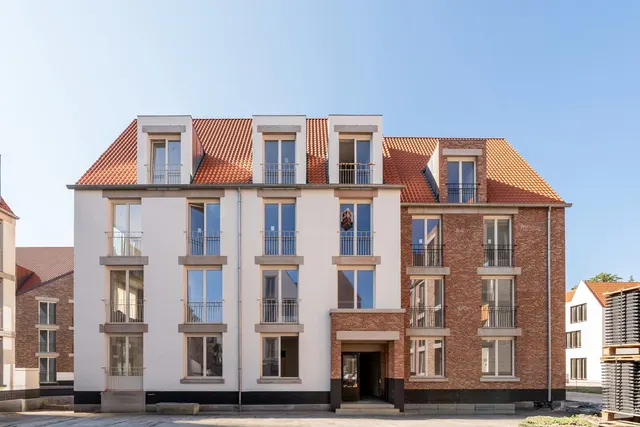
Work is in full swing in the heart of Kapellen, on Marktplein, on the construction of Essenbloei, a complex comprising 53 luxury apartments, an underground car park and basement storage units. Excavating the construction pit proved challenging in both the literal and figurative sense. An ingenious system combining dewatering and groundwater recharge was needed to ensure everything went smoothly.
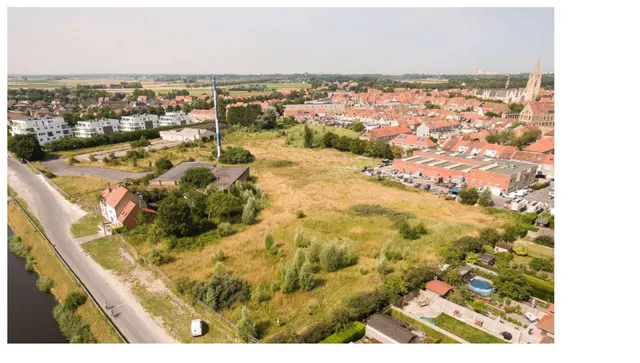
Essenbloei is, to say the least, a distinctive construction site. The local subsoil consists of a highly permeable sand deposit, and the groundwater is only a short distance below ground level, at around 1.40 metres. The groundwater level had to be lowered to 4.5 metres below ground level, and to 5.1 metres below ground level around the lift pits. “There is also a known groundwater contamination site and a park in the immediate vicinity,” adds Rene Lambrechts, quality manager at dewatering specialist G. Smeyers. “Moreover, there are no naturally occurring impermeable soil layers, so constructing a closed excavation with the walls founded in an impermeable layer was out of the question. The only option was therefore to work with an open excavation.”
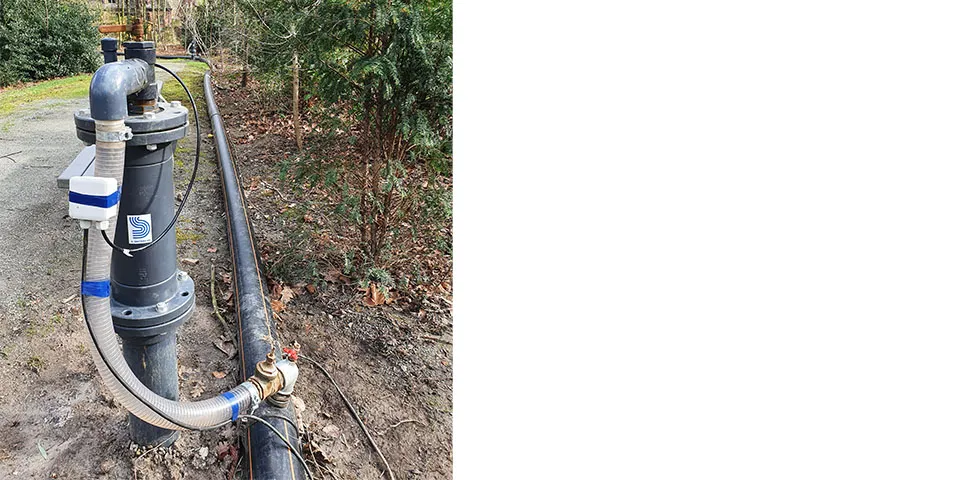
The pumped groundwater is conveyed to the recharge wells via around 1,500 linear metres of collector pipe (PE 160 mm).
Limiting the impact on the surrounding area
Dewatering construction pits of this kind can quickly result in very large volumes of groundwater being pumped out, which may not even be discharged into the existing sewer network. Nor is obtaining the appropriate dewatering permit guaranteed, as numerous external opinions have to be sought, the outcome of which is difficult to predict in advance and the process is also particularly time-consuming. Together with specialist consultancy AGT, G. Smeyers therefore developed a bespoke dewatering concept aimed at minimising the impact on the surrounding area. “We opted for ten extraction wells, 18 metres deep, within the construction pit. These pump the groundwater to sixteen recharge wells, 20 metres deep, via around 1,500 linear metres of collector pipe (PE 160 mm). The latter are located partly on the edge of Marktplein and partly in Nelson Mandelapark. The recharge wells on the edge of Marktplein are intended to prevent any potentially contaminated groundwater from being drawn in, while those in the park ensure that groundwater levels in the park are not significantly lowered and that as much of the pumped groundwater as possible is returned to the ground,” explains Lambrechts.
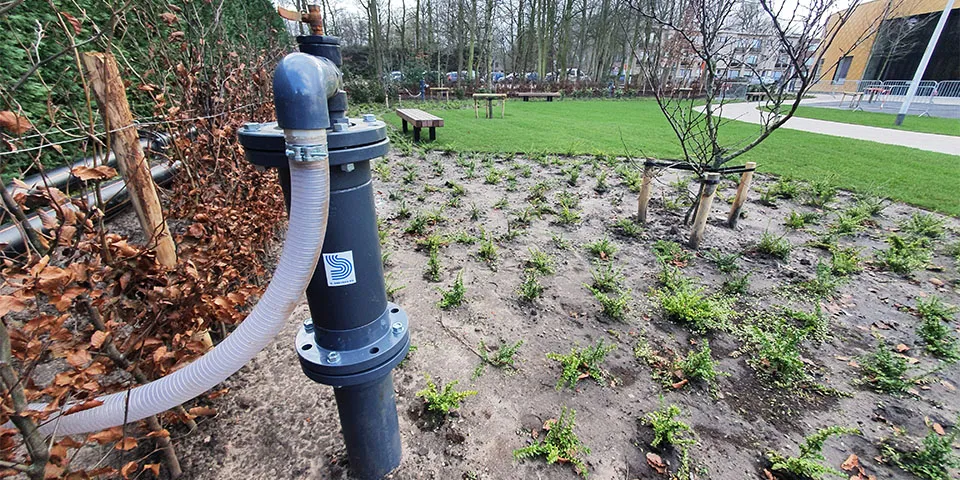
The recharge wells in the park are intended to ensure that groundwater levels in the park are not significantly lowered and that as much of the pumped groundwater as possible is returned to the ground.
Online monitoring
A number of monitoring wells were drilled to track the dewatering and groundwater recharge, each fitted with automatic pressure transducers (known as ‘divers’). “Our teams can continuously monitor all these recorded water levels online,” says Lambrechts. The dewatering and recharge systems have been operational since mid-February. The construction pit has now been excavated, and preparations for pouring the concrete for the lift pits and the base slab are well under way. “Essenbloei is an excellent reference for our company. The project shows that a first-rate dewatering concept can be developed when the main contractor, in this case Cordeel, consults the dewatering specialist from the outset. This will undoubtedly lead to further successful collaborations,” concludes Lambrechts.
Een zakelijke vraag aan G. Smeyers N.V? Neem contact op
Wie eraan werkte
Essenbloei in Kapellen
- bemalingsspecialist
 G. Smeyers
- hoofdaannemerCordeel
- gespecialiseerde adviesbureauAGT
Blijf dit volgen
Bij een nieuw verhaal krijg je een e-mail. Geen account nodig.
- ProjectEssenbloei
- OnderwerpConstruction projects
- BedrijfG. Smeyers N.V
- BedrijfCordeel
- BedrijfAGT