Cascade system ensures operational reliability of monobloc heat pumps at logistics centre
Text Buderus en Wouter PolspoelImage Marco Mertens
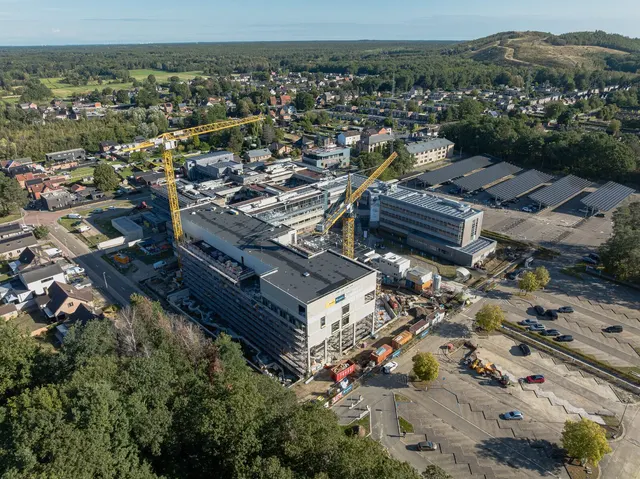
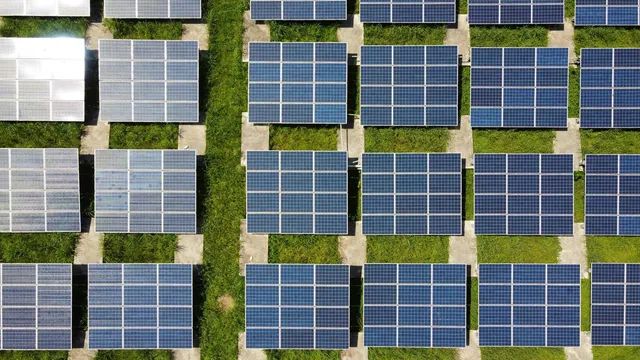
A logistics centre in Herne, which stores professional construction tools, chose heat pumps to heat and actively cool its office space, making use of a persistent surplus of self-generated solar power. To ensure operational reliability, the Buderus air-to-water heat pumps were installed in a cascade system.
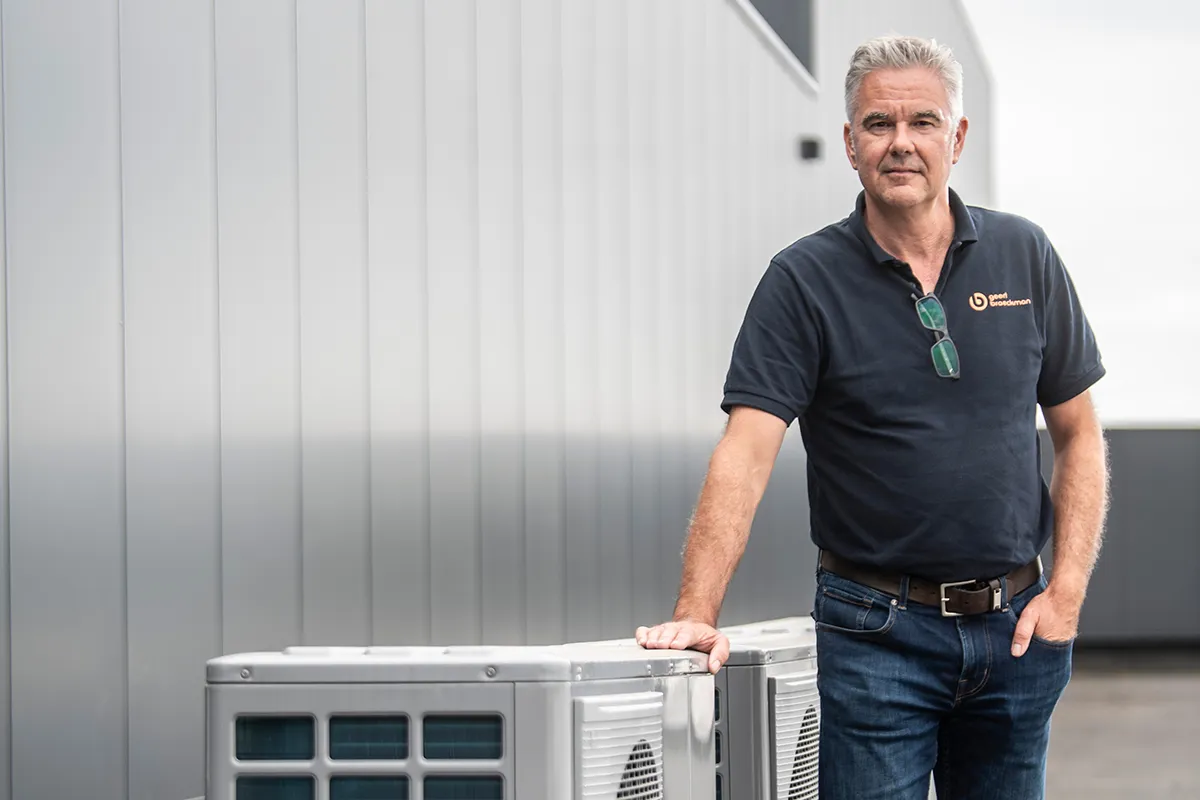
Geert Braeckman, a building services specialist from Serskamp, installed the Buderus air-to-water heat pumps. “Three in total, arranged in a cascade,” he begins. “They are monobloc heat pumps that work together to provide the required output, while also serving as back-up for one another. This ensures heating and active cooling in the offices, which are spread over three floors and cover a total area of about 1,250 m². Underfloor heating was installed on all floors, along with ceiling- and wall-mounted fan coil units, which provide supplementary heating but are used mainly for cooling. We also carried out that installation. The client initially wanted geothermal heat pumps, but it soon became clear that this would be far too expensive. The rocky ground would have made drilling costs prohibitive.”
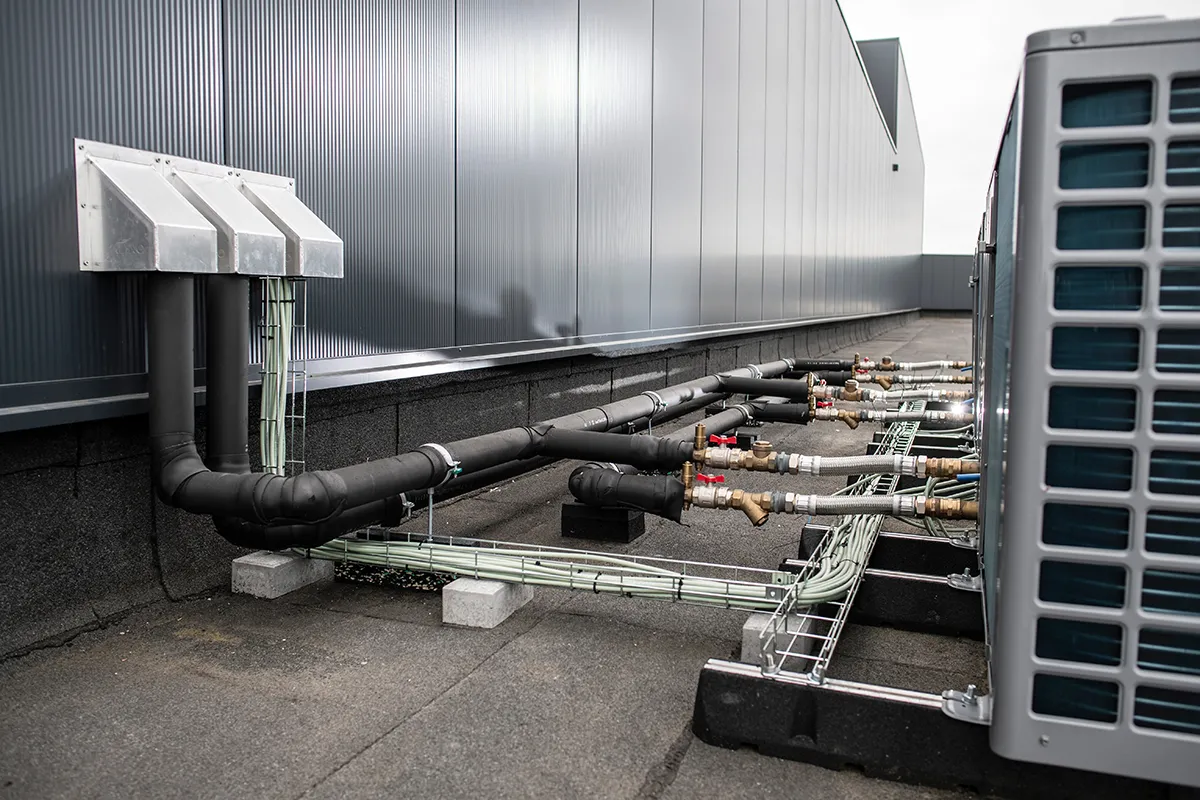
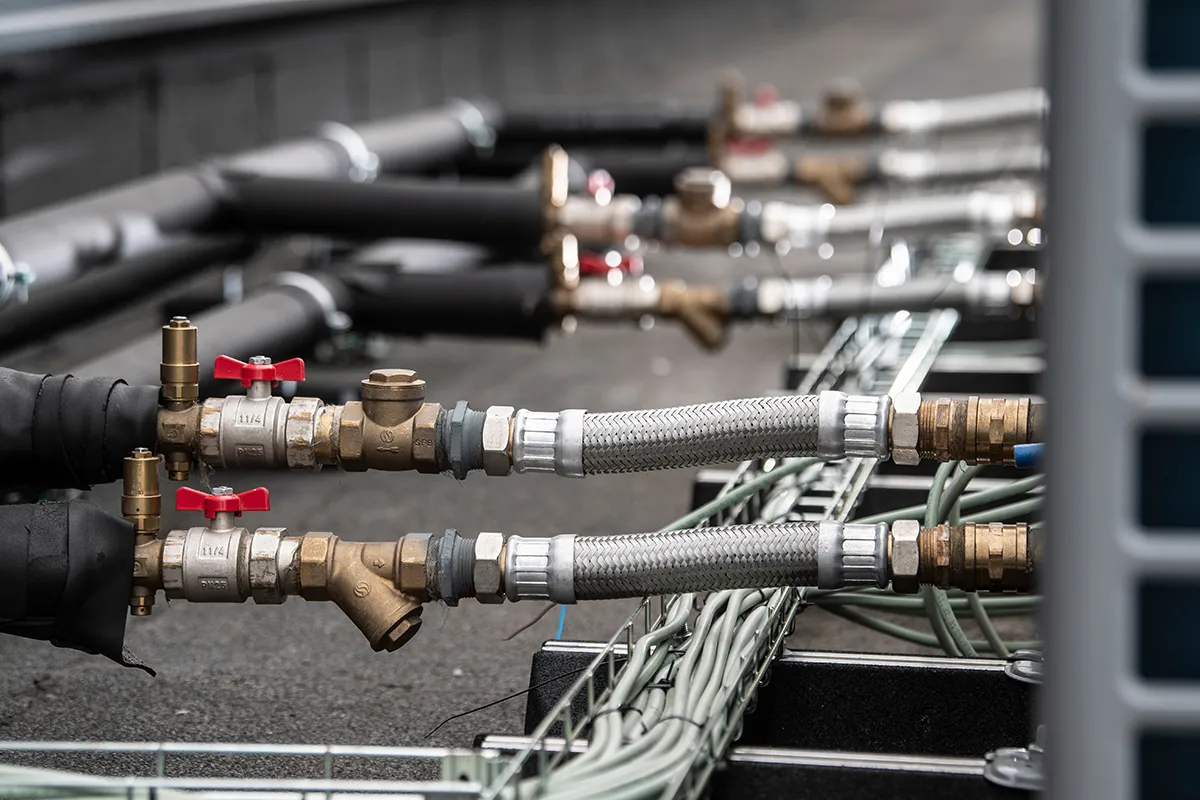
“The heat pumps are connected in parallel using the so-called Tichelmann system,” the installer explains, describing the cascade setup in more detail. “This ensures that each heat pump delivers the same flow rate and encounters the same resistance. One heat pump acts as the ‘master heat pump’ and controls the system. The second heat pump is connected to this lead unit, and the third to the second. The master heat pump starts first, followed, if necessary, by the second and then the third in the sequence.”
Numerous benefits
Operational reliability is unquestionably the main advantage of the cascade system. “If a heat pump ever fails, we receive an error code via an app. We can then schedule a call-out while the system continues to operate using the other heat pumps. As I mentioned earlier, this guarantees continuity,” says Geert Braeckman.
The installer also highlights other benefits of the cascade system. “Ease of installation is one of them. Installing three smaller heat pumps is easier than installing one large one,” he says. “A cascade system is also easy to expand. If the company wants to grow in the future, we can add another monobloc heat pump to the existing system relatively easily. The pipework is already designed for this, and the existing hydraulics and buffer tank can be retained with a minor modification. This is much harder to achieve with a split system. A monobloc system uses heating pipes only, whereas a split system requires both heating pipes and refrigerant pipes. If we had opted for a split system, each of the three outdoor units would have needed its own indoor unit, with three separate refrigerant circuits running indoors, making the installation much more complex. With the current setup, all the technology is in the outdoor units, so no indoor units are needed. Split systems are therefore more common in smaller projects where only one heat pump is required.”
A valuable tip
Geert Braeckman has one final tip for fellow installers and architects considering a similar project. “Don’t underestimate the weight of a monobloc heat pump. Each unit can easily weigh 130 kg. If the units have to be installed on a roof, as they were in the Herne project, it is very important to check that the roof structure is strong enough and to make sure that a crane or lift can reach the installation location.”
Heat pumps that set the standard
Buderus offers an extensive range of monobloc heat pumps, from the Logatherm WLW156 air-to-water heat pump, which has no indoor unit, and the exceptionally quiet Logatherm WLW196i to the Logatherm WLW176i, which uses propane as its refrigerant. The latter two heat pumps do have an indoor unit, but as it operates solely hydraulically and the entire refrigerant circuit is housed in the outdoor unit, they can still be considered monobloc heat pumps. This is also the main advantage of a monobloc heat pump: the installer only needs to run a water pipe indoors. F-gas certification is therefore not required for installation. If work on the refrigerant circuit is needed, a specialist from Buderus Service can always be called in.
Question about this story? Ask your question
Keep following this
Get an email when a new story is published. No account needed.
- SubjectSustainable construction