Flagship building of the Flemish government becomes even more energy-efficient thanks to MPC
Text Tim JanssensImage Neutelings Riedijk Architects

Designing an energy-efficient building only makes sense if it is then operated properly. Yet this is far from straightforward, as the complexity of technical systems continues to increase, while building owners often have less time and expertise available. Sweco takes the burden off their shoulders by working with Builtwins to implement Model Predictive Control (MPC). The Flemish government is already a fan: implementing MPC has significantly optimised the energy performance of the Herman Teirlinck building at the Tour & Taxis site in Brussels. “The initial results indicate energy savings of around 30 % in the operation of the HVAC system,” says Kurt Corvers, Business Unit Manager Buildings at Sweco.
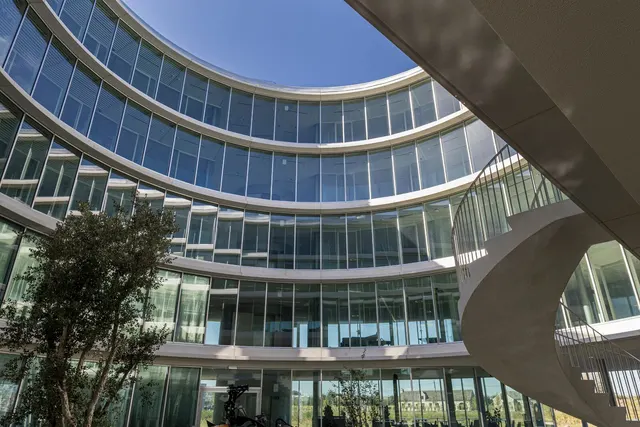
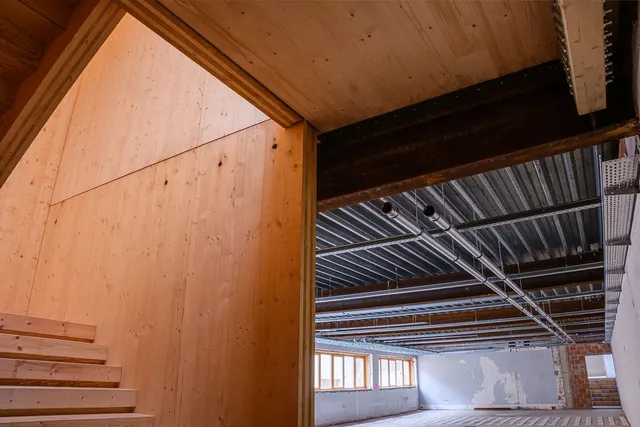
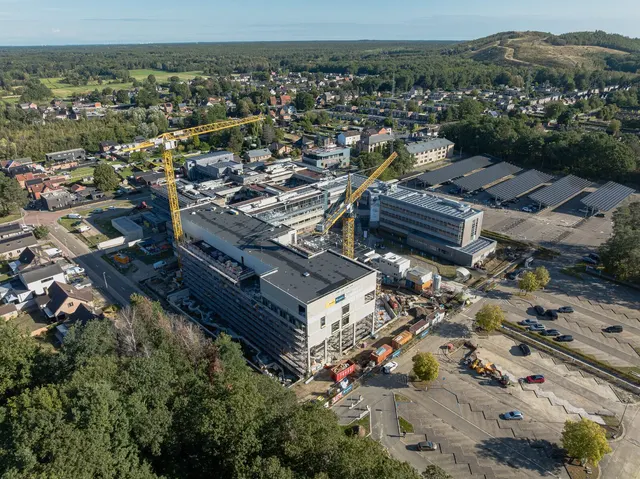
When the Herman Teirlinck building was completed in 2017, sustainability was very much in the spotlight. As the country’s largest passive office building, it symbolised the Flemish government’s ecological and energy ambitions. Consulting engineering firm boydens engineering, now part of Sweco, designed an innovative HVAC system distinguished, among other things, by its extensive combination of geothermal energy and thermally activated building structures (GEOTABS). No stone was left unturned in terms of energy performance, but there was still room for optimisation eight years later. As part of its drive towards CO2 neutrality, the Flemish government approached Sweco and Builtwins, who worked closely with KU Leuven to develop a sophisticated MPC concept that gives buildings an energy upgrade using digital technology.
Dynamic simulations using a digital twin
“MPC is a computer-controlled algorithm that uses a digital twin, incorporating all the parameters of the building envelope and modelling every technical system down to the smallest detail, to run a dynamic simulation every 15 minutes,” explains Kurt Corvers. “We always look three days ahead, taking into account the weather forecast, readings from all the sensors and actuators in the building, and the characteristics of the systems installed. This allows us to calculate an optimal setpoint for every zone and every heat generator, which can also take account of specific settings, such as maximum CO2 savings or financial optimisation based on current energy prices. The technical system is then controlled accordingly via the building management system and BACnet/IP network, with this signal taking priority over the conventional controls.”

Proactive maintenance through excitation tests
As well as optimising the energy efficiency of the Herman Teirlinck building 24/7 using building data and calculations in the digital twin model, the ongoing MPC contract for the Flemish government has a second objective: fault detection to support operation and maintenance. “To achieve this, we subject the various moving components and sensors in the building systems, such as hydraulic valves, pumps, VAV dampers and thermostats, to excitation tests using scripts in the digital twin,” explains Kurt Corvers. “This allows us to simulate their operation precisely and enables the maintenance company involved, in this case Equans, to intervene more quickly and efficiently. In other words, our excitation tests make proactive maintenance possible. We are now also using them during the commissioning phase of buildings. By carrying out a quick digital scan, we can make a huge difference to energy efficiency with far less time and labour.”
Promising results
The initial results of the MPC implementation are very promising. “Even in the Herman Teirlinck building, which was already highly energy-efficient to begin with, energy savings on the HVAC system amount to around 30 %, while occupant comfort has also improved,” stresses Kurt Corvers. “Builtwins’ MPC is a SaaS product requiring an initial investment in design, implementation and licensing, along with maintenance and updates, quarterly reports and support from Sweco. In almost all cases, the payback period is less than five years, depending on factors such as the type of building and the scope for intervention. It is also worth noting that the concept can be applied to buildings we did not design ourselves, and that we can continually calibrate the model to align theory and practice as closely as possible. The digital twin can also be used to simulate potential energy-saving measures and to size technical systems, including realistic estimates of CO2 savings, financial savings and payback periods. In short, MPC is a concept with enormous potential for building owners, maintenance companies and end users alike. The Flemish government is already very enthusiastic. It is a real pleasure to work for such a committed client, who, like us, wants to get the very best out of every opportunity. Thanks to MPC, we have everything we need to optimise building operations throughout their entire life cycle.”
Een zakelijke vraag aan Sweco Belgium? Get in touch
Who worked on it
Herman Teirlinckgebouw in Brussel
- Model Predictive Control (MPC)
 Sweco
- onderhoudsfirmaEquans
Keep following this
Get an email when a new story is published. No account needed.
- ProjectHerman Teirlinckgebouw
- SubjectSustainable construction
- CompanySweco Belgium
- CompanyEquans