Manufacturer of electrical connection and automation components brings together workplace comfort, sustainability and efficiency in renovated office
Text Wouter PolspoelImage WAGO Belux
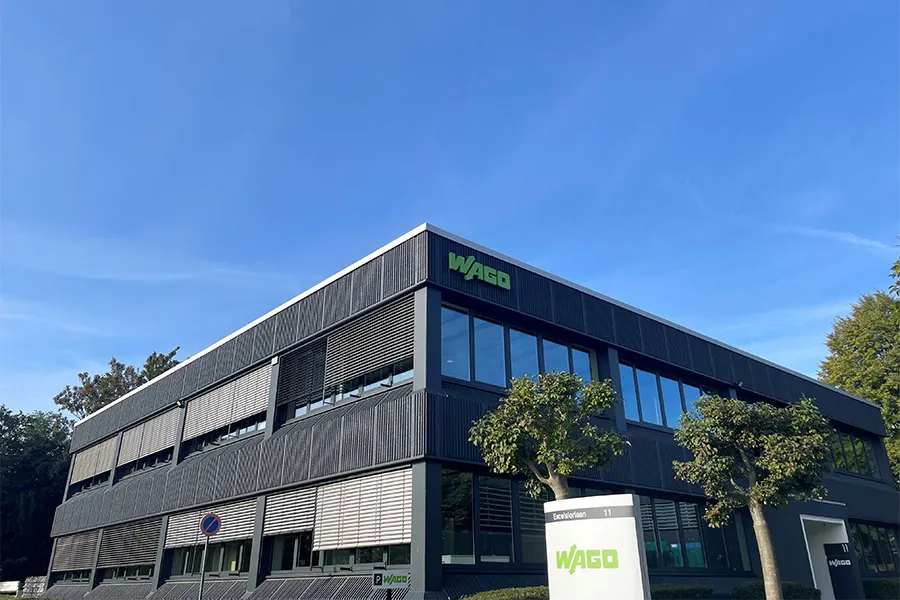
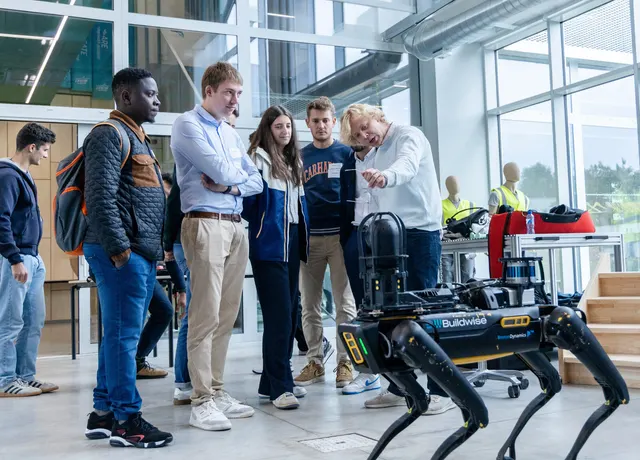
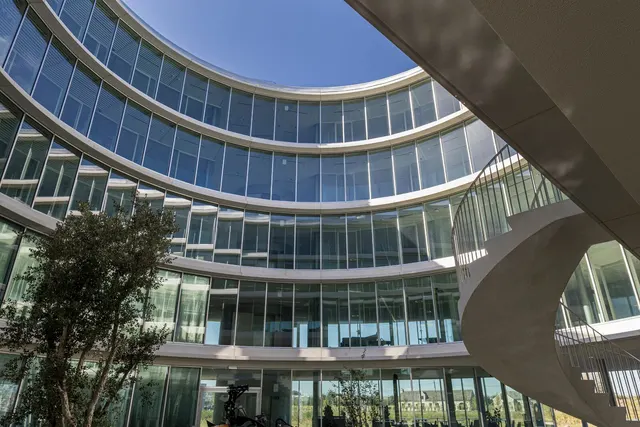
WAGO Belux, a subsidiary of leading German company WAGO, a world leader in the manufacture of electrical connection and automation components, has recently renovated its office building in Zaventem. The decision was made to install WAGO technologies in a visible way. From the building, WAGO Belux markets its products in Belgium and Luxembourg, allowing the manufacturer to use the office to show new and existing customers in practice how WAGO solutions are applied. The sustainable solutions provide greater workplace comfort and energy efficiency.
“Over recent decades, a great many WAGO solutions have been integrated into large buildings, infrastructure projects and homes,” begins Philippe Kygnée, sales manager at WAGO Belux. “In the distant past, we were known primarily for our innovative terminal blocks, but in the meantime many major building contractors have successfully discovered our flexible automation platform, which embraces open protocols. All this is also supported by our plug-and-play cabling systems.”
Monitoring and adjustment to reduce costs
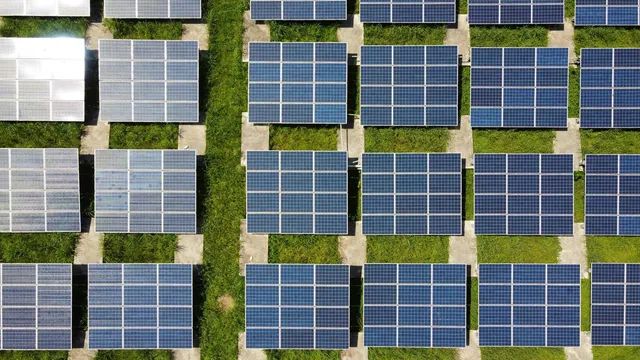
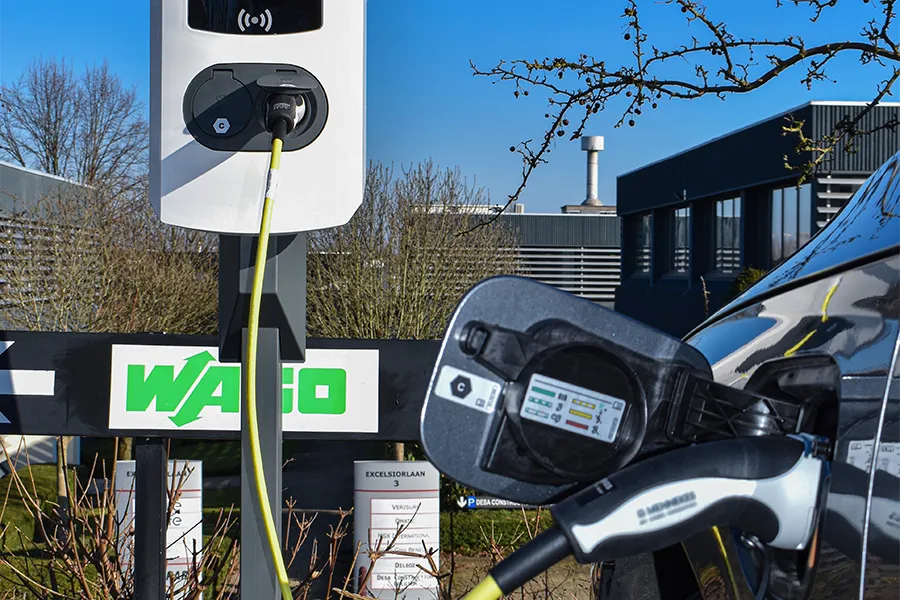
The open architecture makes it easy to communicate with solutions from various manufacturers. This enables a fully integrated installation, giving complete control. Take, for example, the scenario of solar panels and charging points at businesses. Many employees arrive at the office by car in the morning, resulting in considerable electricity consumption. WAGO solutions can accurately measure how much electricity is needed at any given time and how much is being generated. WAGO systematically balances this data, for example by charging the cars of employees who are only at the office for a short time quickly, and charging the vehicles of colleagues who are there all day more slowly. This avoids peaks in electricity consumption, resulting in lower energy costs for customers.
Another example of the efficient interaction between WAGO technologies in buildings is the automatic closing of blinds when the thermostat detects that the indoor temperature is too high, and reopening them when the building needs to warm up. This saves on both cooling and heating costs.
These are just a few examples of how automation within the building not only increases user comfort, but also contributes to sustainability and energy efficiency.
Energy efficiency through intuitive automation
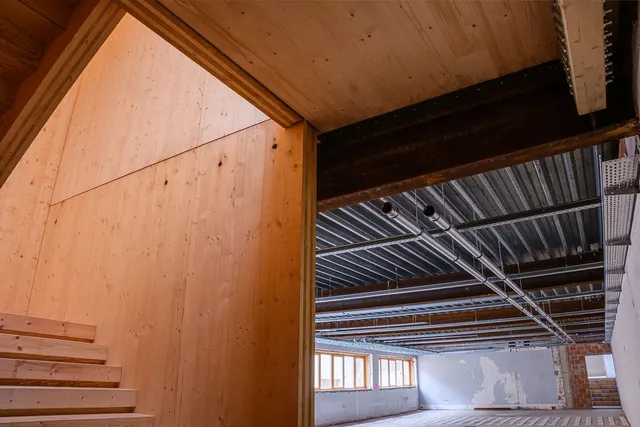
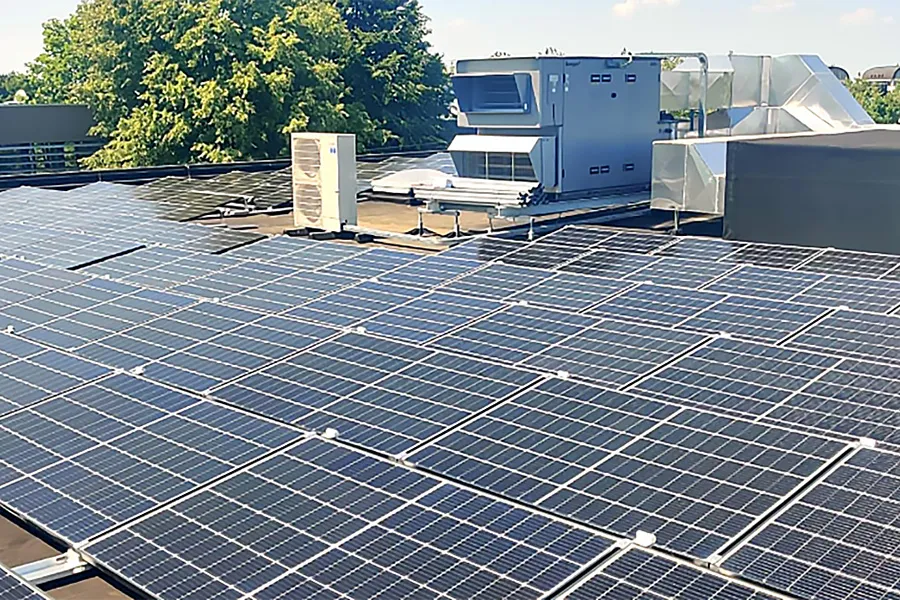
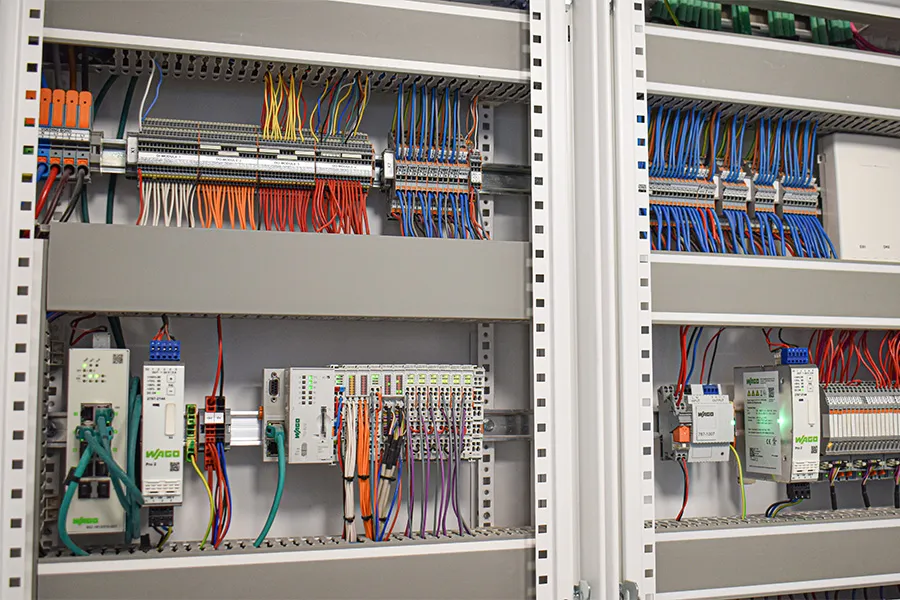
To minimise its environmental footprint, the company deliberately opted for renovation rather than new-build. While a new-build achieves BEN (nearly zero-energy) status at an E rating of 50, WAGO has achieved an E rating of 35 through renovation. This was made possible by using high-quality insulation materials, renewable energy generation and smart energy management. Heating, cooling, ventilation, lighting, solar shading, charging infrastructure, solar panels and access control have been seamlessly integrated via the WAGO platform. They communicate not only with each other, but also with WAGO’s own BMS, WAGO Building Cloud, delivering substantial efficiency gains. The aim is to use configurable solutions wherever possible, so no programming expertise is required.
Experience centre
“Our office is state of the art in building automation, and we would be delighted to welcome visitors. By appointment, our specialists are ready to answer any questions about how the implemented technologies work and discuss their projects. Let’s build a more sustainable future together,” concludes Philippe Kygnée, sales manager at WAGO Belux.
Question about this story? Ask your question
Keep following this
Get an email when a new story is published. No account needed.
- SubjectSustainable construction