Mineral brick slips deliver durable, attractive façades
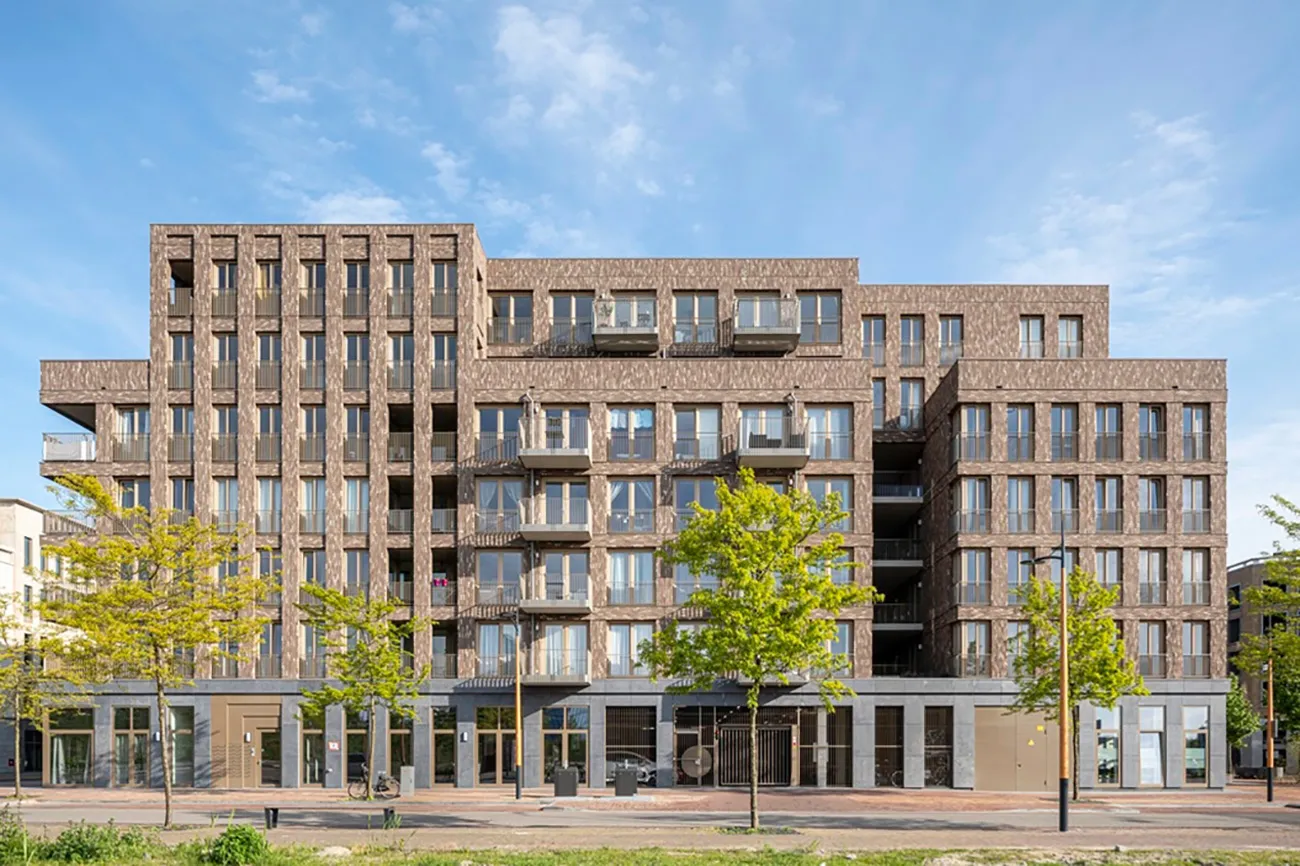
The saying that Belgians have a brick in their stomach still rings true, with brick façades remaining hugely popular in Belgium. However, requirements are becoming increasingly stringent and complex, including those relating to environmental sustainability. As an expert in façade insulation systems and cladding, Sto pays close attention to sustainable solutions. “The brick of the future is energy-efficient, has a long service life and is lightweight. That is why we developed StoCleyer B: a mineral brick slip that combines technical performance and sustainability with the appearance of a brick façade,” says Veerle Ooms, Calculator Hard Claddings at Sto.
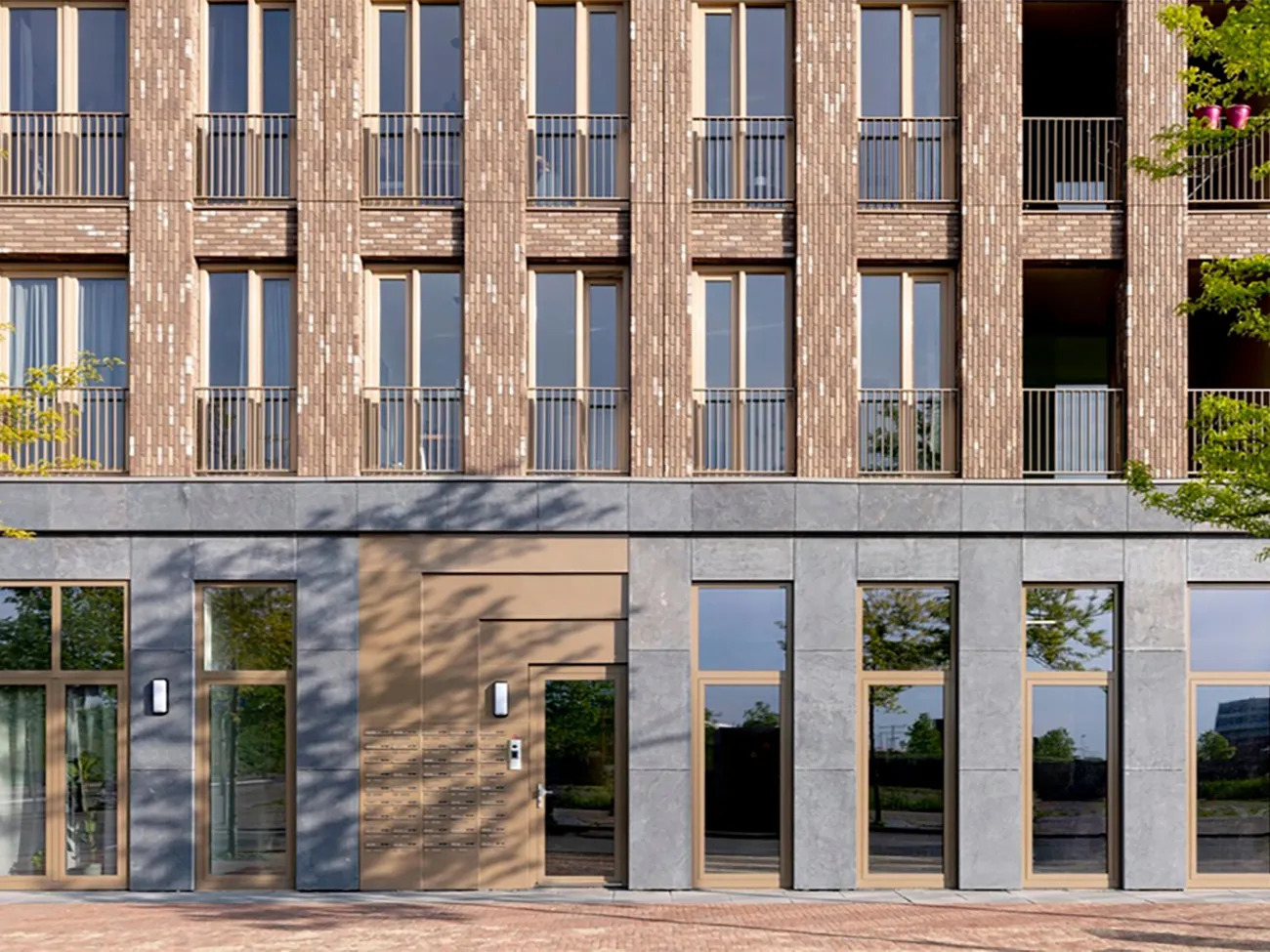
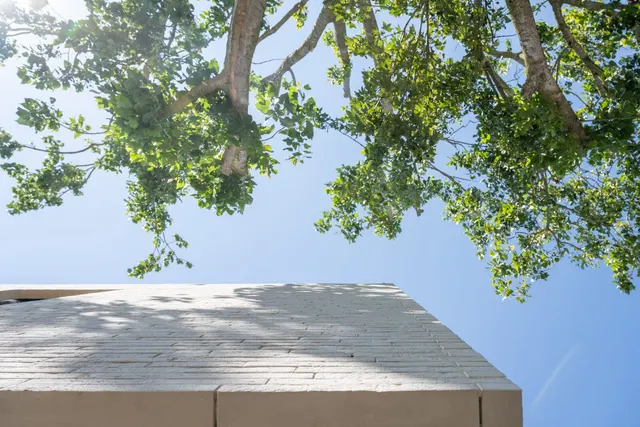
Want to create insulated façades quickly and easily, with the look and feel of traditional brick but at a lower thickness and weight? StoCleyer B makes it possible. The brick slips are made from more than 90% mineral components, are both lightweight and robust, and offer an interesting alternative to standard facing bricks thanks to their straightforward application over façade insulation systems. “StoCleyer B brings together a range of benefits in terms of technical performance, sustainability and design in a single product, enabling the creation of attractive buildings that are both economically viable and environmentally responsible,” says Veerle Ooms.
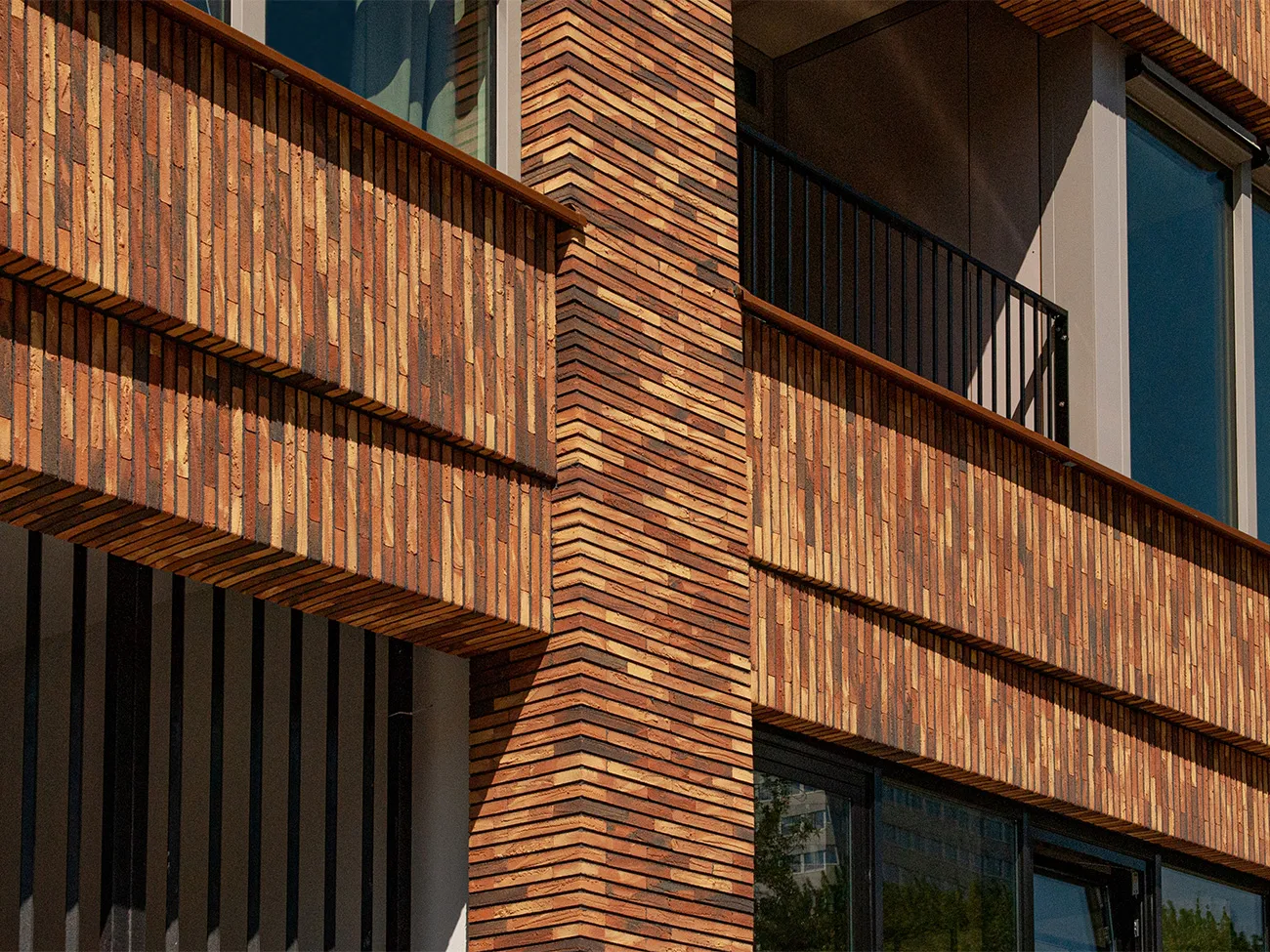
Lower environmental impact
It is no coincidence that StoCleyer B consists largely of mineral components. “This makes the brick slips considerably less harmful to the environment than conventional materials,” says Veerle Ooms. “This is mainly because our brick slips are dried at 60 °C rather than fired at around 1,300 °C, as traditional bricks are. Compared with a conventional façade build-up, this results in 80% lower CO2 emissions, while producing StoCleyer B requires 33% less energy.”
And the environmental benefits do not end there. “Because the brick slips are only 4 mm thick, they require fewer raw materials, need no heavy supporting structure or deep foundations, and allow a larger volume to be transported (6,000 m² per lorry),” adds Veerle Ooms. “Material use and waste on site are also minimal, both in terms of offcuts and jointing material. The brick slips are easy to install using adhesive, with carefully designed technical details. This speeds up the construction process. Thanks to their specific composition, the slips do not delaminate from the substrate, and the façade build-up takes up much less space. This can deliver significant cost savings, particularly on high-rise buildings and where fire safety and insulation requirements are stringent. All this makes StoCleyer B the most economical and energy-efficient brick slip on the market, especially when combined with one of our external wall insulation systems (StoTherm Classic, Vario, Mineral, Resol or Wood).”
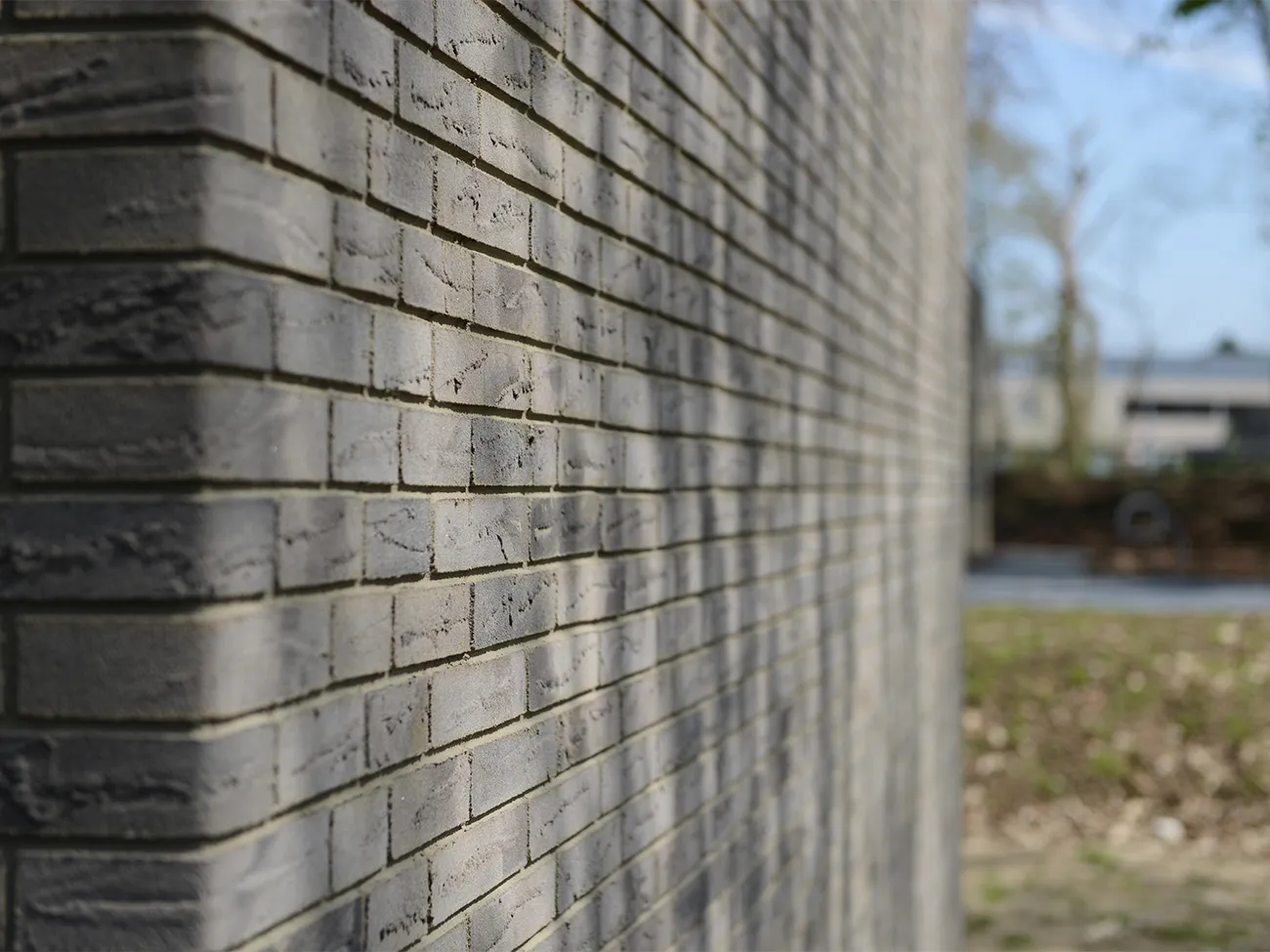
Unlimited design freedom
Another area in which StoCleyer B excels is aesthetics. “The system gives architects unlimited design freedom,” says Veerle Ooms. “The possibilities are extensive: horizontal and vertical bond patterns, curves, ceiling applications, jointless options … There is also a wide range of options and combinations when it comes to dimensions, colours and surface textures. Designers can experiment to their heart’s content using our online tool, ‘Cladding Creator’, and then visualise their designs in a Revit or CAD model to get a realistic impression of the finished façade. Every order is made to measure, with our industrialised production process ensuring quality and consistency. Efflorescence is also avoided, and StoCleyer B can be used on gently curved façades.”
In short, StoCleyer B has many valuable advantages without compromising on service life, robustness, quality or aesthetics. This is borne out by several exemplary projects. “One of the first projects was completed in 1986, so it is now more than thirty years old. We expect the building to last for at least another thirty years, a view also confirmed by the German Fraunhofer Institute. One exemplary Belgian project is Wallegang in Zoutleeuw. It was completed in 2013 in combination with our StoTherm Classic façade insulation system. The façades of those homes still look immaculate!”
Vraag over dit verhaal? Stel je vraag
Blijf dit volgen
Bij een nieuw verhaal krijg je een e-mail. Geen account nodig.
- OnderwerpSustainable construction