Sustainability is key in the certification of cement and concrete
Text Tim JanssensImage BE-CERT
Sustainability is moving fast in the construction sector. BE-CERT, the certification body for ready-mixed concrete, mortar and the associated raw materials, regularly meets producers who have developed an eco-friendly type of cement or concrete. Leslie Hammer and Laurence De Meyst, two young professionals who joined the team in 2020 and 2021, explain what added value BE-CERT can offer in this respect. “We are not just watchdogs, far from it: we proactively seek watertight evidence to substantiate the quality of sustainable innovations.”
The environmental impact of cement and concrete has been a hot topic in the construction industry for years. To bring it down structurally, forward-thinking producers and developers are innovating at a rapid pace. As a certification body, BE-CERT seeks to separate the wheat from the chaff. “We are the first to recognise that something urgently needs to change, so we are working intensively on this,” says Laurence De Meyst. “For instance, I am following developments in the use of AAM (alkali-activated materials) as an alternative cement-free binder at close quarters. We are also certifying an increasing number of water-based admixtures and advocating that performance criteria should no longer be based exclusively on mechanical tests measuring compressive strength, but also on durability tests.”
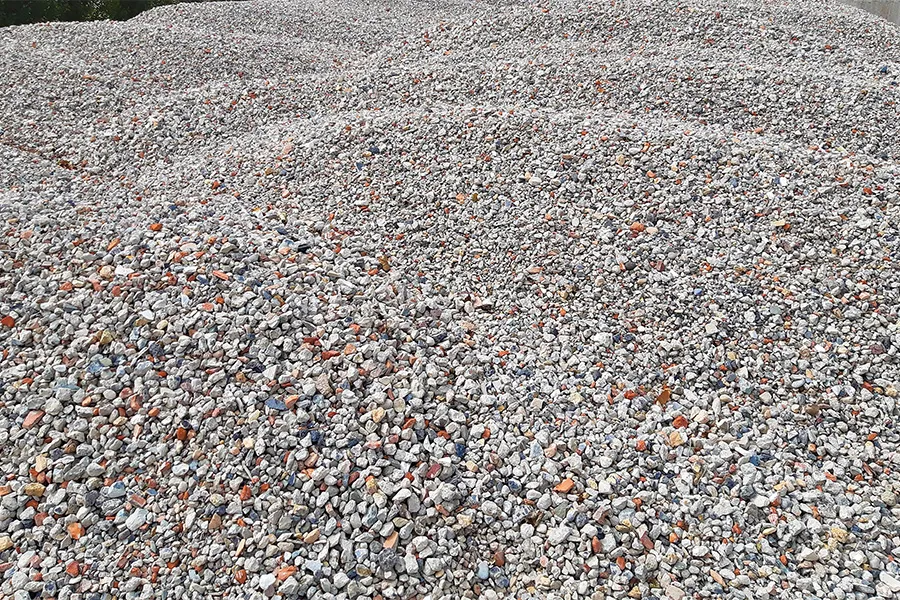
“For concrete containing recycled aggregates, we have introduced dedicated RS and RD certificates. Since last year, there has also been a new standard, NBN B 15-105, which focuses on demonstrating the fitness for use of alternative inert raw materials for concrete,” adds Leslie Hammer. “There is also plenty happening at European level,” Laurence De Meyst emphasises. “Two years ago, a new cement standard, NBN 197-5, was published, focusing on alternative types with an even lower proportion of Portland clinker. The relevant certificates have since been issued. The next part, NBN 197-6, is already in the pipeline and covers cement containing recycled concrete fines. BE-CERT is involved in the associated working groups and translates everything into the Belgian context (BENOR).”
Quality above all
It is clear that BE-CERT is not standing still and is doing everything it can to contribute to the sustainable transition. Yet there is sometimes criticism that standardisation and certification lag behind day-to-day practice. “That is unjustified,” says Laurence De Meyst. “With slag and fly ash becoming increasingly scarce as substitutes for CO2-intensive Portland clinker, and sustainability now a general priority, things are moving at breakneck speed and the pressure to introduce eco-friendly alternatives is very high. The problem is that their quality and durability over time have generally not yet been sufficiently demonstrated, whereas our first priority is to provide a robust quality guarantee. When we issue a certificate, it means there is sufficient confidence that a product is completely reliable. We owe it to users to leave nothing to chance. A great deal of research is therefore still needed, which understandably takes time and money. This creates tension with manufacturers, who would prefer to bring their innovations to market yesterday rather than today.”
Guaranteeing quality while responding to new developments as quickly as possible is no easy balancing act for BE-CERT. Fortunately, Technical Approvals (ATGs) can help. “If no standard exists yet, manufacturers can apply for a technical approval for a product in a specific application. However, depending on the scope, you should allow for a certain lead time, and of course there will also be costs involved. There is a good reason for this: every aspect is checked and every potential risk is covered.”
Taking a proactive approach with an open mind
It is important to note that BE-CERT is open to new developments and proactively seeks to respond to the needs of producers and users, Laurence De Meyst stresses: “I would like to return to the example of AAM (alkali-activated material) as an alternative cement-free binder. I have read up on it extensively, attended symposiums and contacted experts in the Netherlands and Germany, where this topic is also very much in focus. So it is not the case that we act only as watchdogs, far from it: we actively seek evidence to substantiate the quality of sustainable innovations.”
BE-CERT’s goodwill and ambition are also reflected in its staffing policy. “In recent years, we have recruited many new, young colleagues who bring fresh ideas and extra dynamism,” explains Leslie Hammer. “BE-CERT wants to keep its finger on the pulse and respond even better to current trends. In turn, people who work here have the opportunity to contribute actively to reducing the construction industry’s environmental impact, with an open mind and without any preconceived ideas. That is very rewarding.”
Een zakelijke vraag aan PROCERTUS? Get in touch
Companies in this story
Keep following this
Get an email when a new story is published. No account needed.
- SubjectSustainable construction
- CompanyPROCERTUS