“Circular façades are the future”
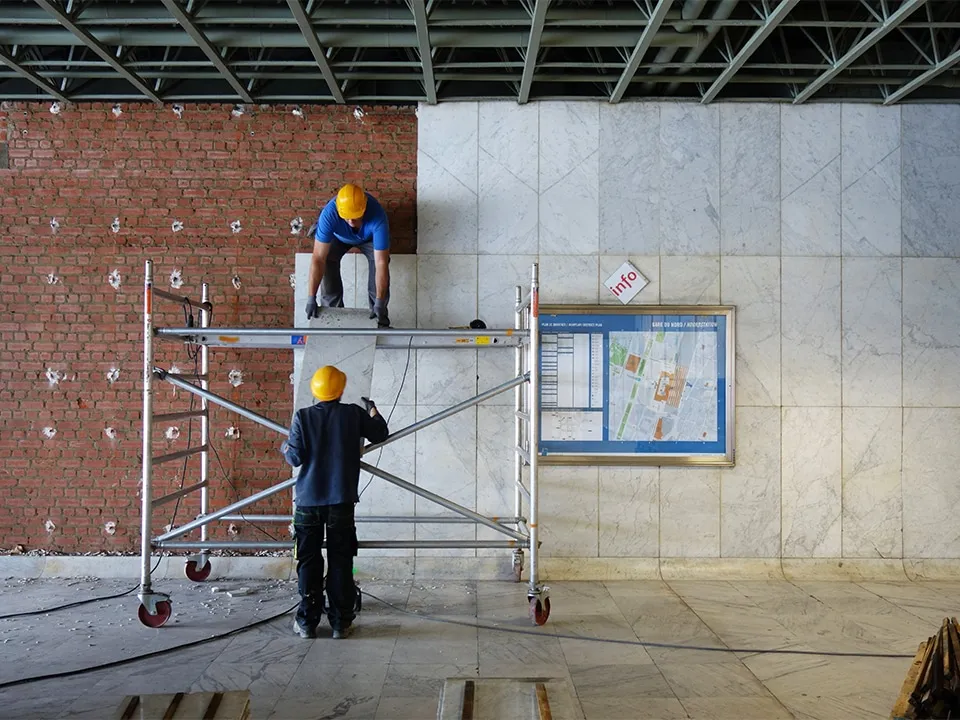
The construction industry thinks about façades differently from the way it did ten years ago. And perhaps we will think about them very differently again in the future.
Even so, experts seem to agree wholeheartedly on the direction façade design is heading: no more throwaway architecture, but more long-term thinking, circular façades and, finally, a focus on maintenance and total cost of ownership (TCO).
There is no getting away from it: within ten years, every new façade will have to be circular. Does this mean certain materials will disappear? “A shift in mindset is under way: materials that are not produced in an environmentally friendly way are disappearing,” says Dirk Driesmans (Q-BUS Architectenbureau). “Even so, short-term thinking is still far too common in speculative development. You often see people settling for more conventional materials because they are affordable and ‘good enough’.”
However, according to Peter Cornoedus (PCP Architects), a low-maintenance product does not necessarily have to be expensive. “The cheapest material in speculative housing is still brick, and it is a highly durable product. Developers are also increasingly recognising that they need to offer quality. A durable, environmentally friendly, low-maintenance building pays for itself. That is why we advise developers to choose new materials, because there is certainly a market for them. Perhaps not the mass market, but that does not have to be the case.”
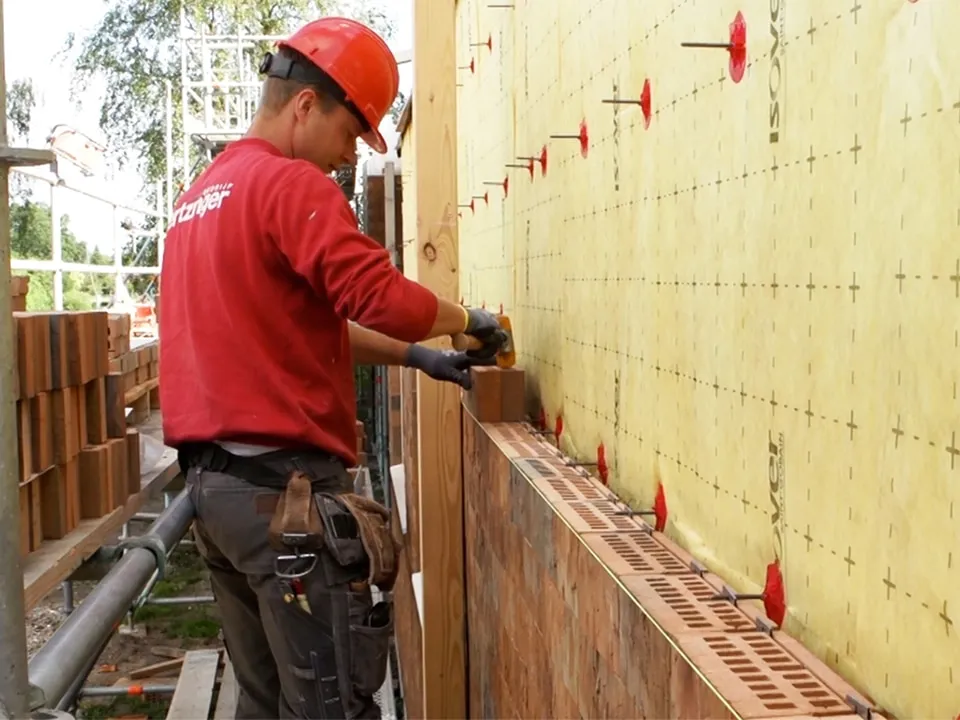
Design for disassembly and TCO
The rise of circular construction inevitably gives materials designed for disassembly an advantage, says Caroline Christiaens (Tata Steel): “Many manufacturers are focusing on recycling, but materials must first and foremost be produced to last as long as possible. They do not necessarily have to remain part of the same building. Design for disassembly is a logical consequence of that.” However, this principle is not straightforward in every sector. Roeland Mondelaers (Kingspan Insulation): “No insulation material can be fully reused. Designing for disassembly is not always straightforward for insulation manufacturers. We are therefore thinking hard about questions such as, ‘How can we reuse our product after twenty or thirty years?’”
As the emphasis increasingly shifts towards circularity, it is also important to give due consideration to maintenance and total cost of ownership (TCO). Does this actually happen in practice? “We always start with good intentions, but unfortunately some things fall by the wayside along the way for budgetary reasons,” acknowledges Maaike Berckmoes (VK Façade Engineering). “An important factor is the level of ambition set by clients and developers at the start of a project. Within this framework, the multidisciplinary team takes an integrated approach to design decisions, with maintenance and TCO also serving as key parameters in building design. While our designs always take the full lifespan into account, TCO analyses are increasingly used to underpin design choices in competition submissions and projects, partly as a result of the transition to a circular economy.”
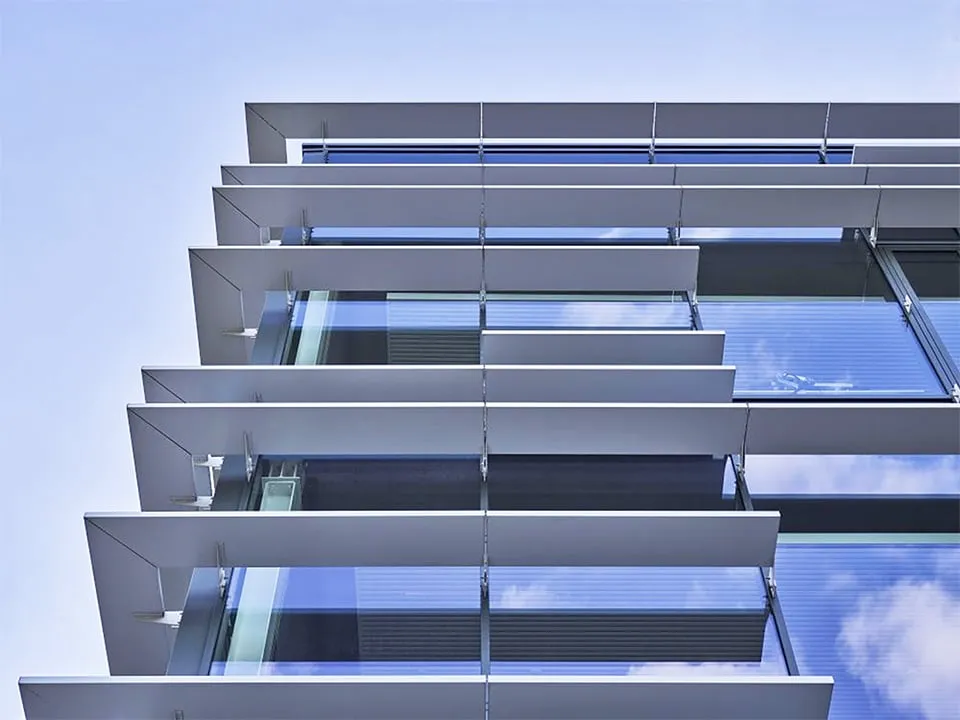
Maintenance and long-term thinking
“We are clearly seeing a shift in mindset among younger generations, with much more thought given to the long term,” says Hubert Bijnens
(AROgroup-architectuur). “Young people are questioning things we have taken for granted for years. As architects, we need to respond: no more ‘throwaway architecture’, but sustainable, future-proof and low-maintenance construction.”
Manufacturers are also noticing that maintenance is playing an increasingly important role and that façades need to withstand the test of time more than ever. One good example is bricks that are impregnated before they leave the factory, protecting them against soiling and gypsum formation. However, according to Caroline Christiaens (Tata Steel), there is still a great deal of work to do. “When it comes down to it, discussions are still very often about the money. When people have to choose between a ten-year or a forty-year guarantee, we see that short-term thinking still often wins out.”
“Not everything is built to last for ever,” recognises Peter Cornoedus (PCP Architects). “We have to weigh this up in every design. The requirements for the building envelope change year after year. Can we still build buildings whose envelopes are durable enough to last easily for two hundred years? One possible compromise is to create façades that can be adapted without having to demolish the entire building.”
This article is based on a panel discussion hosted by architectura.be. The following people took part:
- Hubert Bijnens (AROgroup-architectuur)
- Dirk Driesmans (Q-BUS Architectenbureau)
- Peter Cornoedus (PCP Architects)
- Roeland Mondelaers (Kingspan Insulation)
- Maarten Peeters (Vandersanden Group)
- Caroline Christiaens (Tata Steel)
- Maaike Berckmoes (VK Façade Engineering)
Question about this story? Ask your question
Companies in this story

Keep following this
Get an email when a new story is published. No account needed.
- SubjectThemes
- CompanyKingspan
- CompanyVandersanden