Extensive concrete repairs to the shaft building in Waterschei
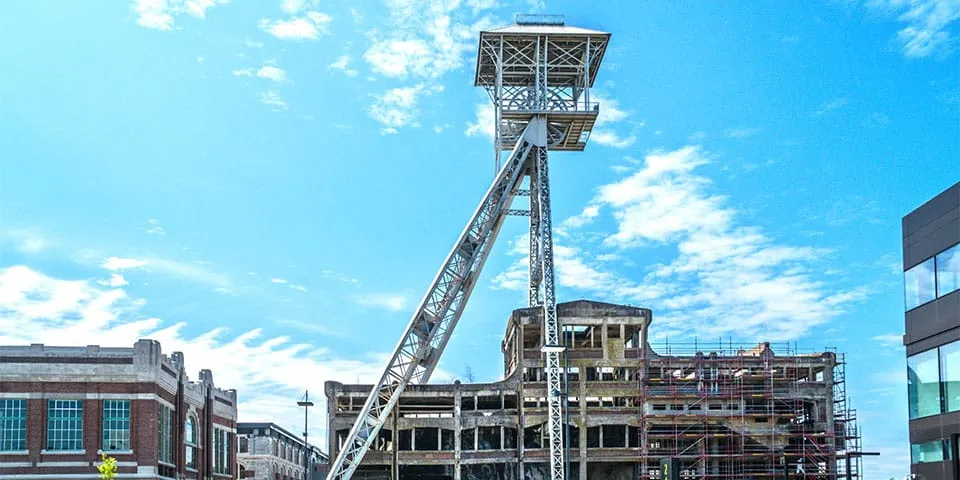
The former mining site in Waterschei, gradually being transformed into Thor Park, has been a hive of activity for years. As new developments spring up all around, the remaining industrial heritage is being restored. Following the main building (Thor Central), the winding house, the ventilation building and the footbridge, it is now the turn of the iconic shaft building. Through manual concrete repairs and effective corrosion protection measures, this imposing mining ruin is being prepared for a second life as an exhibition, reception and picnic space.
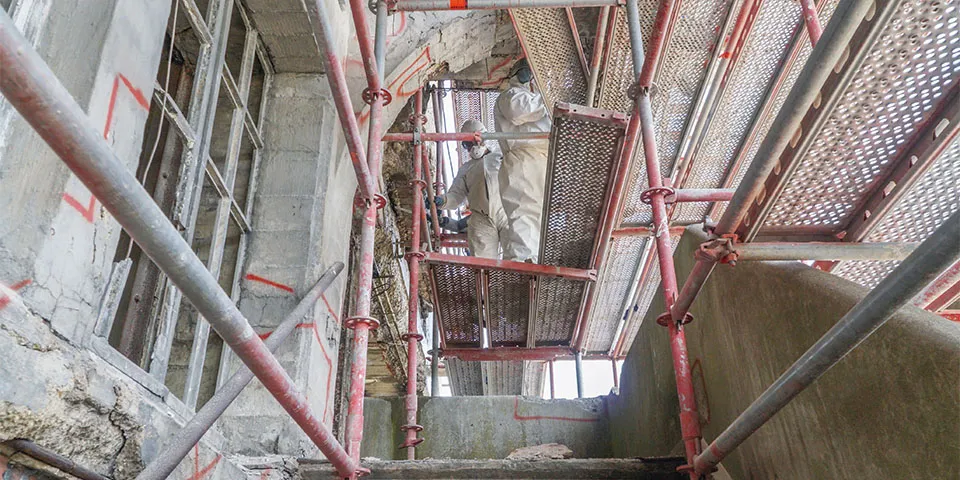
Around 80 per cent of the rehabilitation of the shaft building consists of manual concrete repairs.
The Waterschei coal mine was one of the seven collieries in the renowned ‘Campine Coalfield’. From 1907 to 1987, intensive mining operations took place across the site, which covers more than 100 hectares to the north-east of Genk. Afterwards,
the site faced the same fate as the other former mines in the region: dereliction and decay. Fortunately, its unique character was never entirely forgotten, and it has enjoyed protected status since 1993. As part of the prestigious Thor project, the remaining mining monuments are being thoroughly refurbished and, in some cases, given a new purpose. This also applies
to the impressive shaft building, which from 1 April will serve not only as a publicly accessible cycle parking facility and picnic area on the ground floor, but also as a unique exhibition and reception space on the first and second floors, linked to the main building by the 9-metre-high footbridge.
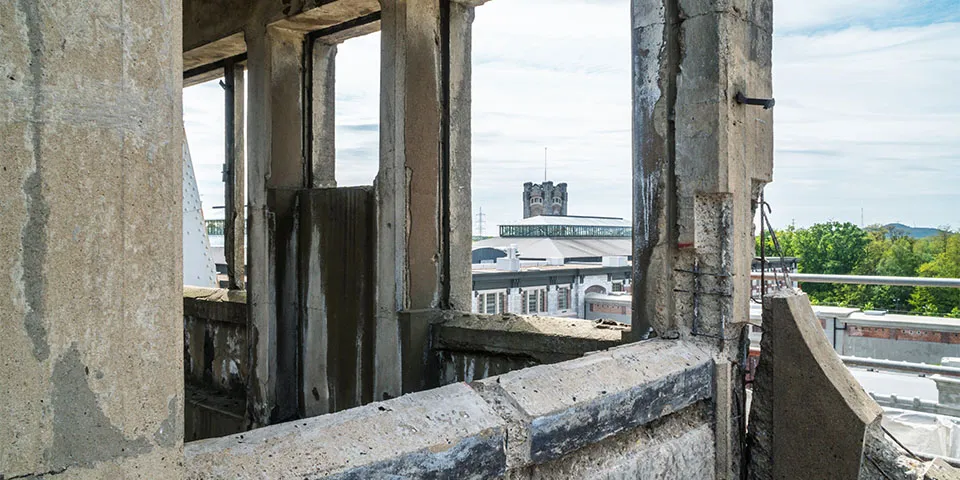
To make the exterior of the shaft building resistant to the weather and corrosion, it has been coated with a thin layer of micro-mortar and given cathodic protection.
200 tonnes of repair mortar
With its towering stature, the shaft building is one of the standout features of the former mining site. Its rigid concrete frame and large windows give the stark structure a raw, shell-like appearance, which must be preserved after the works. Hence the decision to focus largely on conservation, alongside restoration and renovation. This was no small task, as the reinforced concrete structure was in a fairly poor state. “Our extensive preliminary investigation revealed that a great deal of concrete repair work was needed,” says Jan Kriekemans, project manager at Renotec, which had previously also worked on the footbridge, damaged by carbonation and corrosion. “Around 80 per cent of the shaft building’s rehabilitation therefore consists of concrete repairs, which we carry out almost entirely by hand. By the end of the project, on 1 April, we will have used almost 200 tonnes of repair mortar to remedy all the structural defects. That is no small amount. As we were given only a year to refurbish the shaft building, this is a very labour-intensive project. We have around 25 people working on site at all times and follow a very strict schedule. So far, we are right on track!”
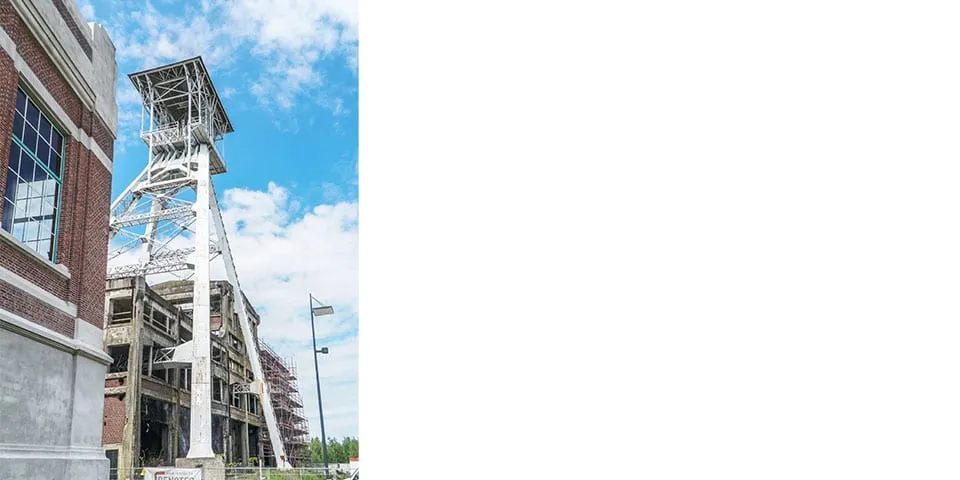
The shaft headframe will also be refurbished in the near future.
Cathodic protection
To make the exterior of the shaft building resistant to the weather and corrosion, it has been coated with a thin layer of micro-mortar and given cathodic protection. “If you really want to stop corrosion, you need to opt for impressed-current cathodic protection. We tested this technique a year before the works began using a trial installation, which showed that the system we developed for this building is not only effective, but also durable over time. We have therefore fitted the exterior with zinc anodes to provide maximum protection for the reinforcement from now on,” explains Jan Kriekemans. “We have also used bonded reinforcement in certain places to strengthen concrete elements or structures. Other works included installing a new roof, integrating two rooflights, carrying out electrical work, installing a steel landing and handrails to provide safe access, and fitting several new windows and doors. Despite all these interventions, the building’s mining past will remain tangible in the refurbished shaft building, which will remain an open structure for the most part.”
Question about this story? Ask your question
Keep following this
Get an email when a new story is published. No account needed.
- SubjectThemes