High-quality sewer manholes thanks to self-compacting concrete
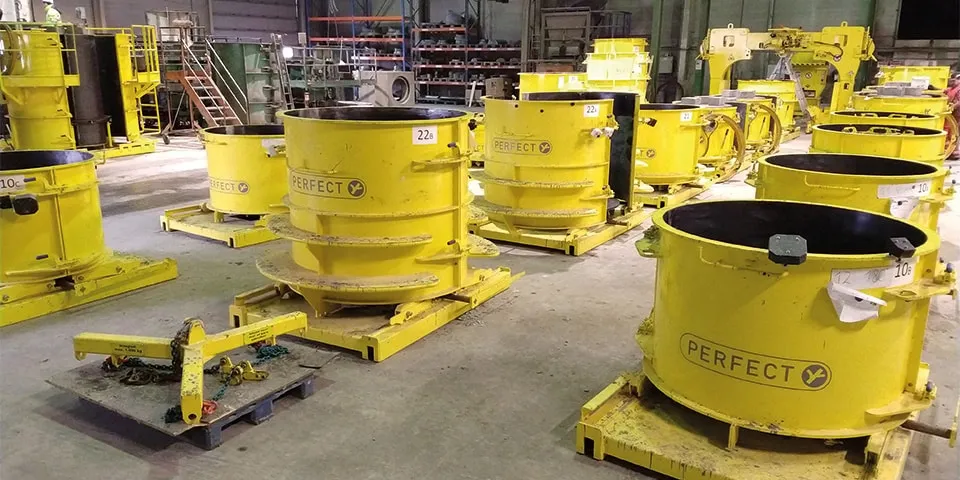
Major road construction projects often also involve new sewers. However, producing sewer manholes using traditional methods is a time-consuming process that puts pressure on the schedule. “If you want a quick result that is also high quality, our self-compacting concrete solutions are the obvious choice,” says Alkern VOR Beton in Roeselare.
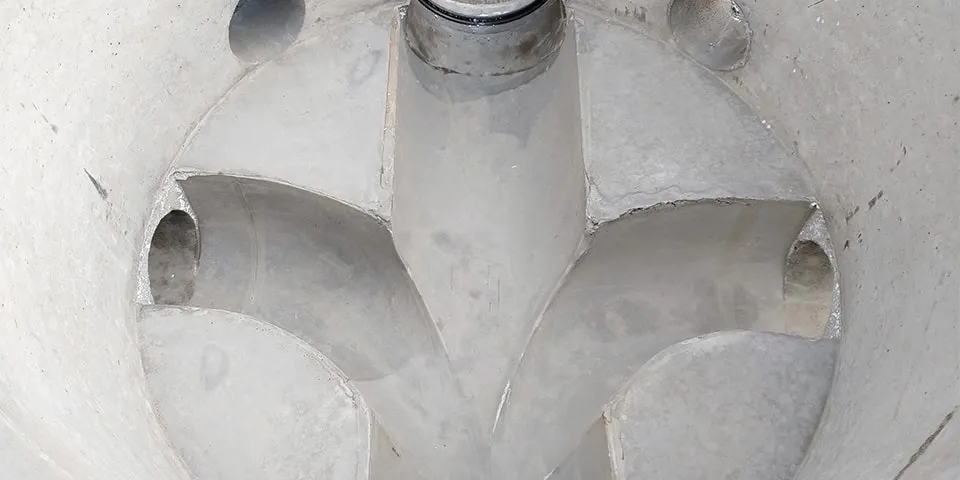
Thanks to the PERFECT system, which also allows the flow channels to be formed straight away using polystyrene formers, the quality of the manholes is greatly improved.
In the past, sewer manholes were produced using a conventional vibrating machine. Once the concrete had been compacted, a great deal of manual work was still required. “It was a lengthy process, and one that was also prone to human error and imperfections,” says Stijn Degraer, managing director of Alkern VOR Beton. “The PERFECT system from Austrian manufacturer Schlüsselbauer has done away with these problems. This solution forms concrete flow channels in the bases of the manholes using a combination of moulds and polystyrene formers. With self-compacting concrete, we can produce a finished product with almost no manual intervention. Once the concrete has cured, the manhole can be demoulded, turned and placed in storage straight away. Our experience shows that this can save up to 40 % of the time on site.”
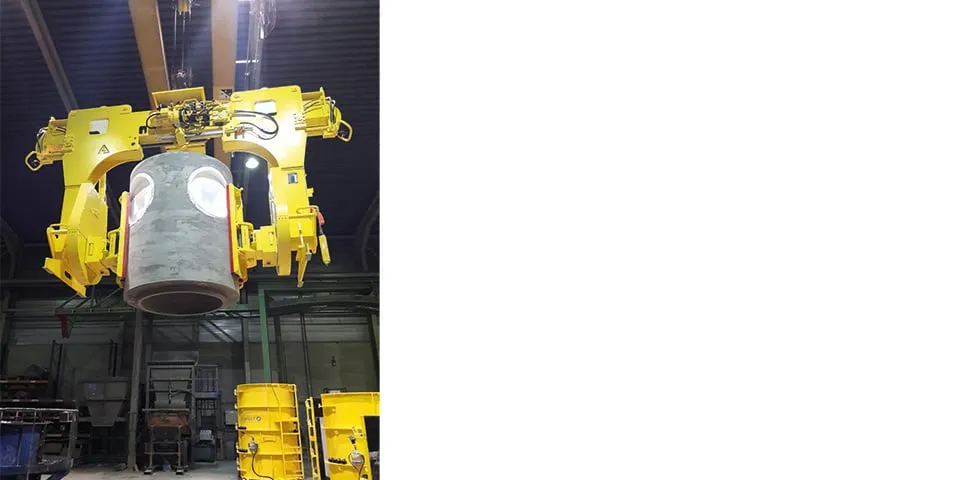
Once the concrete has cured, the manholes can be demoulded, turned and placed in storage straight away.
A closer look at the solution
The polystyrene formers are assembled with great precision using advanced laser technology that projects the configuration onto the workbench. “This allows us to avoid human error,” explains Stijn Degraer. “The different sections of the polystyrene profile are cut beforehand to the required dimensions and curves by our automated saw. Once assembled, the moulds are filled with self-compacting concrete. We choose this material for its high flowability. The smooth finish of the flow channels is another advantage: it reduces the risk of blockages and, combined with the precise geometry, makes it easier to achieve a better fit between the various socket and spigot joints. Connections at an angle
can also be cast in without any problems. This means our manholes already meet tomorrow’s standards.”
Question about this story? Ask your question
Keep following this
Get an email when a new story is published. No account needed.
- SubjectThemes