Insulating a façade? Beware of thermal bridging!
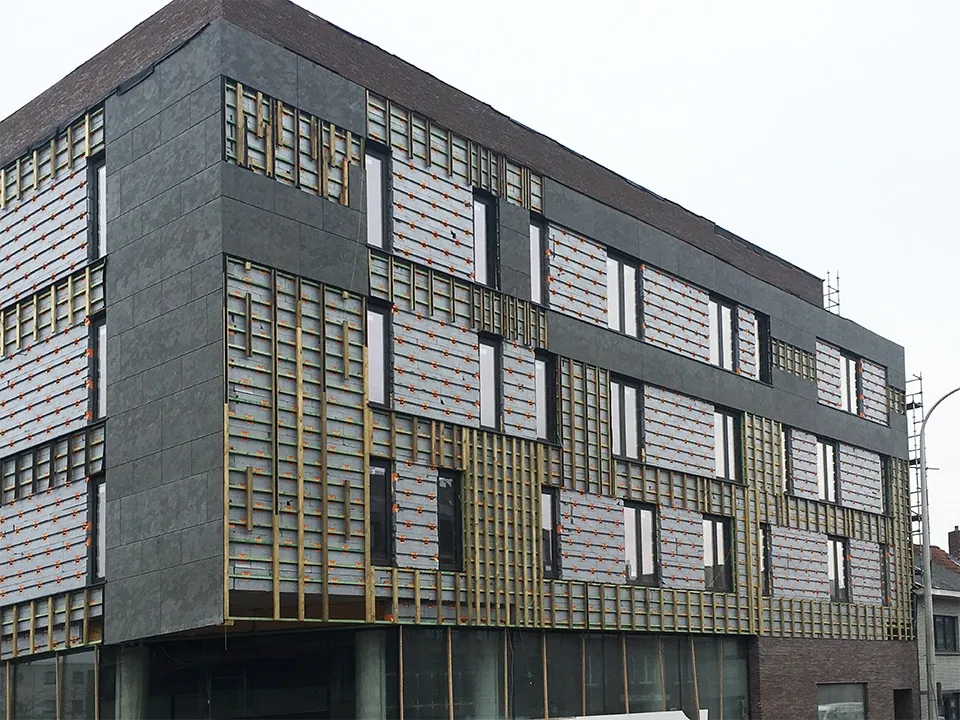
When insulating or upgrading the insulation of façades, too much attention is still paid solely to the RD value of insulation materials. Too little account is taken of the impact of thermal breaks, such as timber battens or a large number of screws. As a result, the required insulation performance is often not achieved in practice.
Take, for example, a traditional façade insulation system with a timber frame filled with insulation. The timber battens act as thermal bridges, meaning an initial RD value of, say, 6.5 can result in an Rc value of just 4.5 (based on a Trisco calculation with a timber fraction of 15 %). Another example is systems using stand-off screws. In practice, an average of at least six screws per m2 are required. This means an RD value of 5.8 is needed to achieve an Rc value of 4.5. In other words, the insulation material's RD value needs to be around 30 % higher than the required Rc value.
Smart insulation board
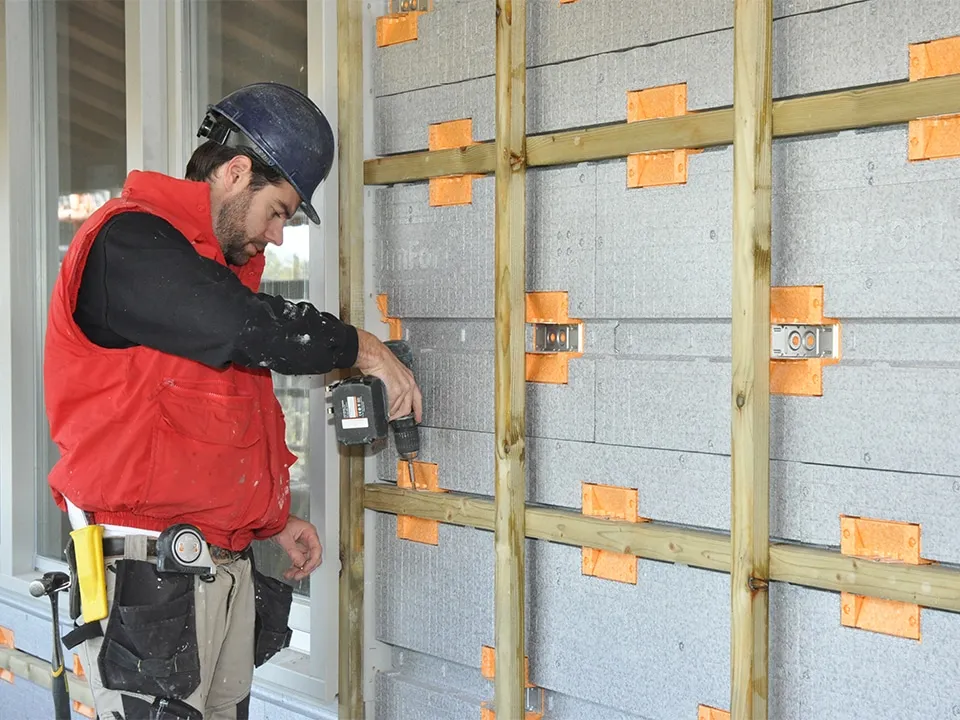
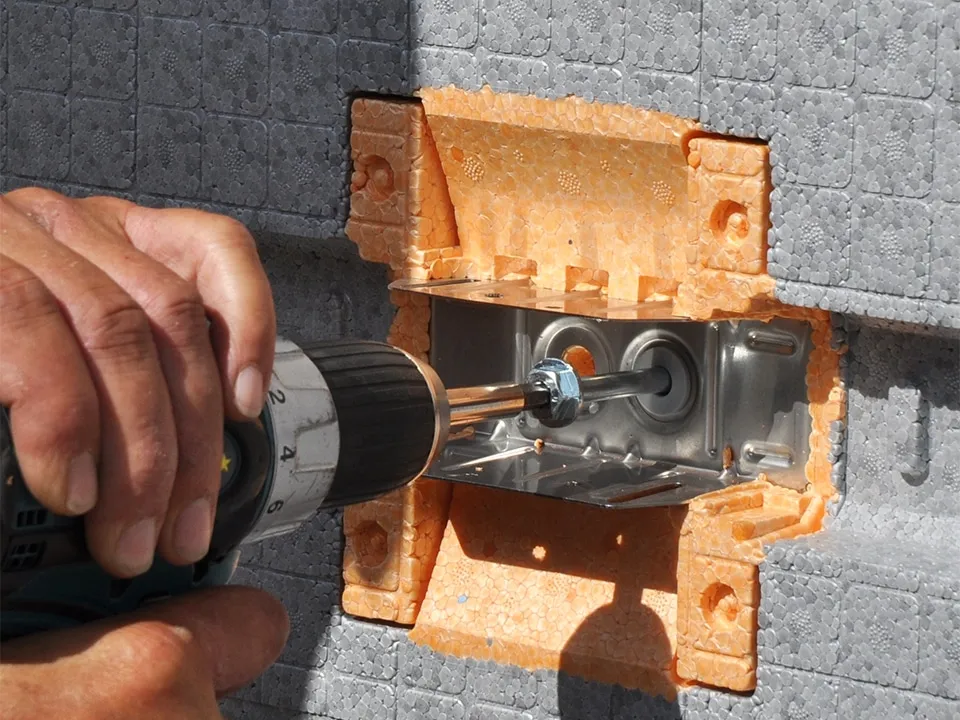
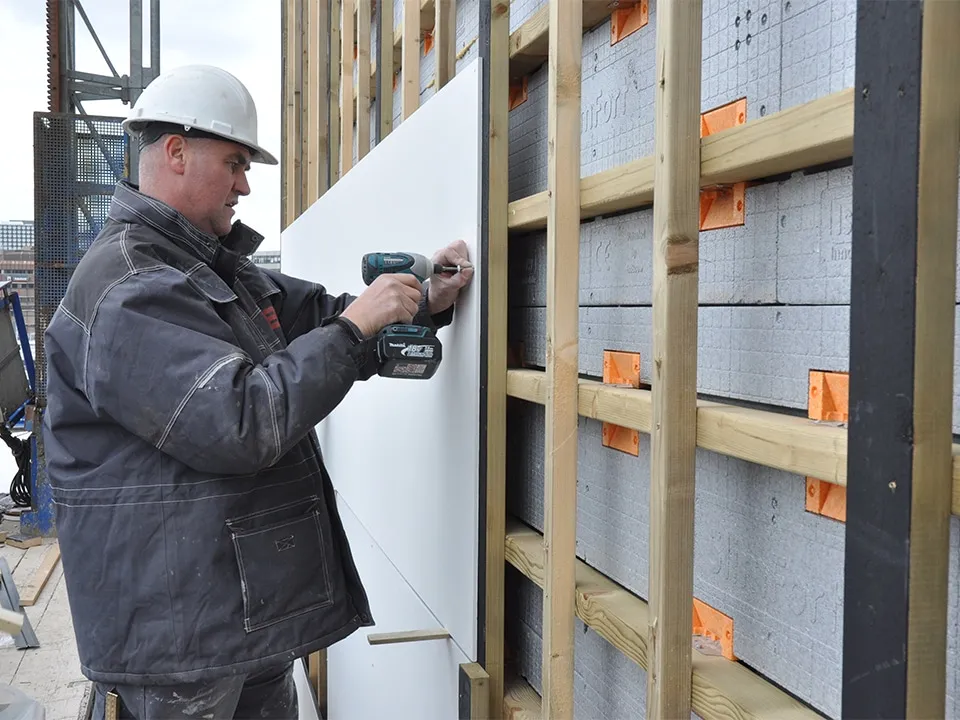
SlimFort is an insulation board by IsoBouw with integrated metal brackets that do not make contact with the supporting structure. With SlimFort, builders can insulate and finish a façade aesthetically in three steps. First, the SlimFort boards are screwed to the supporting structure using the integrated brackets. The boards fit together thanks to their robust tongue-and-groove joints. The metal fixing brackets also serve as supports for the timber or aluminium subframe. Once the subframe has been screwed in place, the façade cladding is installed. Thanks to its continuous insulation layer, SlimFort delivers optimum insulation. Usually, only 2.8 screws per m2 are needed. The impact of these screws on the Rc value has already been taken into account in the specification (thickness) of SlimFort.
Cost-effective choice
A façade structure also needs to have effective ventilation. This prevents unpleasant damage to the façade cladding and extends the service life of the structure. Thanks to the installation method, a façade with SlimFort is always optimally ventilated. The SlimFort system may not be cheaper than standard insulation boards, but it is the most cost-effective option. The savings also come from using fewer other materials and reducing installation time. Installation is around 50 % faster than with traditional façade insulation systems. Since thermal bridges do not need to be compensated for, around 15 % less insulation material is required. Timber use is reduced by 50 to 75 %, and there is no need to use a membrane at all.
Question about this story? Ask your question
Keep following this
Get an email when a new story is published. No account needed.
- SubjectThemes