“Repairing fire-damaged concrete structures is perfectly feasible”
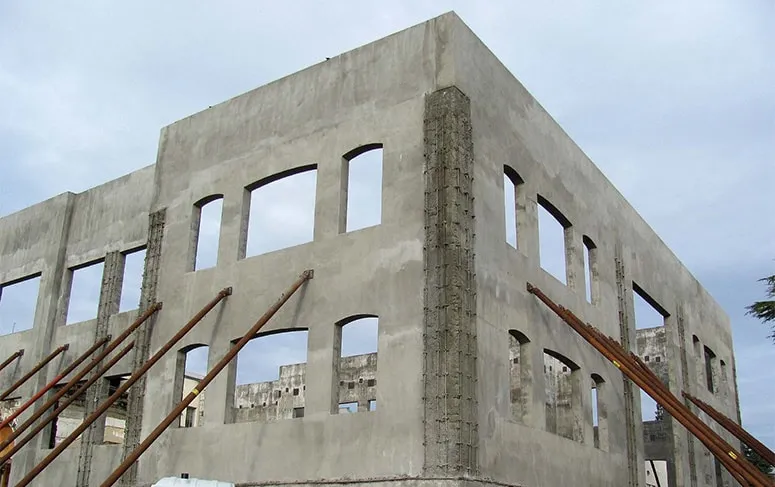
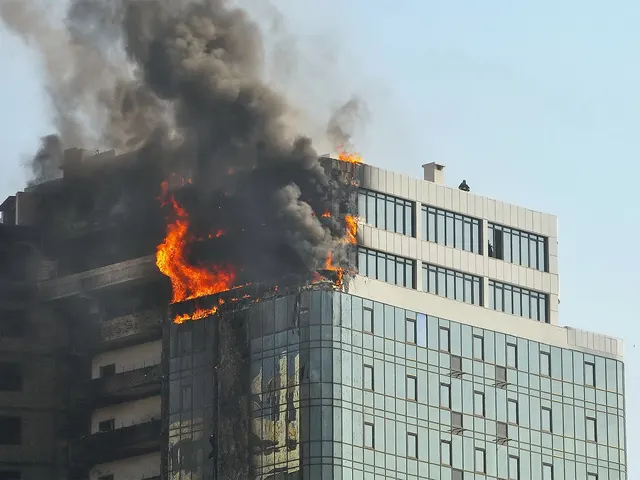
Concrete’s high fire resistance is one of the many reasons to choose this sustainable building material. Despite the internal and external damage caused to a concrete structure by an intense blaze, a building does not necessarily have to be demolished afterwards. “Microscopic investigation and carefully planned concrete repairs can restore the load-bearing concrete structure of fire-damaged buildings to service,” says Luc Taerwe, professor at UGent.
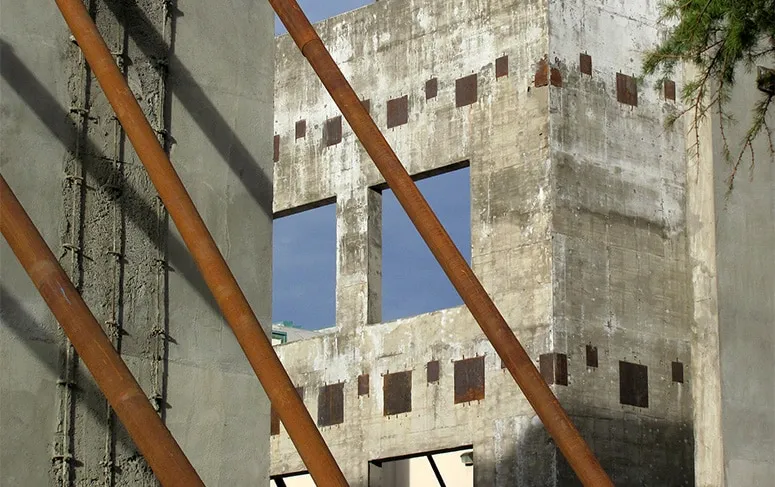
Once the damaged layer has been removed, fire-damaged concrete can be repaired and/or strengthened using repair mortars.
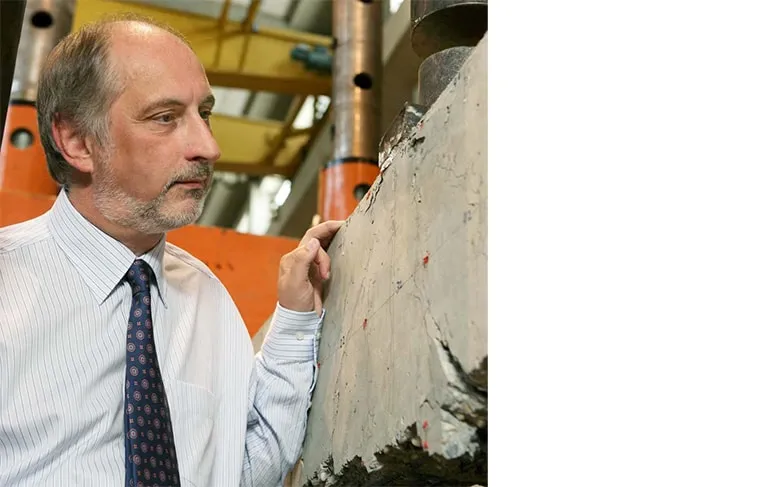
Professor Luc Taerwe specialises, among other things, in concrete structures and reinforced concrete. Together with Emmanuel Annerel, he wrote the 2013 paper ‘Damage assessment of concrete structures exposed to fires’, which examined how concrete behaves in a fire and the methods used to assess its residual load-bearing capacity. “Repairing damaged structures can make economic sense, as it avoids the costs of demolition and reconstruction and allows the building to be used again sooner,” Taerwe and Annerel concluded. “Concrete structures are generally relatively fire-resistant. Concrete has a high fire resistance, which can last for several hours, far longer than other building materials such as steel. This is also why reinforced concrete is so popular: the concrete cover provides excellent protection for the internal structural steel.”
‘Performance-based design’
What accounts for this high fire resistance? “Concrete has a relatively low thermal conductivity,” says Taerwe. “This means the temperature within a concrete element does not rise very quickly. Heat from the fire is transferred to the concrete, but it takes a relatively long time for the inner part of the concrete to heat up significantly.”
It is also worth protecting concrete against the damaging effects of fire in advance. ‘Performance-based design’ can significantly reduce the risks. “During the first half-hour of a fire, there is a risk of the concrete spalling, which can of course be very dangerous. However, this can be prevented by choosing a specific concrete mix or adding polypropylene fibres,” Taerwe explains.
Luc Taerwe: “Specialist concrete repairs are often quicker and more appropriate than demolishing fire-damaged buildings and rebuilding them.”
Less consequential damage
A fire inevitably affects concrete structures. Over time, the internal temperature rises and mechanical properties such as compressive strength and modulus of elasticity decline. “However, compared with other construction materials, this process is relatively slow in concrete, resulting in less consequential damage. That is why fire-damaged concrete structures often remain standing. Thermal effects nevertheless frequently cause cracking. Concrete can also gradually crumble when certain components disintegrate at a given temperature, leading to internal microcracks and the concrete breaking apart. Since such cracks are not always visible to the naked eye, samples should be examined.”
Residual strength
After a fire, the remaining load-bearing capacity and residual strength must also be assessed, Taerwe stresses: “This involves taking samples as well as carrying out technical and mechanical calculations for the elements. Microscopic examination of selected samples provides insight into their compressive strength, the temperature to which the concrete was exposed, the structural changes that have occurred and the extent of the damage to the different concrete layers.”
Where residual strength is no longer adequate, the local concrete elements can be strengthened to restore the structure’s original load-bearing capacity. “Once the damaged layer has been removed, the concrete can be repaired and/or strengthened using repair mortars. And if the reinforcement no longer provides sufficient strength, external reinforcement can be added. Specialist concrete repairs are often quicker and more appropriate than demolishing fire-damaged buildings and rebuilding them. The choice is, of course, up to the client, but they should in any case understand that repairing fire-damaged concrete structures is perfectly feasible.”
Words: Filip Van der Elst | Image: UGent, Flickr
Featured image: Concrete structures are generally relatively fire-resistant. Concrete has a high fire resistance, which can last for several hours.
Question about this story? Ask your question
Keep following this
Get an email when a new story is published. No account needed.
- SubjectThemes