Sustainability as a guiding principle for international building materials producer
“Sustainability is in our company’s DNA and is a tangible ambition for us. Our culture is based on strong values, with a clear sense of responsibility towards future generations and respect for the environment.
Many of our investments and innovations are made within that sustainable framework.” Speaking is Caroline Van de Velde, CEO of building materials producer Wienerberger in Belgium. Demountable facing bricks, circular shrink wrap, reuse of rubble, transport by water …: Wienerberger is doing everything it can to limit its environmental impact, both in its production processes and through product innovations.
Last year, Wienerberger celebrated its 200th anniversary. The international group has since grown into one of the world’s largest brick producers, with a strong position in the production of clay roof tiles, as well as plastics and ceramic pipes. The Belgian division has 11 production sites, 18 quarries and 1,200 employees. Wienerberger is strongly committed to sustainability both internationally and in Belgium. “We aim to cut CO2 emissions by 30% by 2030 and be CO2-neutral by 2050. Our ambitions are high, and we are doing everything we can to achieve them,” says CEO Caroline Van de Velde. “You cannot introduce sustainable business practices overnight. It is a process that takes years, and at Wienerberger we were aware of that long before climate change became as widely discussed as it is today. We are already reaping the benefits of our efforts, both in our production processes and through product innovations.”
Renewable energy and reuse
Wienerberger is making a significant contribution in the field of energy. The roofs of all 11 of its production sites in Belgium are covered with solar panels: 75,000 in total, equivalent to 45 football pitches. But that is not enough for Wienerberger. “The next step is to install wind turbines. Our Beerse site will be the first to take the plunge, as we will soon begin construction of our first two wind turbines,” says Caroline Van de Velde. “We also have numerous programmes under way to further reduce our energy consumption and contribute to climate targets.”
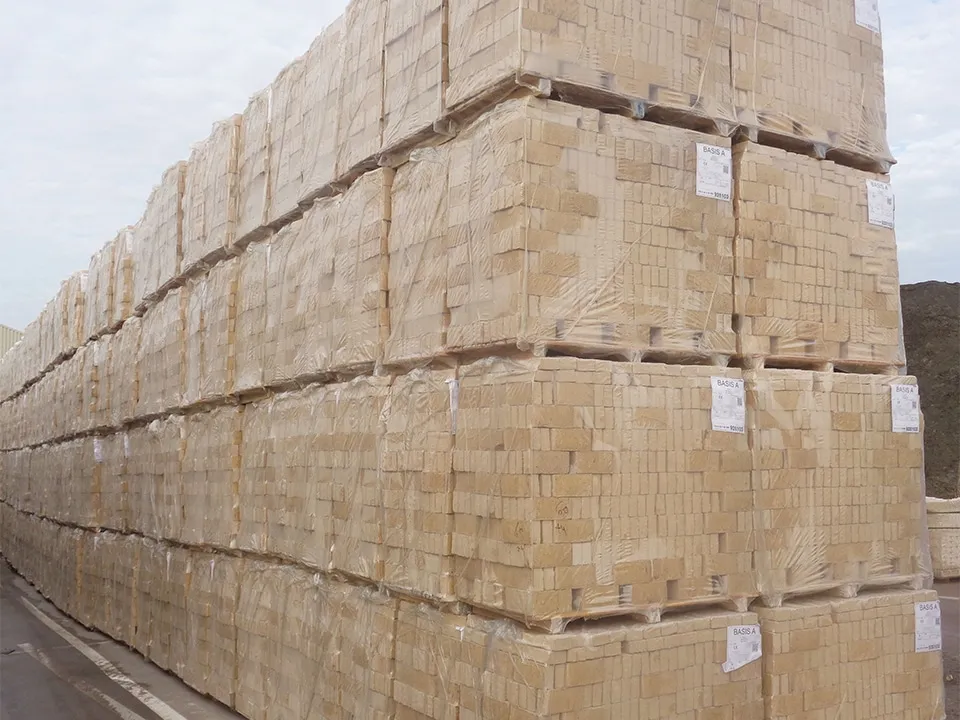
Wienerberger is also fully committed to reuse. Rubble generated by certain production processes is crushed, screened and reused as a raw material. Last year, the brick manufacturer launched a circular shrink wrap in collaboration with Valipac, Total and other external partners. The new shrink wrap contains at least 50% recycled plastic, and the finished product is technically and physically much stronger and better than virgin material.
Water and biodiversity
“We also seek to promote biodiversity by creating natural habitats in our exhausted clay quarries. In Beerse, for example, we have created an extensive 1-hectare inland dune as a buffer between industry and a nature reserve. At its base is an ecological ditch that stores rainwater and makes excess water available for reuse,” says a proud CEO. “Across the company, we also try to minimise our use of mains water by using rainwater.” Transport is also linked to
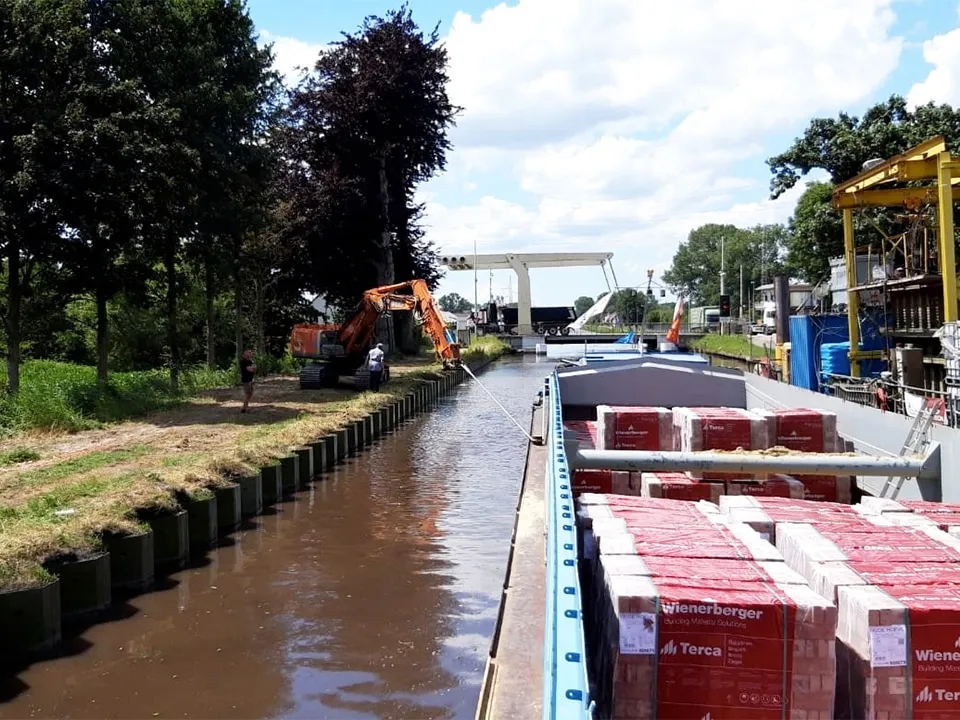
water, and Wienerberger moves as much as possible by ship. “When you consider that one ship is equivalent to 32 lorries, we are taking a considerable number of vehicles off the road,” Caroline Van de Velde stresses.
Circularity and energy efficiency
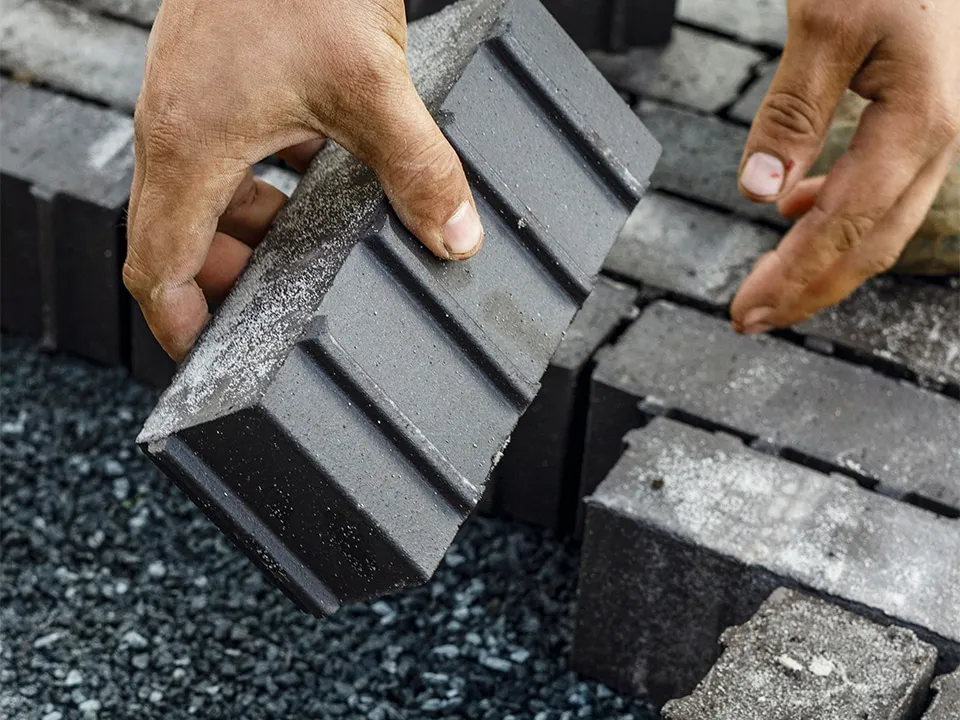
Wienerberger’s commitment to sustainability is also reflected in its products. Caroline Van de Velde says: “Circularity is very much in the spotlight today, even though our paving and facing bricks and roof tiles are inherently circular products. They have a long lifespan, ranging from 70 to 150 years, and retain their functional and aesthetic qualities throughout. As a result, they are ideally suited to reuse, even in new-build projects.” One important innovation in circular construction is ClickBrick, a demountable façade system in which facing bricks are dry-stacked. The mechanical connections mean that contractors can later remove the bricks without difficulty and use them elsewhere, without wasting materials or raw resources.
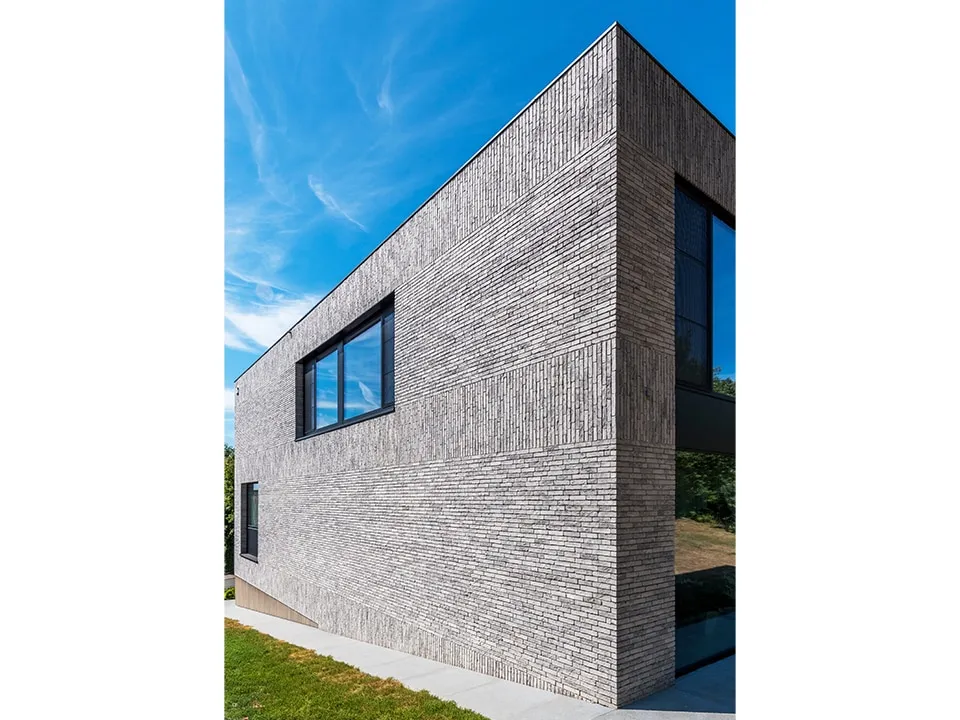
Wienerberger’s building products help optimise the building envelope and thus contribute to energy efficiency. The brick manufacturer takes this a step further with Eco-brick, a narrower facing brick measuring 6.5 to 7 cm deep instead of the standard 10 cm. “This brick improves energy efficiency by providing up to 3.5 cm more space for insulation. Its lower weight also means more bricks can be transported per load. This is a very good example of ‘less is more’,” says Caroline Van de Velde. It is clear that Wienerberger is doing everything it can to reduce its industrial footprint. Given the many innovations, there is certainly more to come …
Een zakelijke vraag aan Wienerberger nv? Get in touch
Companies in this story
Keep following this
Get an email when a new story is published. No account needed.
- SubjectThemes
- CompanyWienerberger nv