The fight against gypsum deposits on façades
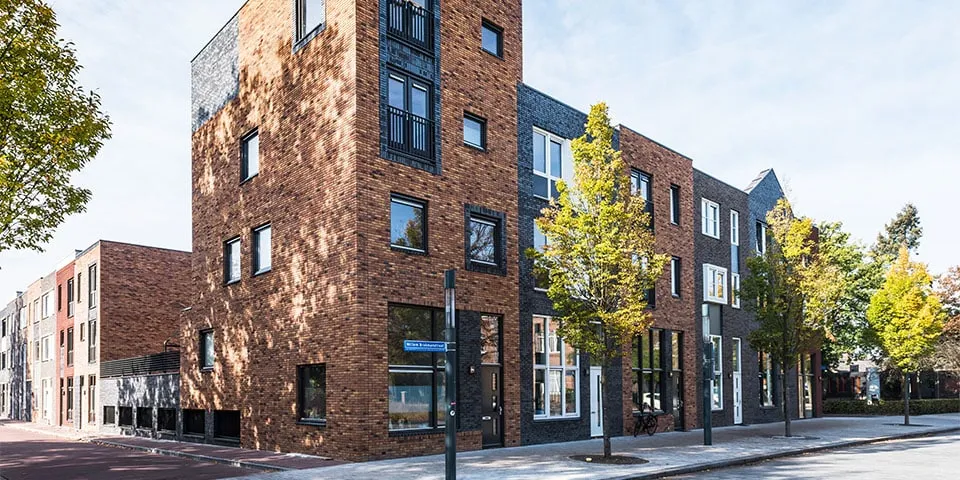
Vandersanden Group’s three Belgian factories have been ready for the future for some time. The brick manufacturer will soon also equip its Dutch façade-brick plant with an impregnation line. An ideal solution to the growing problem of gypsum deposits on façades.
Impregnation line ensures façade bricks stay beautiful for longer
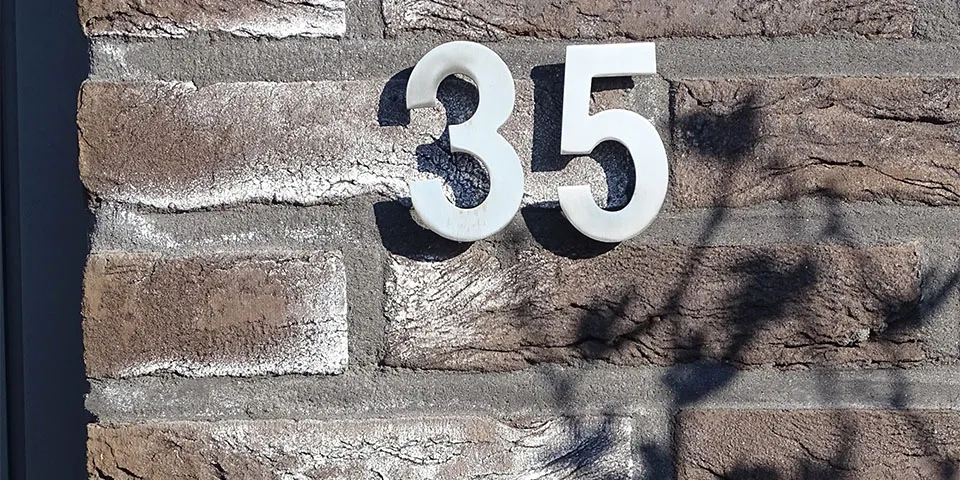
In recent years, an increasing number of façades have been affected by gypsum deposits.
Jean-Pierre Wuytack, CEO of Vandersanden Group: “Our mission is to create façades that stay beautiful for longer.
Ten years ago, we set up an innovation unit to make our bricks even better, more attractive and more environmentally friendly. That unit also developed our latest innovation: impregnated
bricks. After firing, we treat the outer edges of the bricks with a special liquid to make them water-repellent. This protects façades against gypsum deposits, a problem that has become increasingly severe in recent years.”
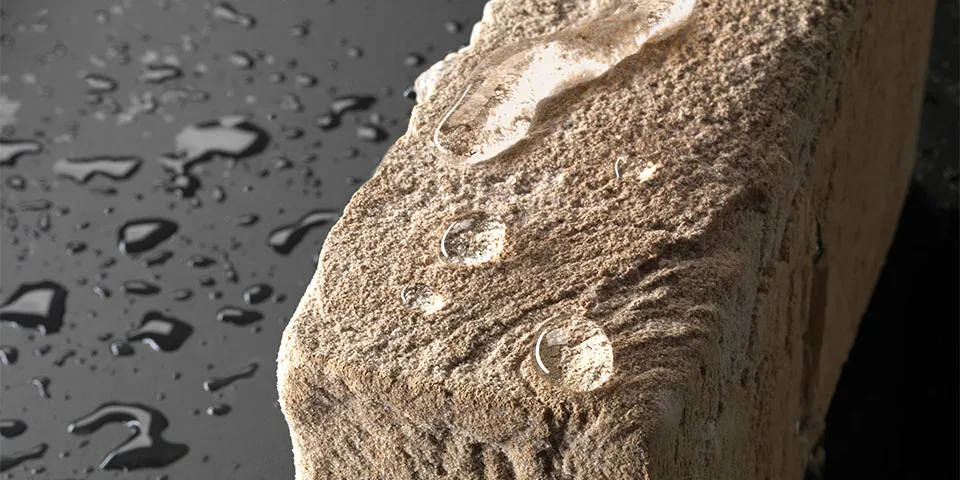
Façade bricks are made water-repellent using an impregnating agent.
More façades affected by gypsum deposits
What are gypsum deposits? Think of the greyish-white film that appears on many brick façades just months or years after completion. A dull veil forms, particularly on parts of the façade exposed to heavy rain and sunshine.
The film worsens over time and cannot be removed with water. It only disappears after sandblasting.
Belgian brick manufacturers have already commissioned several studies into the phenomenon. One cause is the rising CO2 content in the air. Gypsum is added to cement mortar to prevent it from hardening too quickly. The gypsum reacts with the cement, forming ettringite and monosulphate. CO2 in the air breaks these substances down again. When it rains, the gypsum is carried through the pores in the mortar onto the façade bricks. As the bricks subsequently dry out, the gypsum gradually becomes visible on their surface.
A second cause is that construction companies are increasingly using pre-mixed cement mortars. These contain air-entraining agents to make them easier to work with. But the more pores and air the mortar contains, the more gypsum is formed. Plasticisers in the mortar carry the gypsum to the surface. On top of that, many modern buildings no longer have roof overhangs. This leaves façades even more exposed to the vagaries of rain, wind and sunshine.
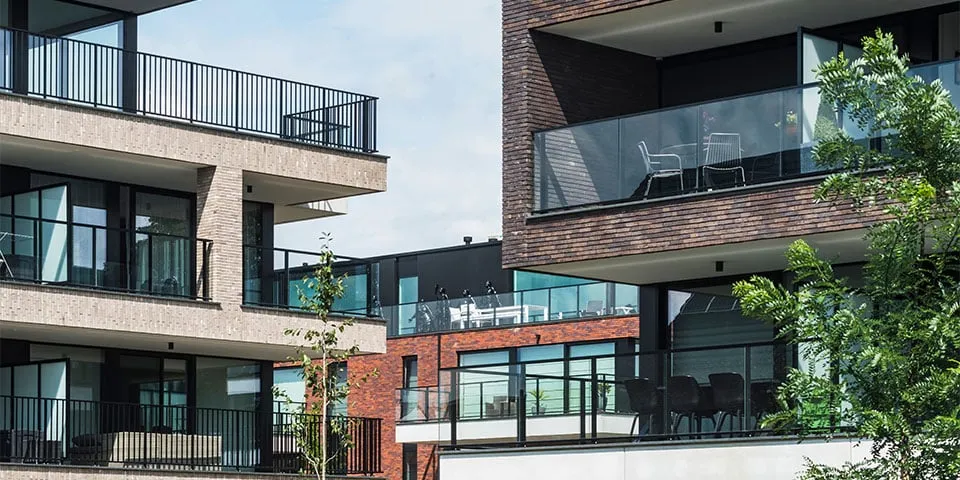
Impregnated bricks prevent dirt, gypsum deposits and salt efflorescence from taking hold. (Image: Marc Sourbron)
Façade bricks that stay beautiful for longer
Are there any solutions to gypsum deposits? Jean-Pierre Wuytack: “You can bond the bricks. Adhesive is virtually waterproof, but of course it does not give you the same result as a beautiful, traditional mortar joint. In 2017, KU Leuven devoted a PhD thesis to alternatives to cement mortar for preventing gypsum deposits. But these alternatives are currently still too complex to produce, and therefore too expensive. We did not wait for the PhD research to be completed. In 2015, we decided to make our bricks water-repellent using an impregnating agent, a technique that has long been established for roof tiles. The product penetrates 5 to 10 mm into the brick. It repels water while allowing internal water vapour to escape. This is important to prevent frost damage to the bricks. The water-repellent outer surface also keeps out dirt as well as gypsum. Another benefit is that it prevents salt efflorescence. As with non-impregnated bricks, the water-resistant bricks must be laid in dry, windy conditions. In cold, wet winter weather, the mortar should be mixed slightly drier.”

Jean-Pierre Wuytack, CEO of Vandersanden Group: “We invested 35 million euros in impregnation lines.”
Investment of 35 million euros
Vandersanden Group had impregnation lines installed at its four factories for the impregnated bricks, representing a total investment of 35 million euros. Jean-Pierre Wuytack: “But our customers will not notice any difference. There is no price difference compared with the other bricks. For 95 years, we have been making products that enhance our surroundings, and we intend to continue. That is why we see it as our duty to make this investment: we want to create façades that will still be just as beautiful a hundred years from now.”
Een zakelijke vraag aan Vandersanden? Get in touch
Companies in this story

Keep following this
Get an email when a new story is published. No account needed.
- SubjectThemes
- CompanyVandersanden