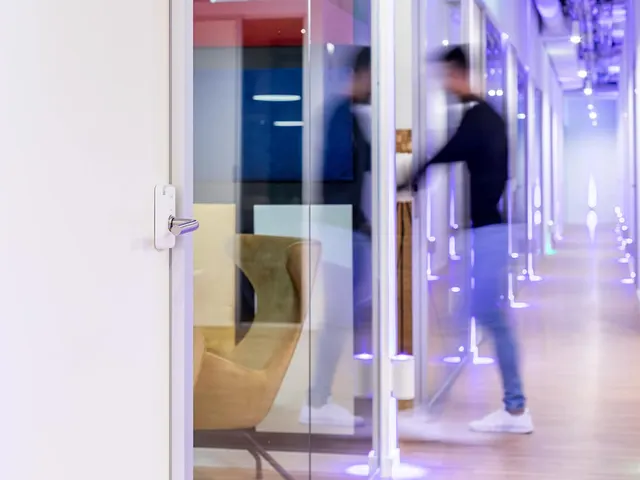
The key to accessible buildings
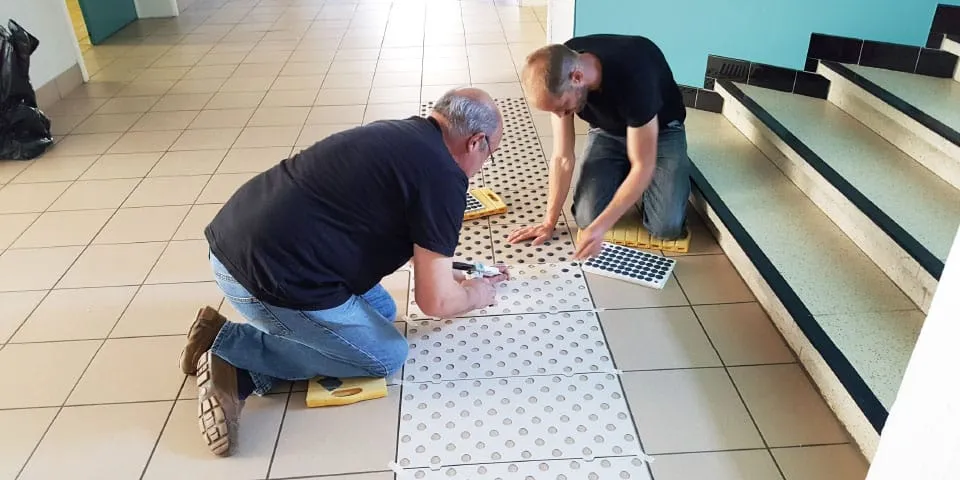
Christian van Kan founded VIAKAN in 2002. The Beersel-based company is constantly looking for new ways to improve accessibility in public spaces. Van Kan has a very clear vision of what this takes. “Clients, designers and business owners must see accessibility as a quality upgrade for all visitors, not just people with disabilities.”
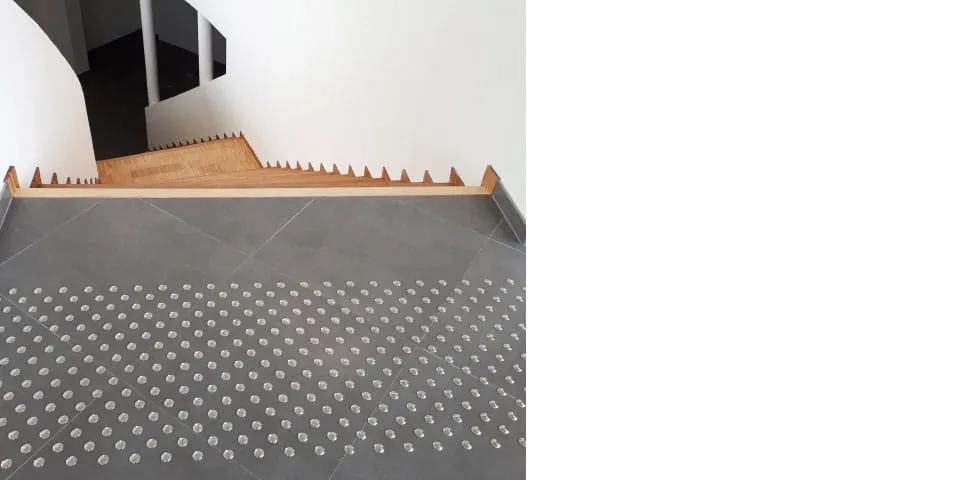
The installation of tactile studs is strictly regulated, particularly near staircases.
Stairs, thresholds and protruding objects: buildings contain many obstacles that pose a real danger to older people and those with impaired vision. It is therefore important to warn visitors when they are approaching such an obstacle. Christian van Kan, formerly a specialist in road-marking paint, took on this mission after visiting a trade fair in England. There he came across resin tactile guidance tiles. Van Kan explains: “I initially sold outdoor solutions, until I realised that the same concerns applied indoors. So I developed tactile studs for indoor use. The adapted underside of the studs allows for two bonding methods: they are fitted with self-adhesive tape, while a specially formulated structural adhesive ensures a durable bond. This unique combination provides excellent impact, shear and torsional resistance.” After earlier versions in composite, the studs are now also available in aluminium, stainless steel or brass. This makes it easier to meet the functional and aesthetic needs of both users and clients.
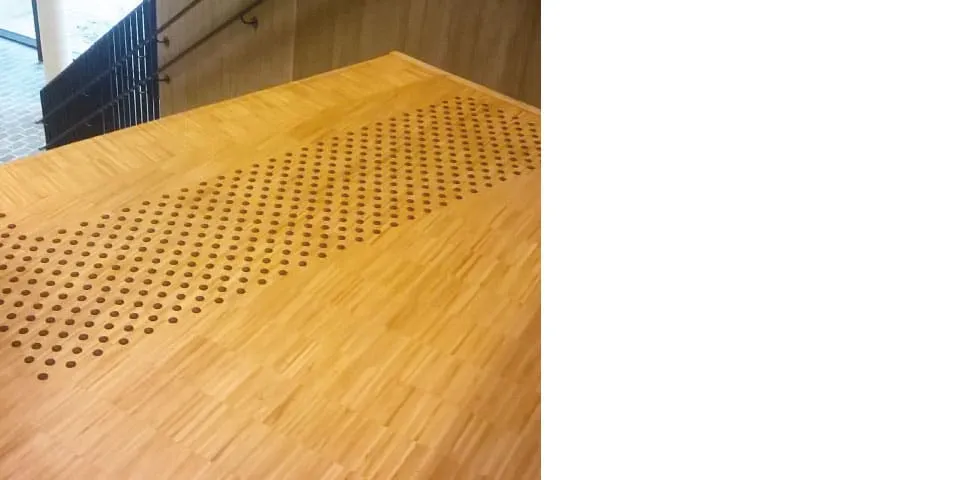
The advantage of tactile studs is that they have only a minimal impact on the nature and appearance of the floor finish.
Putting yourself in the shoes of people with impaired vision
Of course, standards and regulations determine where and how designers should install these features, particularly near staircases. According to Van Kan, however, it is even more important to put yourself in the shoes of someone with impaired vision, a distracted person or an older person in a panic. “You need to provide the right aids in the right places to make the information relevant and intuitive for users,” says Van Kan. “Think of people who don’t watch where they’re going and fall. Our studs are like a handrail. They’re not essential for everyone, but they make the environment much safer for those who need them.”
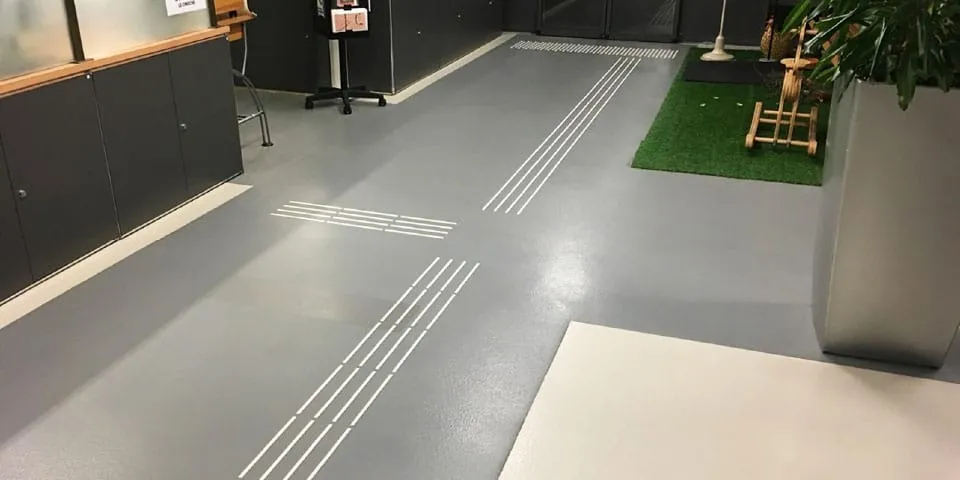
Unlike studs that indicate a hazard, guidance paths help people with impaired vision find their way.
Tactile guidance paths
VIAKAN also offers tactile guidance paths for blind people. Whereas studs indicate a potential hazard, these paths help blind people find their way. For example, residents of care homes often struggle to find the exit in reception areas.
They find it difficult to adapt to sudden changes in bright light. Like the studs, the guidance paths are available in composite or aluminium and benefit from VIAKAN’s major advantage: its patented dual-bonding system.
Don’t settle for ‘good enough’
The new Flemish Administrative Centre of the Flemish Government in Brussels, UZ in Ghent, the new headquarters of Créagora in Namur, the European Parliament and the Council of Europe in Brussels, numerous museums, care homes, H&M stores and many bank branches: these are just some of VIAKAN’s many references. Unfortunately, clients still do not instinctively look to improve building accessibility with tactile studs or guidance paths. Van Kan says: “My biggest competitors are those who end up doing nothing, or only making a half-hearted effort on accessibility. Too often, designers do something merely for appearances, such as fitting signs only on the main staircase. ‘We’ll get to the rest later,’ they say. But for a blind person, a ‘good-enough’ approach is an additional handicap. Our tactile warning studs and guidance paths are also very easy to install, both during construction and in buildings that are already open, without inconveniencing people or blocking access during the works.”
Question about this story? Ask your question
Keep following this
Get an email when a new story is published. No account needed.
- SubjectThemes