The road to a smart grid
Developments in the energy market are increasingly pushing users towards self-consumption.
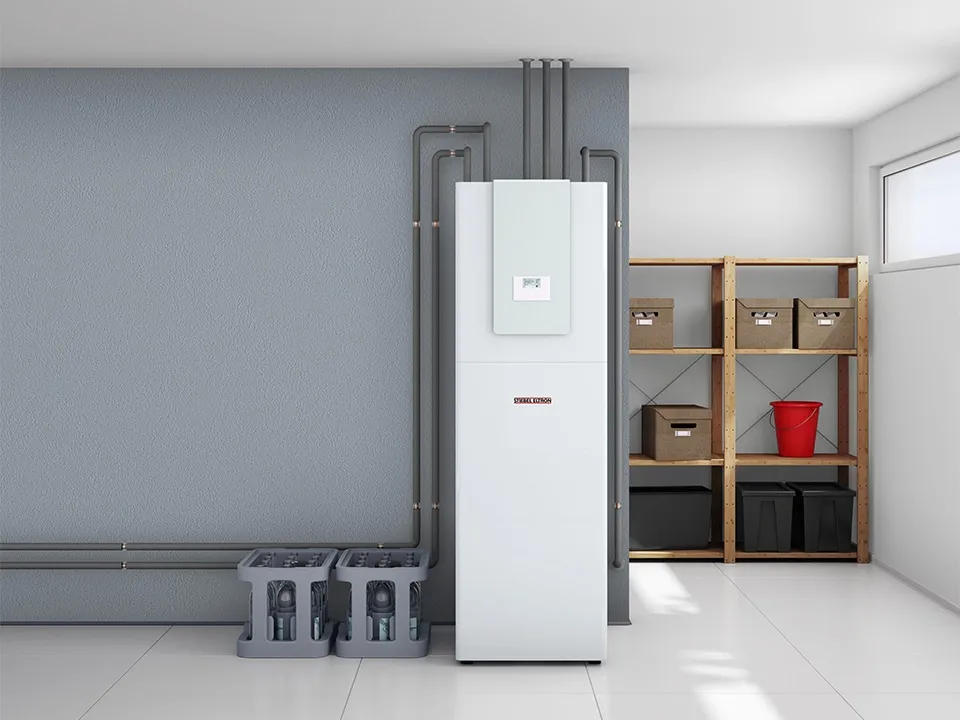
By actively working towards ‘smart grid readiness’, heat pump specialist Stiebel Eltron aims to give this trend a helping hand. All the company’s heat pumps have the features needed to operate on a smart grid.
The rollout of digital meters and the associated end of the ‘running meter backwards’ system are fundamentally changing the way we use energy. ‘Self-consumption’ is now the order of the day. It reminds Hans Dolfeyn, Managing Director of Stiebel Eltron België, of the storage heaters of the 1970s: “A technology dismissed as old-fashioned, but which is now more relevant than ever. A heater that can store heat for 36 hours in a compact unit is becoming popular again when combined with solar panels.”
The key to the new energy landscape lies in balancing production and consumption. Stiebel Eltron is also responding to this trend and exploring solutions that increase users’ self-consumption. Inevitably, this brings up the term ‘smart grid readiness’. Dolfeyn explains: “A smart grid is an electricity network with the functions needed to balance consumption and demand. Day and night tariffs were an early step in that direction. In Germany, there is also a third, mandatory, higher tariff, designed to relieve pressure on the grid during periods of peak demand.”
‘We’re ready’
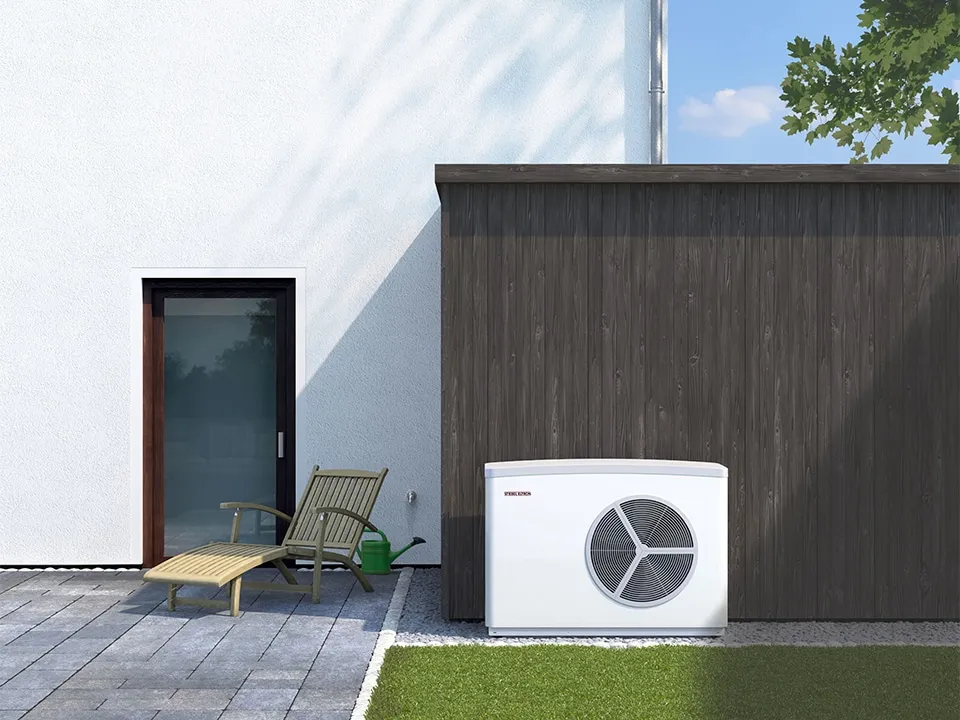
As a manufacturer, Stiebel Eltron is focused on developing products that are ready to operate on a smart grid. “The Belgian grid is not yet equipped for this, but all our appliances are. For example, when the solar panels produce a surplus of electricity, the solar cylinder can be activated automatically,” explains Dolfeyn. “Or we can configure a heat pump to start running only when solar heat is available, at a higher set temperature.”
A heat pump is a very efficient appliance for operating on a smart grid, Dolfeyn explains. “It is a low-temperature heating system combined with an emitter system that has a longer response time, which is an advantage in this case: steady consumption with high inertia is ideal for maintaining the energy balance in a building.” While the heating demand in a home is considerably lower than it was fifteen years ago, the same is not true of demand for domestic hot water. Dolfeyn says: “That demand has actually increased, even as the output of installed boilers continues to fall. Smart use of the technology can deliver significant savings. Stiebel Eltron has more experience than other manufacturers in intelligently controlling domestic hot water. A smart grid connection also opens up new possibilities in this area.”
Capacity tariff
Dolfeyn concludes: “Smart grid readiness has become second nature to Stiebel Eltron. It does not require complex home automation, it is a standard application.” But for users, the picture is very different. Even so, everyone will have to adapt to the move towards smart grids, Dolfeyn believes. “The VREG is currently working on a capacity tariff for residential connections, under which you will no longer pay per kWh used, but according to the capacity of your grid connection. Domestic users need to prepare for this. The smart grid is coming, and balancing production and consumption is essential.”
Een zakelijke vraag aan STIEBEL ELTRON bvba? Get in touch
Companies in this story
Keep following this
Get an email when a new story is published. No account needed.
- SubjectThemes
- CompanySTIEBEL ELTRON bvba