“We firmly believe in the digital future of construction”
What does the future hold? Nobody has a crystal ball, but one thing is certain: smart digital applications will play an important role in the buildings and homes of tomorrow. One company leading the charge in this respect is Schüco. By looking beyond individual products and investing heavily in the development of integrated, end-to-end concepts, including as a partner in the pioneering Living Tomorrow project, the German group is firmly committed to value-adding digitalisation. Geert Michels, country manager at Schüco Belgium, tells us exactly how this works and what the priorities are: “In the past, possessing knowledge and information was the greatest asset, but today integration is the key to success.”
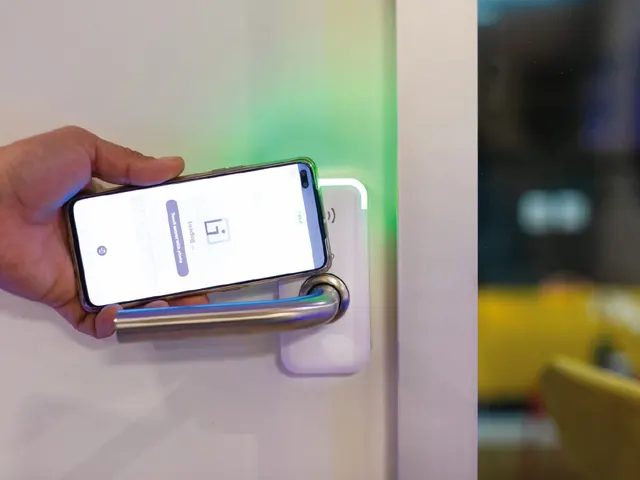
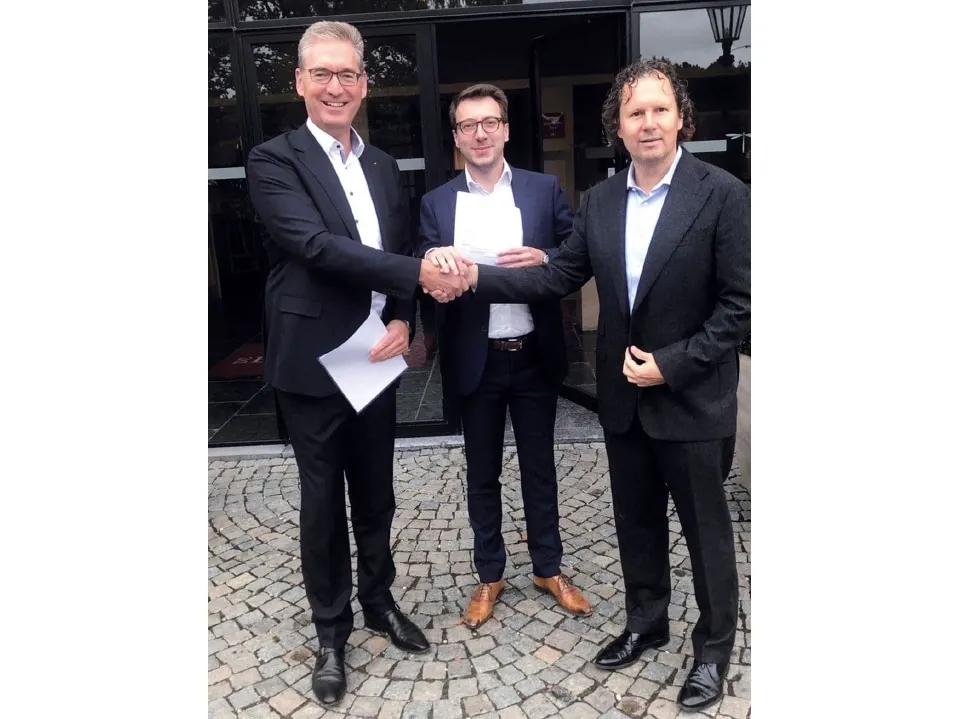
Schüco has been making a name for itself for almost seventy years as a developer of aluminium and PVC window, door and façade systems, but it is far from past its best. On the contrary: late last year, the German global player once again cemented its reputation as an innovative trendsetter by throwing its weight behind Living Tomorrow 2.0. “The new Living Tomorrow building in Vilvoorde will include, among other things, a dynamic Schüco innovation showroom and will be fitted with our most advanced aluminium systems and all
kinds of new developments, such as digital access control and smart sensors,” says Geert Michels. “We are also renovating the existing building, which will be integrated into the new development once the work is complete. Living Tomorrow will be Europe’s largest innovation campus focused on the future of work, home and life.”
Why is the Living Tomorrow project so important to you?
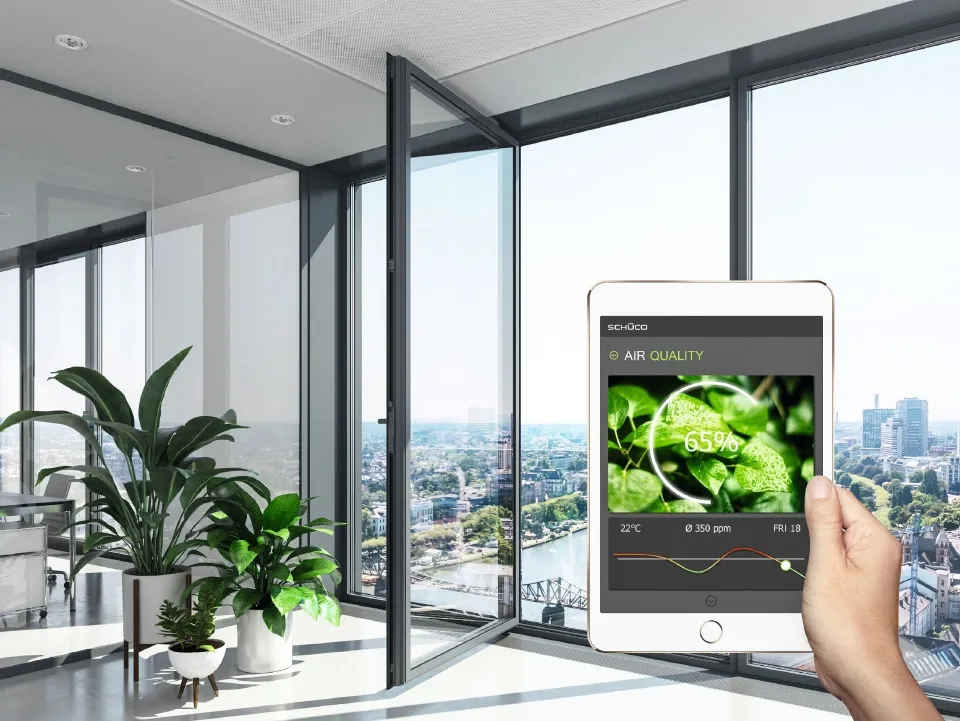
“Because it gives us the chance not only to show what is possible today, but also what our world will look like in the not-too-distant future. Living Tomorrow fits perfectly with our vision of the future of home, life and work, and gives us the opportunity to collaborate with like-minded partners. We are no longer focusing on individual products, but on smart, integrated concepts with a digital dimension. So it is not just about attractive sliding windows, but about complete systems intelligently linked to ventilation, air quality, thermal comfort and so on. It is harder to bring this to life in a traditional showroom, but the advantage of Living Tomorrow is that everything is demonstrated in practice. It is not just a theoretical sales pitch: visitors will actually be able to experience the living room, kitchen, study and care room of the future. They will be amazed by the many possibilities!”
What exactly are these possibilities? You have certainly piqued our curiosity …
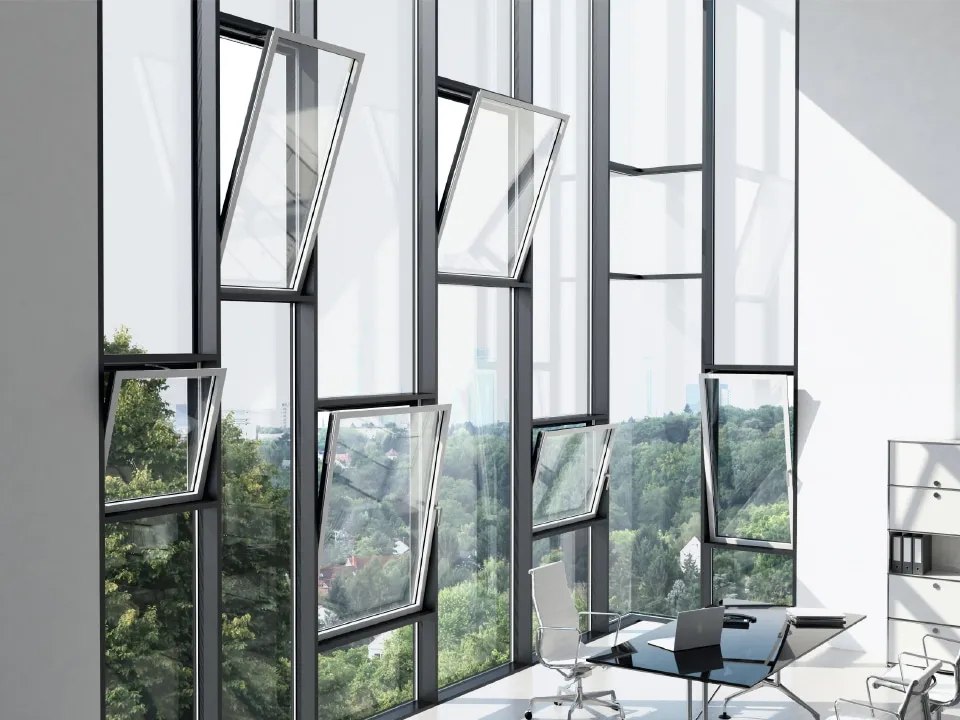
“I won’t reveal the secrets of Living Tomorrow just yet, but our own range already includes some great examples of digital innovation. Take Schüco Building Skin Control, for instance, a central platform that lets you monitor and control all the elements of the building envelope. Building automation is another very interesting area. There is a building in Seraing, for example, which is fully equipped with Schüco controls, linked to a weather station, among other things. The windows and solar shading are controlled automatically based on parameters such as light intensity, temperature and precipitation. We also have a lot of innovations in the pipeline that have not yet been commercialised, but have already been developed and extensively tested. At our production facility in Bielefeld, for example, there are prototypes of window systems incorporating voice technology. Talking to your window is no longer science fiction!”
Digital innovation is clearly close to your heart. When did you decide to commit to it wholeheartedly?
“Innovation is in our DNA, so our focus on digitalisation is a logical consequence of our business philosophy. We are constantly seeking to respond to new technologies and significant trends, so there was no turning point or clearly defined change of direction towards digitalisation. The evolution has been entirely logical and gradual. Schüco has been linking its window systems to all kinds of digital solutions for years and has always been a leader in this area. This wave of digitalisation applies not only to product development, but also to the production process, installation, administration … The smart, integrated, end-to-end concepts that result from it are a product of our general drive to innovate. We love revolutionary projects such as the Havenhuis in Antwerp, for which we came up with a bespoke parametric solution. Pushing boundaries and getting the very best out of things is typical of Schüco, and these days that is reflected in the digital and technological sphere too. We firmly believe in the digital future of our end-to-end concepts and of the construction sector as a whole.”
Digital innovation remains a distant prospect for many construction companies. Is a change in mindset needed to help new developments gain traction more quickly?
“Absolutely, because the construction industry still tends to think in relatively traditional terms. Not everyone is open to digital solutions, mainly because they involve a certain level of investment. Of course, we cannot deny that many integrated, end-to-end concepts are currently expensive, but you have to weigh that against indirect benefits such as time savings and cost reductions. Our philosophy is: invest in quality, efficiency and digitalisation up front to reduce potential additional costs later on. Unfortunately, for many people the timing of the investment is still the deciding factor, and long-term thinking has yet to become sufficiently established. That obviously will not change overnight, but it is important for early adopters to continue leading the way and developing new solutions. That is the only way we can gradually reap the benefits of digital innovation and the added value it provides.”
That is why you keep stressing the long-term benefits of smart, integrated solutions …
“That’s right! At present, they may seem to be reserved for the ‘happy few’, but before long they will be a must. The added value of smart buildings and artificial intelligence will be so great, not only in terms of comfort but also energy efficiency and overall cost optimisation, that digital solutions will sooner or later become commonplace. There is still a gap between the theoretical possibilities and practical implementation, but fortunately we can put our ideas into practice through pioneering projects such as Living Tomorrow.”
The construction sector of tomorrow will be digital, but what does the future hold for Schüco? You too will no doubt continue to embrace digitalisation?
“Indeed, although digitalisation is not an end in itself, but rather a means of creating added value, as we have always done. Above all, we want to show that we are more than a system supplier, because we have the knowledge and expertise to work alongside our construction partners and raise the efficiency and quality of projects to a higher level. Innovative methods such as BIM enable us to fulfil this advisory role even better, so all our products and concepts are fully BIM-ready. Since we want everyone to benefit from our expertise as early as possible, we are also entering into partnerships during the early planning stages of major projects. This allows us to propose a comprehensive solution from the outset and gain an edge over other bidders. We will continue to focus on this in the years ahead, always with the same aim: to respond as effectively as possible to the needs and wishes of owners and users of homes, office complexes and other buildings, and to make the most of our concepts.”
Question about this story? Ask your question
Keep following this
Get an email when a new story is published. No account needed.
- SubjectThemes