First energy-positive residential tower
Text Koen BruelemansImage Architectenbureau Mecanoo en Tim Fisher Photography
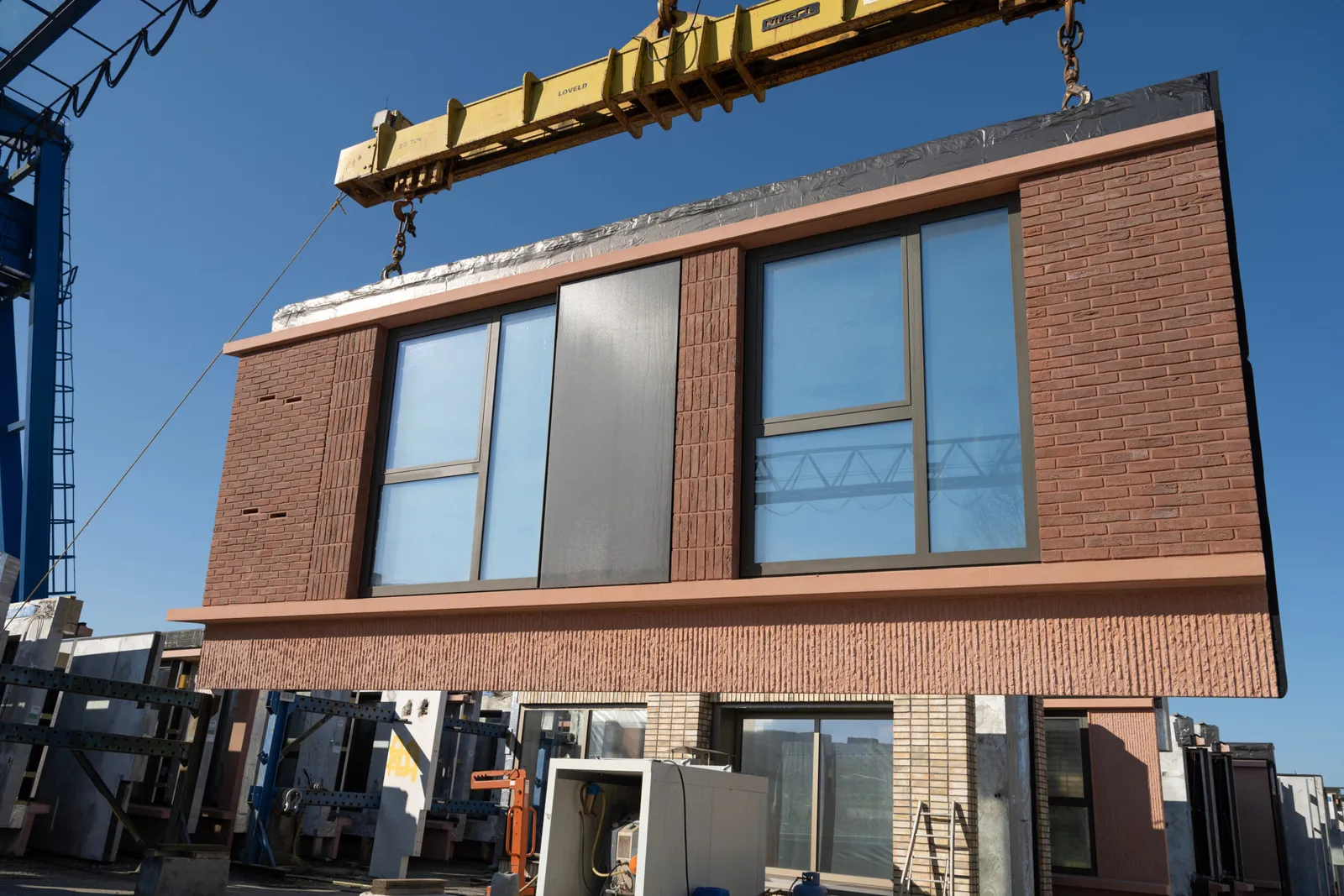
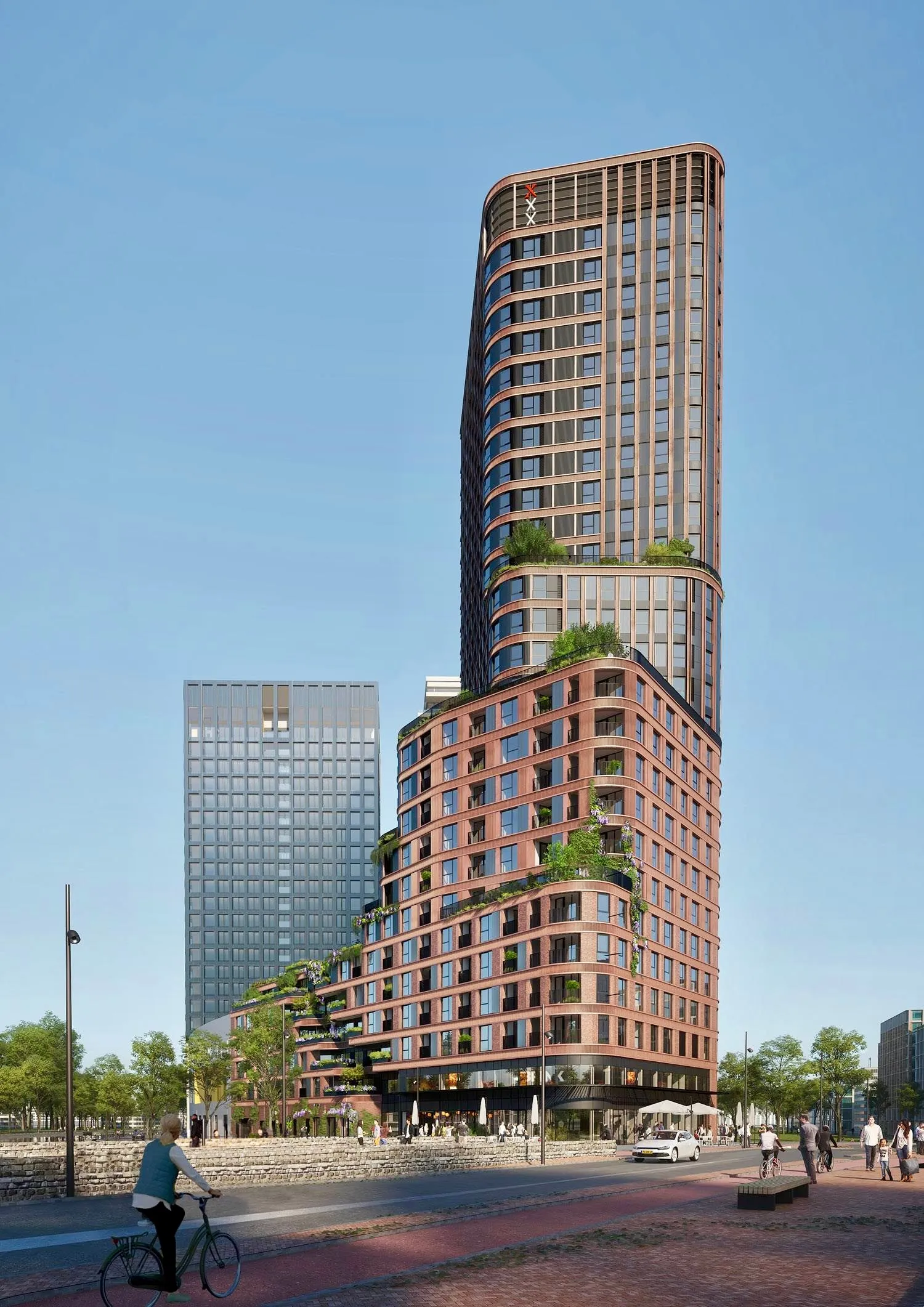
The BrinkToren is due for completion in 2025, becoming the first energy-positive residential tower in the Netherlands. It is the final piece in the new high-rise strip in the Overhoeks district of Amsterdam. Architectural concrete specialist Loveld is supplying the precast concrete elements, which incorporate not only insulation, joinery (including glazing) and weatherproofing, but also all the systems needed to connect solar panels.
Project Sales & Development Manager Vincent Termote: “The BrinkToren in Amsterdam is unique in every respect. It is the first energy-positive residential tower in the Netherlands because developers Xior Student Housing and DubbeLL Buurtontwikkelaars decided to equip the building with, among other things, a ATES system (aquifer thermal energy storage) to heat and cool the four hundred rental homes, as well as solar panels on the façades and roof to generate electricity. Combined with courtyards, roof terraces and ‘polder roofs’ that collect rainwater, this gives the building a negative EPC rating.”
Electricity in the concrete elements
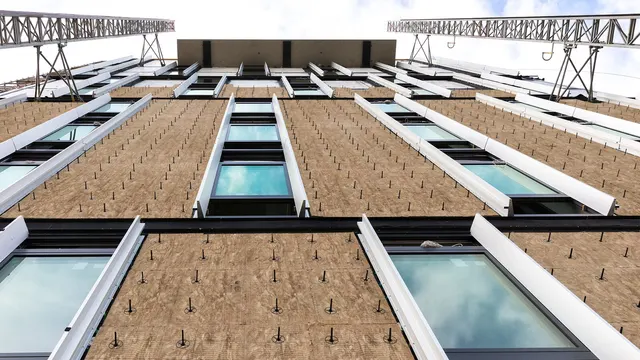
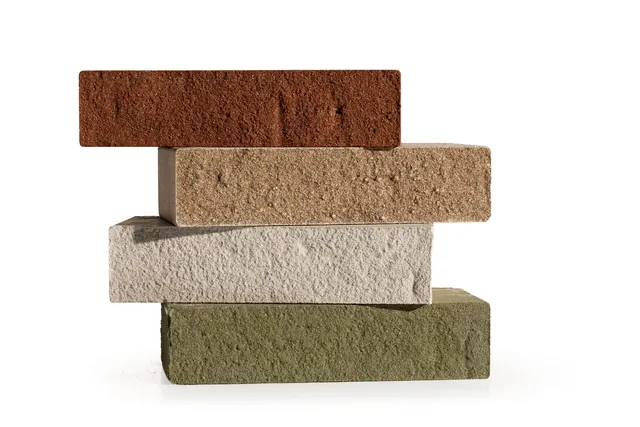
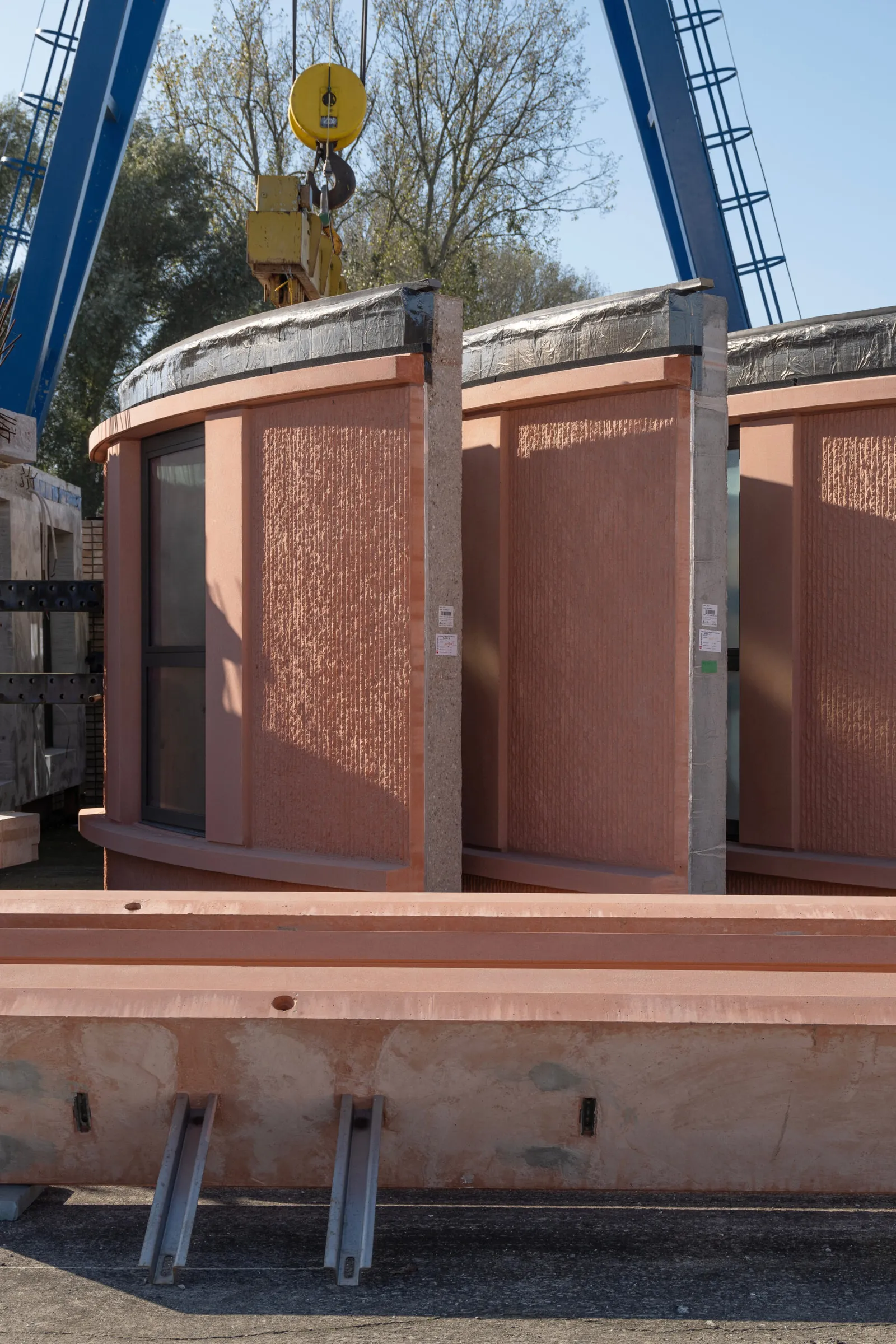
“The tower’s entire façade is made up of precast, load-bearing sandwich panels with various finishes on the outer leaf. The façade consists mainly of red acid-etched concrete, some areas featuring a profiled texture mat, while others have cast-in red brick slips. Xior and DubbeLL also chose rounded corners for the tower, reminiscent of the Burj Khalifa. Recesses in the concrete at various points provide entrances to nesting sites for birds and bats. More importantly, solar panels will be suspended between the window openings across all 28 floors. We cast the electrical cables and connections required for them into the concrete elements during production.”
Faster, safer construction
“Various suppliers come to our factory to finish the precast elements. Normally, this involves, for example, installing the external joinery and glazing and pointing the brick slips. Now, however, the solar panel supplier also comes to fit the panels to the elements. Finishing the elements in our factory brings nothing but benefits. Suppliers are not dependent on the weather and do not have to contend with the hazards and risks of working at height. And fitting everything in our factory means the tower can be built much faster.”
Engineering is crucial
“To put ‘much faster’ into perspective: if the construction time for a tower built using in-situ concrete is 100%, then the production of the precast elements, construction using precast components and all the internal finishing together take just 40% of that time. The remaining 60% is spent on engineering, because a great many factors have to be brought together during the preparation process, requiring extensive collaboration between suppliers. Every detail of the building must already be known at that stage. For example, you have to take account of insulation against heat and cold, acoustic insulation, weatherproofing and fire safety.”
Less disruption to the neighbourhood
The district where the BrinkToren is being built also benefits from the time saved. “Because construction is faster, there is much less disruption to the surrounding area. Xior and DubbeLL have also kept construction traffic to a minimum because the BrinkToren will be the last building in the district, leaving very little space around the site. They have all building materials delivered to a hub on the outskirts of Amsterdam. From there, a single logistics partner handles all deliveries of the various components to and from the site. This minimises the impact on the streets around the site and limits construction traffic to just a few streets.”
Five more residential towers in Amsterdam
Loveld also supplied precast concrete for five other residential towers in Amsterdam. The Fortitudo and Caritas towers on Postjesweg and tower 2 of The Ensemble project on Karspeldreef are made from concrete elements finished with brick slips. For The Ruby and The Jay towers in Bajeskwartier, the client opted for Loveld’s white acid-etched concrete.
Question about this story? Ask your question
Wie aan BrinkToren werkte
- prefabbetonelementenLoveldIn this story
- ontwikkelaarsXior Student HousingIn this story
- ontwikkelaarsDubbeLL BuurtontwikkelaarsIn this story
- architectArchitectenbureau MecanooIn this story
- architectMecanooMentioned in Sculptural BrinkToren takes modular façade construction to a higher level
Keep following this
Get an email when a new story is published. No account needed.
- ProjectBrinkToren
- SubjectYearbook
- CompanyLoveld
- CompanyXior Student Housing
- CompanyDubbeLL Buurtontwikkelaars
- CompanyArchitectenbureau Mecanoo