Patented modification technology turns softwood into an alternative to tropical hardwood
Text Wouter PolspoelImage Kebony / Hometrack / Kristian Alveo
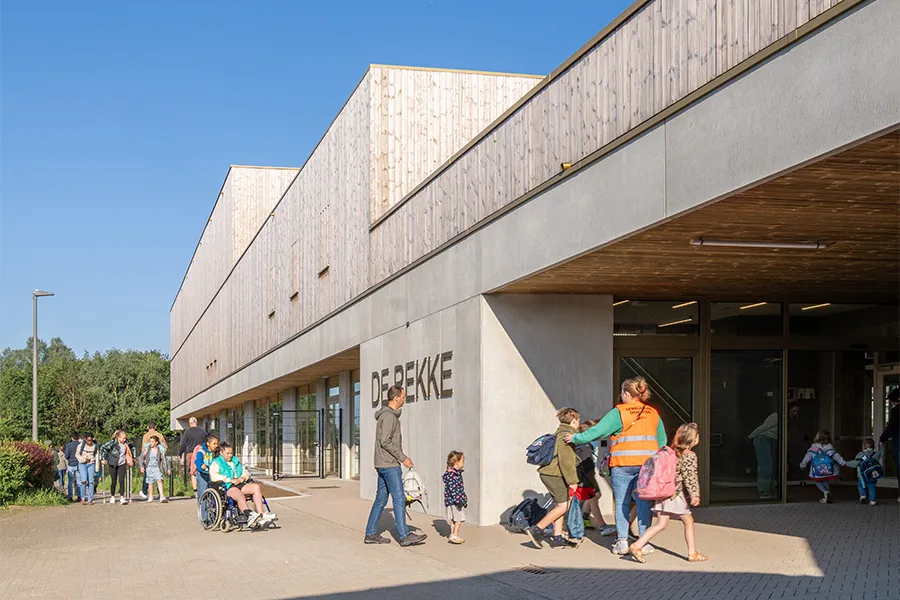
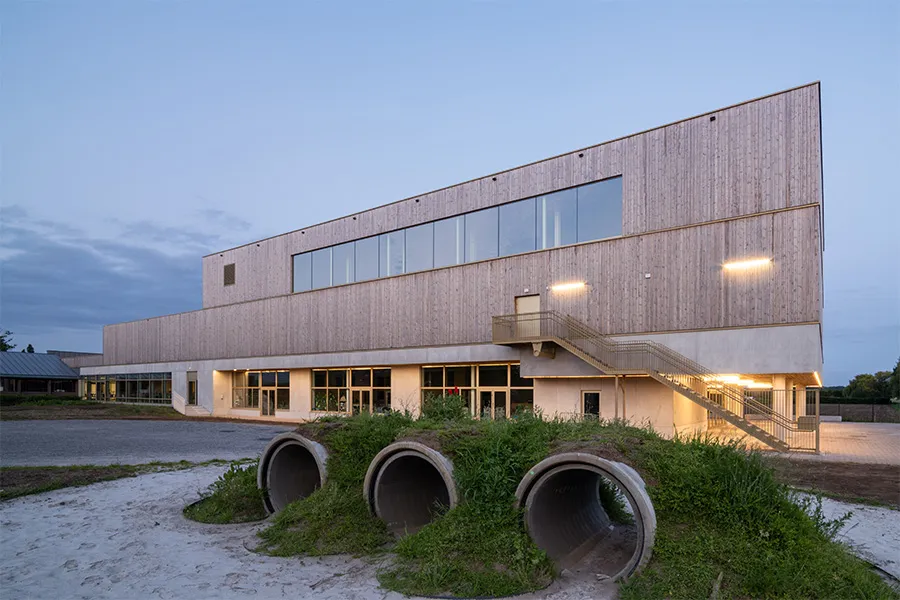
With its unique wood modification technology, Kebony is helping set the standard for sustainable construction. Its patented process sustainably and permanently transforms softwood into a timber with properties comparable to, or even better than, tropical hardwood. Architects in particular are keen to use Kebony products, which are ideal for building terraces and finishing façades. A fine example can be found here in Stabroek, where Antwerp-based architecture practice bureau ADAM used Kebony timber as cladding for a new school.
Founded in Norway in 1997, Kebony is driving a revolution in the construction sector by offering a green, more sustainable alternative to endangered tropical hardwood. It also provides an answer to the twin problems of deforestation and carbon emissions caused by the production and processing of traditional building materials such as steel and concrete. The company now operates worldwide. In 2018, it opened a factory in Kallo.
Unique technology
Kebony transforms FSC-certified softwood, usually coniferous timber, into wood with properties comparable to, and in some cases better than, those of expensive and increasingly scarce tropical hardwood. This is achieved through a process known as double modification, which consists of two stages.
The first stage involves impregnating the wood with a bio-based liquid. This is followed by the curing process, stage 2, in which the wood is heated to permanently lock the resulting polymer into the wood cells. After this process, the wood cell walls are 50 per cent thicker, resulting in timber with excellent stability, maximum hardness and a guaranteed long service life.
Ready to use straight away
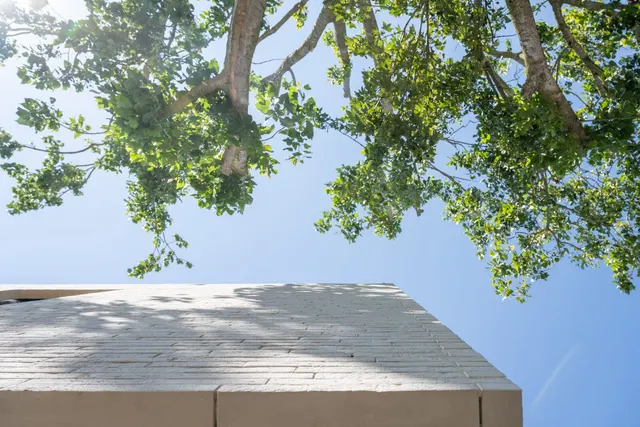
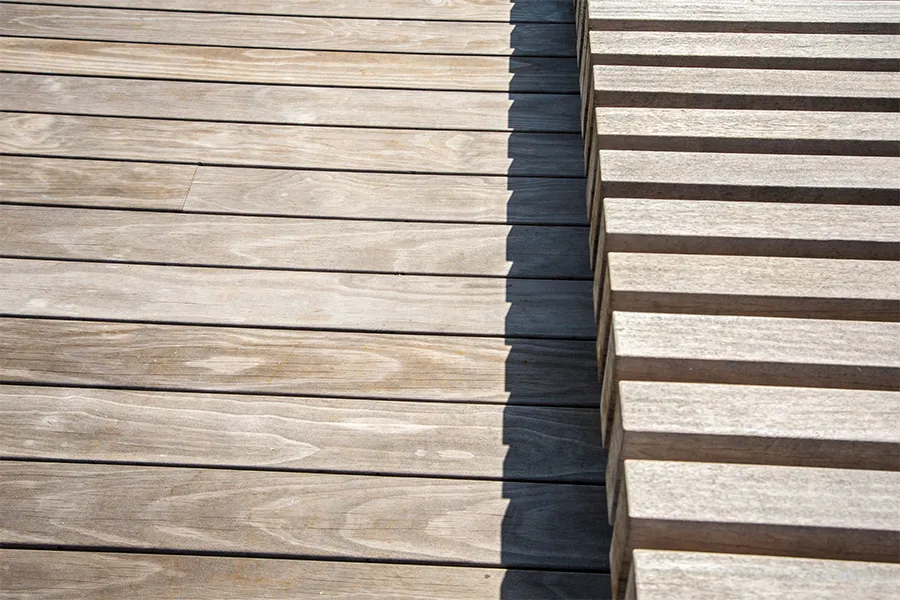
Kebony timber is ready to use straight away and requires no pre-treatment or specific maintenance. It is weather-resistant and can be used in a wide range of applications. In construction, it is used mainly for terraces and façade finishes. Over time, depending on exposure to outdoor conditions such as rain and sunlight, Kebony timber’s rich brown appearance develops into a unique silvery-grey colour. According to Kebony, this only enhances the timber’s natural look and beauty, making it especially suitable for high-quality sustainable construction projects.
Kebony timber can be handled safely and without risk to health. It does not splinter, contains no toxic substances or chemicals, and stays cool in summer.
Kebony has received numerous awards and accolades for its environmentally friendly technology, including being named a World Economic Forum Technology Pioneer and repeatedly recognised as a Global Cleantech 100 company.
“The colour just keeps getting better”
A reference project for the use of Kebony timber in this country can be found in Stabroek, where Antwerp architecture practice bureau ADAM used the sustainable material as cladding for De Rekke school. “We were looking for timber produced in a genuinely environmentally responsible way, and that led us to Kebony,” says managing director Bruno Dekoning. “Its warm appearance provides a counterpoint to the building’s rather cold concrete. The fact that the timber greys over the years only adds to the project’s aesthetic value. The cladding was installed in early 2022, and the first effects of sun and rain are already visible. The colour just keeps getting better. The initial reactions have all been positive too.”
But the architect chose Kebony for more than just ecological and aesthetic reasons. “Installation is also straightforward, and can be carried out in such a way that the timber can be recovered without damage in the future. It also requires little or no maintenance.”
This was bureau ADAM’s first time working with Kebony timber, but the practice was won over by the Stabroek project. “We now have two more projects involving Kebony timber in the pipeline, including the fire station at Ostend Airport,” concludes Bruno Dekoning.
Question about this story? Ask your question
Keep following this
Get an email when a new story is published. No account needed.
- SubjectSustainable construction