Sustainable business in construction: how Anneleen De Pau makes sustainability profitable
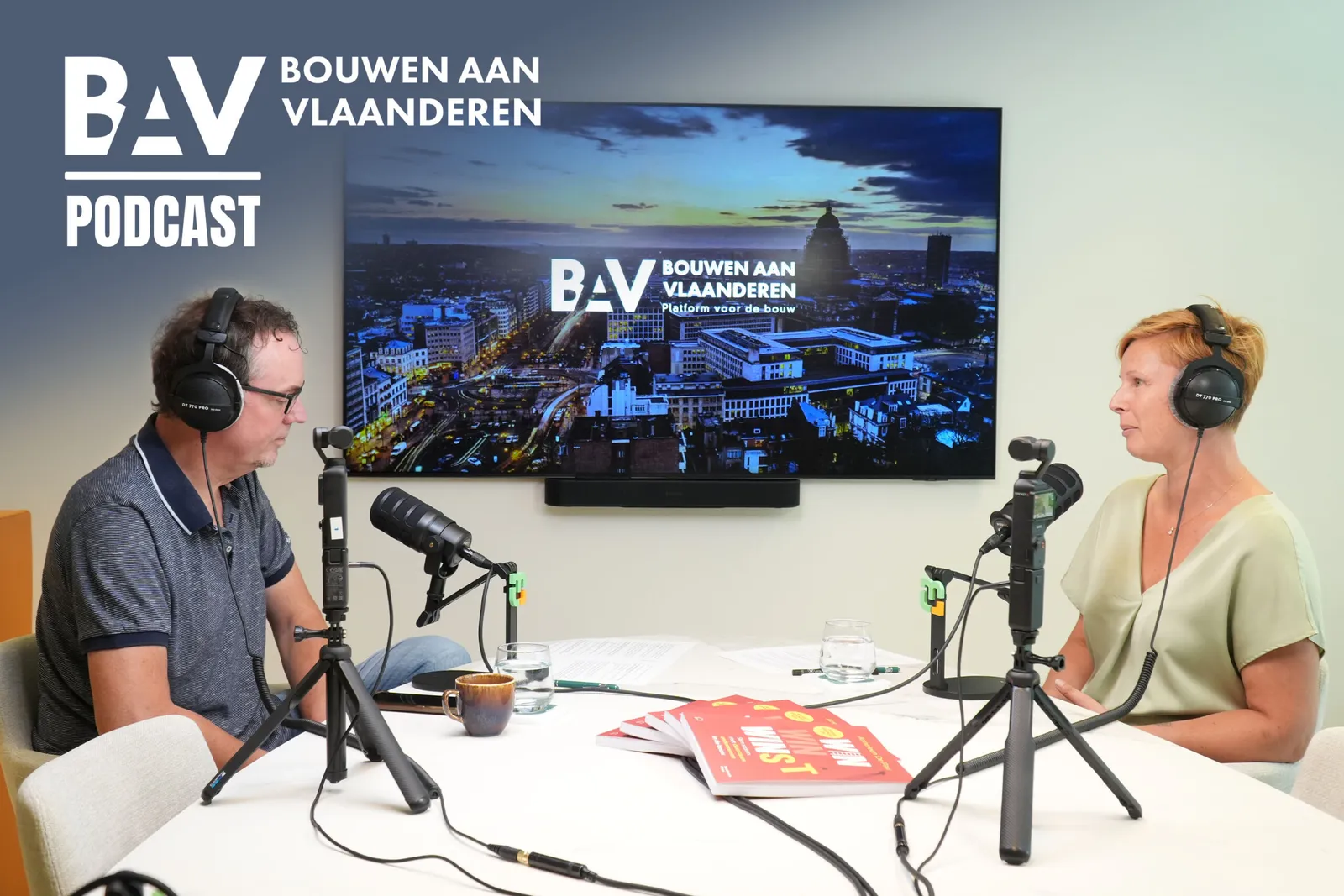
Sustainable business in construction need not mean extra costs or a complicated process. In this episode of Bouwstof, presenter Kris Vandekerckhove talks to Anneleen De Pau, founder of MierO and author of Win win winst, about how construction companies and SMEs can make sustainability practical and profitable. From environmental choices and employee policies to good governance, De Pau explains how business owners can build on what they are already doing, which investments can pay off and why credible sustainability must above all be right for the business itself.
Full transcript
All chapters (14)
- Sustainable business in construction
- Sustainability as a catch-all term
- From real-life stories to a book
- The three pillars of sustainability
- Sustainability and profit
- A small sustainable change
- Investing in your own heating system
- Sustainable choices have to suit the business
- Getting started in three steps
- The action plan
- Sustainability during busy periods
- The customer and the lowest price
- Misconceptions about sustainable business
- Closing remarks
Sustainable business in construction
Kris Vandekerckhove Sustainable business, the word ‘sustainable’. I can hardly bear to hear it any more. For one construction business owner, it is an opportunity; for another, it is just one more thing they have to do. Because while calls for sustainability grow ever louder, projects still have to move forward and the figures have to add up. So what can it actually deliver, and is it really worth the effort? The podcast from Bouwen aan Vlaanderen. From the studios of Louwers Mediagroep, we discuss the issues that matter to the construction industry. Food for thought, from and for the sector.
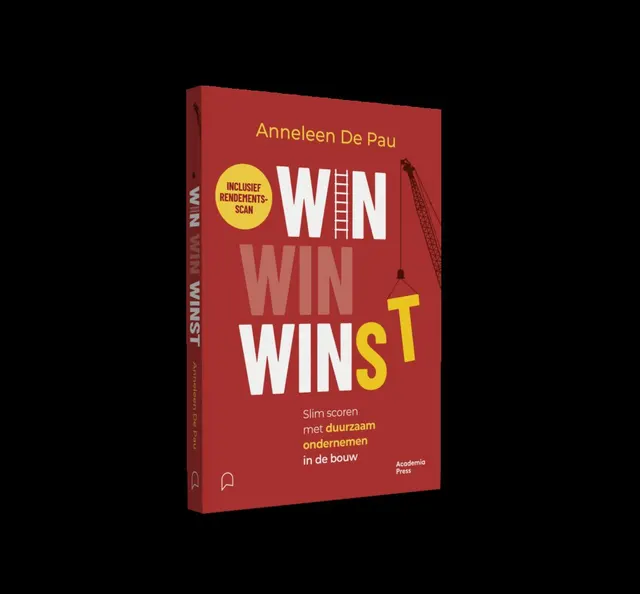
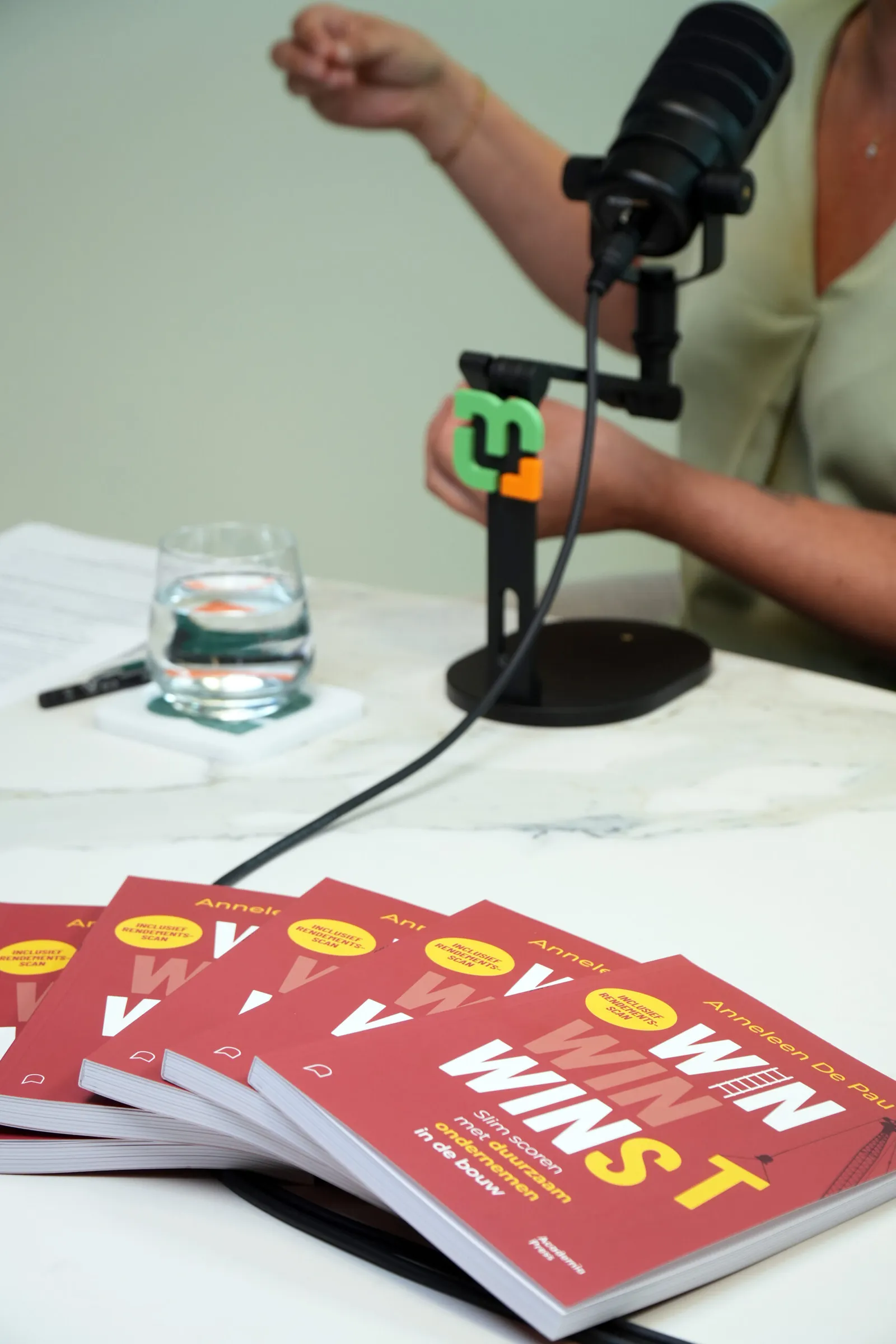
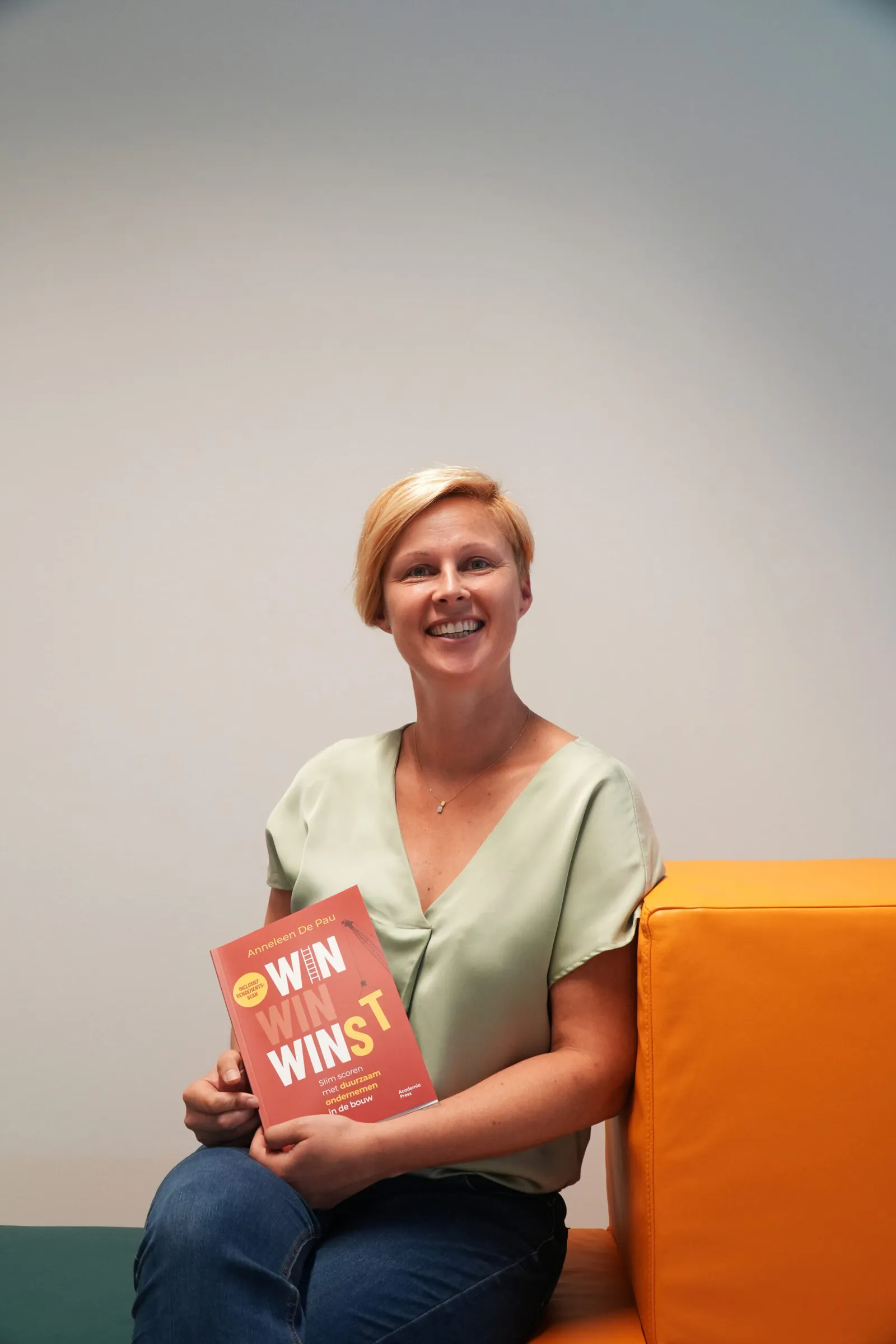
Kris Vandekerckhove Our first guest is Anneleen De Pau, founder of MierO and author of Win win winst: slim scoren met duurzaam ondernemen in de bouw. We will be exploring how to translate sustainable ambitions into the day-to-day reality of a construction business. What choices does that involve? And, above all, when do you start to reap the benefits? Anneleen, welcome. Have I got all that about right?
Anneleen De Pau Yes, thank you for the invitation, Kris.
Kris Vandekerckhove You’re very welcome. Anneleen, you support construction business owners with sustainable business practices. What question or concern do you hear most often when you sit down with a company?
Sustainability as a catch-all term
Anneleen De Pau In my experience, businesses have doubts on all sorts of fronts. It has become a catch-all term. As you said in your introduction, I can hardly bear to hear the word any more. I completely understand that. People simply no longer know what sustainability actually encompasses. What does it mean? And then it is not easy to see how it relates to your own business. So business owners have doubts very frequently, but those doubts are also completely normal. What question do I hear most? ‘What actually is it?’ That is the question I get most often. And the next one comes very quickly: ‘But can I actually do it? Is it really for me?’
Kris Vandekerckhove So that is what is holding business owners back from getting started. They do not know what it is or what the benefit to them would be.
Anneleen De Pau Yes, of course. It is not always a question of bad intentions or not wanting to get involved. Business owners are, by definition, people who want to move forward, so they do look around at what is happening. They are not unaware of what is coming or blind to the fact that sustainability is taking up more and more space in conversations, tenders, on construction sites and so on. They do know about it.
Read the full transcriptCollapse transcript12 more chapters
From real-life stories to a book
Kris Vandekerckhove To write a book about it.
Anneleen De Pau Exactly. Yes, exactly. I started to notice that I go to quite a lot of networking events and visit business owners. I don’t know what it’s like for you at a networking event, Kris, but people spontaneously start telling me about all the things they do in their businesses that relate to sustainability. So I hear a lot of stories, and immediately hear the doubts too. Things they cannot resolve, challenges they face around sustainability. I began to notice that I might hear about a wonderful achievement at one event, for example, then in a conversation with another business owner I would hear them ask: ‘How can I get started with that? I’m stuck.’ So I thought: what if those two people knew about each other? One of them has already worked out the solution to the other’s problem.
Anneleen De Pau That is really where my book began. I started interviewing business owners about the things that mattered to them. Not necessarily business owners who were already a long way down the road, but people dealing with the realities of running a business. Someone just starting out, someone who works much more with ecological materials, but also someone who regularly faces the challenge of having people on site who speak different languages. Those different stories and that diverse audience are simply representative of construction. The challenges are very varied, and that is where I started with the stories.
Kris Vandekerckhove Yes, people forget that sustainability is about more than ecology.
Anneleen De Pau No. It is understandable that we think it is mainly about ecology. There is a lot of media coverage about that too. But I always say: sustainability is what enables your business to last.
The three pillars of sustainability
Anneleen De Pau And, of course, there is the environmental aspect, which is about much more than that. It is about the planet lasting too. That matters as well. But what else enables your business to last? It is having employees who want to keep working for you, suppliers who want to keep working with you, and customers who continue to buy from you. So the social aspect is a very important part of sustainability.
Anneleen De Pau That is still a challenge, of course, but we have had more practice with it. We have been setting up and refining our HR for years. The third part of sustainability is how you run and structure your business. That is the policy and governance side. What do you do about bullying? Do you have a policy on it? That can still seem a long way removed from the day-to-day reality of an SME, but in fact a lot of this happens quite naturally in SMEs.
Anneleen De Pau Do you ignore things like discrimination, workplace bullying or gender equality? In large companies, all of that has to be recorded in tables and figures, with carefully documented processes. That does not mean it is unimportant or that nothing is being done. So sustainability has three parts: the environmental aspect, including materials; the social aspect, meaning how you treat the people who come into contact with your business; and governance, meaning how you run and organise your business. You can assess all of that in terms of sustainability.
Sustainability and profit
Kris Vandekerckhove And you link it seamlessly with profit in your title. Naturally, we like the sound of that. What can it actually deliver for a construction company?
Anneleen De Pau We often have an instinctive sense of it already. There are always businesses we admire, or at least I certainly have some. Somehow, there is something they do that earns your respect. In many cases, it is not simply because they make a lot of money. There are other things too. It might be the social aspect, for example. I am often delighted to be amazed by what businesses do.
Anneleen De Pau And that means that what you gain can first and foremost be your reputation, your image. As a business, we are often not very conscious of that, but sustainability is also a way to work on your image. What does that mean? Once again, it means employees enjoy working for you. And once again, it means customers come to you.
Anneleen De Pau The businesses featured in the book say things like: ‘I don’t have any job vacancies.’ Sometimes I even have to tell people who apply spontaneously: ‘Sorry, but I simply don’t need anyone at the moment.’ That is because they focus on things that attract people. So that is one aspect of what you can gain. There are many others too. It can also bring in money directly, giving you a financial return every month.
A small sustainable change
Kris Vandekerckhove Great. And could you, if possible, without giving too much away from your book, perhaps share a real-life example? Something a company did and what it actually achieved?
Anneleen De Pau I’ll give you two. I’ll start with a very small change. ‘I’d really like to do something about sustainability, but I didn’t know how.’ That is often the starting point. I noticed that they often gave presentations to clients on lovely white paper. There is nothing wrong with white paper, but there are more sustainable options. That is one very small aspect of what you can do about sustainability. It is simply about how you run your office and the office supplies you use.
Anneleen De Pau It was a case of: ‘It won’t look as nice, and our colours won’t come out right. I’m not sure.’ Anyway, they did try it. It took a little courage, but they gave it a go. A week later, they called me. I still think it is a lovely story. They called me a week later and said: ‘Well, I went to see my client, and they noticed. They asked me about the recycled paper. I told them you had recommended it and that we were doing a bit of work on sustainability. They connected with that and were curious, and asked what else we were planning to do.’ So they did see the value in the recycled paper. A very small effort, but it helped with their image and their connection with the client. I’m not saying the client placed an order worth who knows how much because of it, but it gave them something different to talk about.
Kris Vandekerckhove We can only hope.
Investing in your own heating system
Anneleen De Pau Here is an example on a different scale, because if you invest a lot, does it deliver a lot too? There is a joinery business in my book, which naturally produces a lot of wood waste. That waste has to be taken away, which costs money. They had several skips taken away every month. The owner said: ‘I’d be happy to invest in my own heating system, so I can use my wood waste directly to heat my workshop.’
Anneleen De Pau How much did that investment cost? I think, if I remember correctly, €60,000. I think they had about ten employees or so. It was quite a substantial investment.
Kris Vandekerckhove That’s a lot.
Anneleen De Pau But they went ahead, because they had done the sums. If I do this, I won’t need gas to heat my workshop or my offices. And I won’t have to pay to have my wood waste taken away either. So it saved them €10,000 a year. It is more sustainable because you avoid producing waste. Now, okay, I know that wood waste is often made into new panel materials. But you also save on transport. There are environmental benefits to be had. So they made the investment, which was on a different scale and delivered a different level of return.
Kris Vandekerckhove Exactly. To use another overused expression: return on investment. It has paid for itself, and they have also made a sustainability improvement that is really worth showing off, haven’t they?
Anneleen De Pau Yes, of course. And once it’s paid off, it just generates a return.
Kris Vandekerckhove Absolutely.
Sustainable choices have to suit the business
Kris Vandekerckhove There’s another side to the coin, as there always is. Are there any choices you wouldn’t recommend to a small contractor or small business just yet?
Anneleen De Pau That’s a really difficult question.
Kris Vandekerckhove Of course.
Anneleen De Pau But I’m glad you asked. In principle, no, absolutely not. I’m rarely the person who walks into a business and says: you need to do this, this and this now, and then you’ll be more sustainable. We always start with the business itself. And what’s essential to me when you’re working on sustainability is that you make your own choices.
Anneleen De Pau Because, for now, there is no sustainability law in Belgium requiring you to work through and tick off a checklist. Then you lose your competitive advantage. You can no longer stand out, and the level playing field that politicians want to create ends up disadvantaging the business owner.
Anneleen De Pau But that’s not the case at the moment. That means you can choose what you want to do, how far you want to go and how much money you want to invest. You’re in the driving seat when it comes to your approach to sustainability. And you know your business best. I may come into a business and say that I know best how sustainability works in the sector, because that’s my area of expertise. But the business owner knows best how their business should be run. And they set the pace too.
Anneleen De Pau So the proposals very often emerge from bringing those things together. And that’s when projects come to the fore that are feasible, suit the business, are profitable for it at that particular time and fit the pace it wants to set. They also lend credibility. Because there is one line I would draw: if someone wanted to do something that simply wasn’t credible. You can come up with something completely bizarre that lacks all credibility because it just doesn’t fit your business at that point in time. So I would say: that doesn’t suit the business.
Kris Vandekerckhove So, sustainability for sustainability’s sake is out.
Anneleen De Pau No, no.
Kris Vandekerckhove It has to remain credible, absolutely. And across the board. So not just the kind of sustainability we’re used to thinking about, but also good governance, social policy, everything.
Anneleen De Pau Yes, credible sustainability is ultimately a blend of those three for me. You can’t use highly eco-friendly products while exploiting your subcontractors. That doesn’t work. It’s the combination of all three that makes it credible. That’s why I always look at whether you’re doing something in all three areas, or how we can bring things into better balance if they’re out of kilter.
Getting started in three steps
Kris Vandekerckhove You also have a framework, and that’s what makes your book so fascinating. It’s not just the three-pronged sustainability framework, there are also the steps you take or can take. And there are three of those too. Maximisation. Suppose I run a construction company and want to get started. How would you guide me through it?
Anneleen De Pau Yes, I have three steps. The great thing is that you don’t need to go through all three to become more sustainable. As soon as you take the first step, you’re already working on sustainability. I really like that, because I sometimes get quite frustrated when people jump straight into teams. No, I think sustainability should be achievable at every level and for everyone.
Anneleen De Pau That also means you should be able to get started and reap the benefits straight away. So how do you begin with the first step? It’s mainly about looking at what you’re already doing. That’s the step most business owners underestimate. As I said earlier, most people think of ecology. But once we broaden that to include the three pillars, you see that many businesses are already doing this and that.
Anneleen De Pau And when I point out that this is sustainability, and that this also comes under the sustainability umbrella, they’re often surprised by the list we end up with. Then they say: yes, but I’m already doing that. And it’s a much smaller step from there to organising it better and using it more efficiently to make a profit. So it’s really about looking at what you’re already doing as a business owner. That’s a great step.
Kris Vandekerckhove Looking at what the business owner is already doing at that point. So it’s really about taking stock of what’s already happening in the business across the three pillars. You then use that to decide what should happen first and what can wait. That’s for the action plan.
The action plan
Anneleen De Pau Yes, with the action plan we look a little further ahead. Instead of looking back at yesterday and last year, we look to the future. The action plan is about looking ahead. Okay, let’s work out where you want to go, what your goal is and how you’re going to get there.
Anneleen De Pau It’s a mix of small things that sit more at the margins of your activities. There may also be bigger projects that need to be spread over time because they require investment or knowledge. We use a lot of concrete, but what exactly can we do with concrete? A first step is to look at how the concrete market works and talk to your suppliers. What are you working on? Everyone’s working on something, you know.
Anneleen De Pau Sometimes it’s simply a matter of having conversations. The first step in an action plan might be to talk to people over the next three months to find out more. Then you can start including some more serious measures. That takes a little more commitment. I like that, because you also need people in your business to help support it all. And then it becomes a team effort.
Sustainability during busy periods
Kris Vandekerckhove Okay, so everyone’s pulling in the same direction. But we all know how it goes in every business, and in every sector too. At some point you have a plan. Hopefully, you put that action plan into practice. Until the sites get really busy. And then every time you think: right, we really don’t have time for that now.
Anneleen De Pau The reality is that this does happen sometimes. I used to get quite frustrated by it. As soon as things got busier, certain things would just disappear from the list of priorities. I stopped doing that, because it just made me miserable.
Kris Vandekerckhove You’ve learned to take a step back.
Anneleen De Pau Yes. Your core business as a construction company is to build, install, or sell as a wholesaler, and make sure your orders are fulfilled. To make sure your order book is full. That comes first. Sustainability is about how we can do that better and with less negative impact.
Anneleen De Pau Slow motion multitasking has given me a really valuable insight into this. As a business owner, you have to think about so many things at once, and you have to do a lot of things at once too. That’s the classic multitasking we all know. It doesn’t work. It doesn’t work for me either. They say women can multitask. That’s true up to a point, but...
Kris Vandekerckhove That’s a myth. We all know that by now.
Anneleen De Pau It works to a certain extent. What is slow motion multitasking? It’s making sure you focus intensely on something for a set period, because you make time for it and prioritise it at that point. But you also need to give yourself a break so you can let it sink in. Often, when you hit a wall, you feel you’ve lost your motivation. And then everything feels like a struggle. That’s when you say: I’m going to leave this for a while.
Anneleen De Pau That could also be when the construction holiday is just around the corner, everything has to be finished and you have no time to work on sustainability. That happens. Those periods come around every year. So yes, you let it go. But everyone knows the feeling: when you pick it up again, suddenly something starts working. You were stuck and wondering how to tackle it. Then the answer comes much more easily.
Kris Vandekerckhove Or you can give it time when you’ve taken a small step, to let that step work. Sometimes you need to give it a little time to take root and spread throughout the whole business. Often you need that time too. You take one part of your action plan, put it into practice and wait.
Anneleen De Pau Absolutely, yes.
Kris Vandekerckhove That’s right.
Anneleen De Pau And then you’re ready for the next step.
Kris Vandekerckhove For the next step.
Anneleen De Pau So no, you don’t have to do everything now or put everything into practice straight away. If things are busy, they’re busy. The only thing you need to watch out for is that it doesn’t disappear for good. You need to have that reflex to say: hang on, I haven’t worked on this or that sustainability project for a while. I should pick it up again. Because if you don’t, it ends up on its last legs.
Kris Vandekerckhove Or they get an angry phone call from you, of course, because you’re getting annoyed.
Anneleen De Pau Yes, no. I’m rarely angry with my clients.
The customer and the lowest price
Kris Vandekerckhove I asked the toughest question, but perhaps also the most practical one, because I think everyone can relate to it. Maybe we’ll save that for the end, which is now. But my customer ultimately chooses the lowest price. And you can’t achieve that if we have to take this step and that step and the other step in the short term. What do you say to that? You must have had that question before.
Anneleen De Pau I’ve definitely had that question. Quite often, in fact. People say: my customer isn’t interested in that. They just want the lowest price. And I say: but hang on, why should something more sustainable necessarily be more expensive? That’s not always the case. If you haven’t done a business case, you can’t know. So just start by putting together a business case. Is it more expensive? Why is it more expensive?
Anneleen De Pau Is it because demand is still very low? Then you have to decide where on the adoption curve, I’ll use the term for once, you want to come in. Do you want to wait until demand has risen and then be part of the mass market? Because then you’ll have volume. Or do you want to be more of an innovator and pay that higher price? Both are fine. So once again, it comes down to timing. How long do you want to leave it? What investment do you want to make? What position do you want to take? Both are fine. Because that means you’ll get involved at some point. But above all, make your own choice.
Kris Vandekerckhove And perhaps you can educate your customers a little too.
Anneleen De Pau What do you think?
Kris Vandekerckhove I mean your customers’ customers.
Anneleen De Pau I see. Yes, I thought you meant I should educate my customers. I rarely do that. But yes, educating your customers’ customers. I see a lot of businesses that can play a role in raising awareness and so on. I think it’s great if you can take on that role. Not everyone is keen, but private individuals are the hardest to educate. Businesses tend to be more receptive.
Kris Vandekerckhove It takes time, of course. It will all come. When the benefits of any of the three pillars become visible, business owners will get on board. It really is that simple.
Anneleen De Pau Exactly, yes. I think it really is that simple.
Misconceptions about sustainable business
Kris Vandekerckhove Right, good. One last question, the very last one. This might sum up everything we’ve discussed, but that can’t hurt. Repetition is always helpful, I think. What misconception about sustainable business would you like to dispel in the construction industry before we wrap up?
Anneleen De Pau I have to choose just one?
Kris Vandekerckhove We have time.
Anneleen De Pau I’ve already said that sustainability is expensive. That isn’t necessarily true. Buying a new machine for a new workshop is expensive too, but you know what it will deliver. So why buy it if it’s expensive? Why not invest in sustainability if it’s expensive?
Anneleen De Pau I also really want to dispel the idea that sustainable business is only for large companies. I work with SMEs. Some have five employees, some twenty, some seventy. That sort of size. What percentage of Flemish companies are SMEs? Ninety per cent or more, right? And those large companies, the ones we all think have the money, resources and marketing to focus on sustainable business, make up only a very small five per cent or slightly more. But they need all those SMEs to deliver their construction projects.
Anneleen De Pau So if they want to be sustainable, they need all of us. And I’m convinced that sustainable business is not only profitable for an SME, which is what my book is about, but also achievable. It’s credible for SMEs to show those large companies that they can deliver sustainable projects together. So there you are. That’s the misconception I’d like to dispel through my work.
Closing remarks
Kris Vandekerckhove Very, very, very good. And a great way to wrap up this podcast too, Anneleen. If this doesn’t encourage listeners to at least flick through Anneleen De Pau’s book Win win winst, I don’t know what will.
Kris Vandekerckhove Sustainability is about much more than the materials you choose or the energy you use. It also includes how you work with employees, agree terms with subcontractors and organise your business. Here’s an exercise to take away: look at where time, materials or expertise are being lost in your business. Choose one specific area for improvement, agree who will take it on and decide how you’ll assess the result. And make sure it can be measured.
Kris Vandekerckhove Anneleen, thank you very much for this conversation. And to all our listeners, thanks for tuning in to Bouwstof, the podcast from Bouwen aan Vlaanderen. Follow our channels for more insights and conversations from the industry. See you in the next episode. Bye.
Keep following this
Get an email when a new story is published. No account needed.
- SubjectSustainable construction