“Almost every Belgian home needs to be insulated again by 2050”
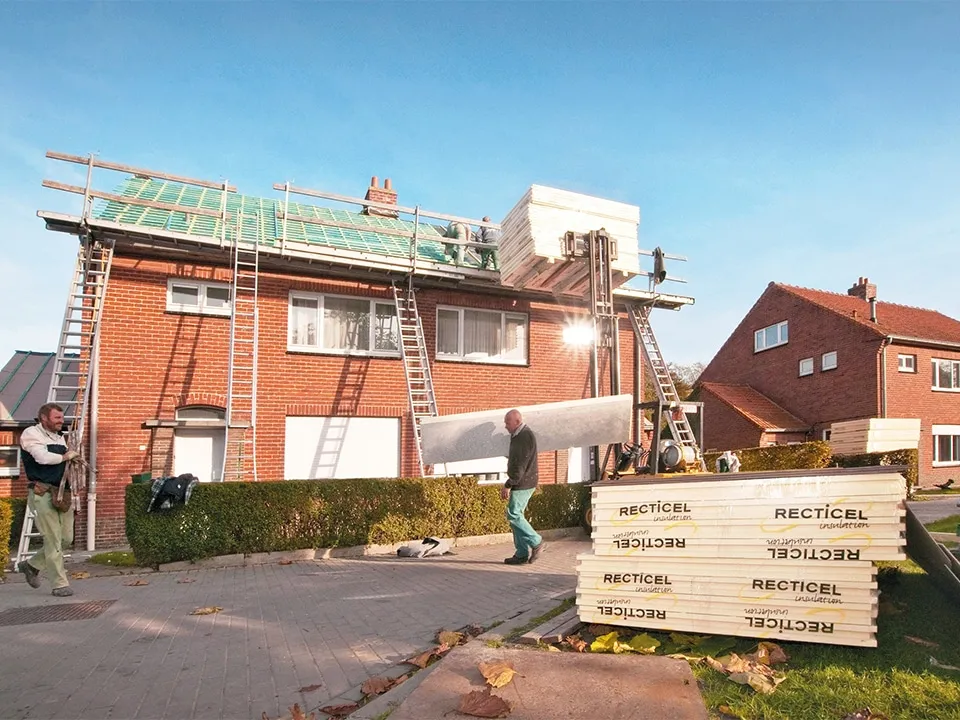
To meet European energy targets by 2050, around 3.5 million Belgian homes will need to be upgraded.
This is according to the 2020 Insulation Barometer from Recticel Insulation, a major player in thermal and acoustic insulation. “We face a major challenge, but it is not insurmountable. We just need to start thinking differently about our homes,” says Pieter Bailleul, technical manager Belux at Recticel Insulation.
Belgium supports the European Green Deal and the Paris Agreement. Greenhouse gas emissions must be cut by 80 to 95 per cent by 2050 compared with 1990 levels. In Belgium, homes and apartments account for 13.2 per cent of total emissions. Residential buildings will therefore need to achieve better energy performance. “That can only be done by demolishing and rebuilding these homes, or improving their energy performance so that energy consumption falls below 100 kilowatt-hours per square metre per year in Flanders and Brussels, and 85 kilowatt-hours in Wallonia,” says Pieter Bailleul. “We all need to think ahead and, when renovating, prioritise insulating and adding insulation to roofs, walls and floors. This is the most efficient and cost-effective way to achieve our energy ambitions.”
Roofs, walls and floors
The challenges are enormous, so Recticel Insulation drew up its 2020 Insulation Barometer, comparing the energy performance of the existing housing stock in Flanders, Brussels and Wallonia. The findings show that 99 per cent of houses and 95 per cent of apartments still fail to meet the 2050 target. “Energy renovation is essential,” says Pieter Bailleul. “You need to bear the Trias Energetica in mind: insulate, use renewable sources and use fossil fuels efficiently. So start by investing in insulation. The lowest-carbon energy is the energy you do not use. This is a way to improve your home’s energy performance faster and more efficiently.”
20 per cent of the roofs of Belgian homes are not insulated. Wall and floor insulation is even less common. “However you look at it, you only get one chance to insulate properly. It is a wise investment, not just for your comfort or energy bill, but also for the added value it generates in the long term,” concludes Pieter Bailleul.
Question about this story? Ask your question
Keep following this
Get an email when a new story is published. No account needed.
- SubjectThemes